


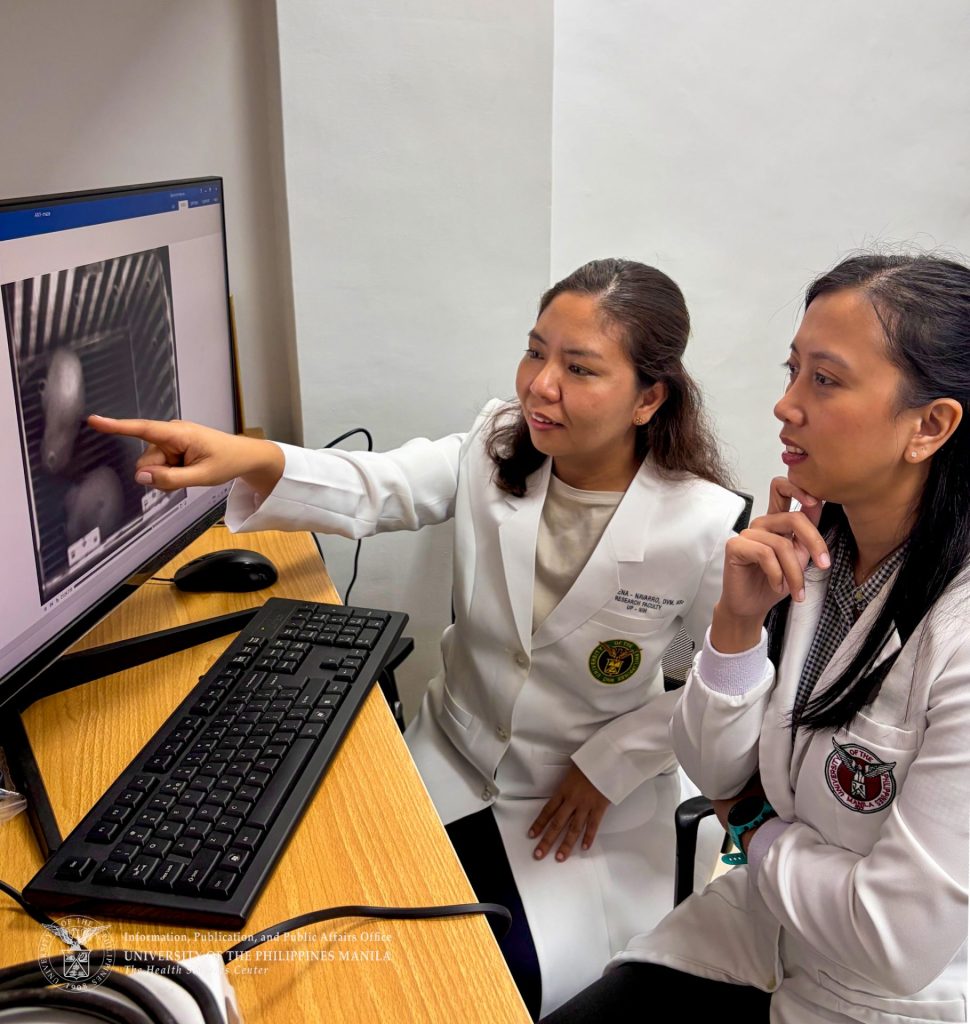
Researchers at the University of the Philippines National Institutes of Health (UP NIH) found promising insights into treating the effects of solvent addiction.
Research conducted by a team led by neuroscientist Dr. Rohani Cena-Navarro found that a drug usually prescribed as a mucolytic, N-acetylcysteine (NAC), may be an effective treatment for the effects of toluene (solvent) addiction.
Solvent addiction is ranked the 5th most commonly used drug according to data from the Dangerous Drugs Board in 2024. Toluene, the addictive component of solvents, is a clear, colorless liquid chemical commonly found in industrial solvents, paints, paint thinners, glue, gasoline, and nail polish. Misuse of these compounds is linked to inhalant abuse in the Philippines.
Toluene affects the nervous system when inhaled, swallowed, or absorbed through the skin. It may cause dizziness, drowsiness, confusion, and irritation to the eyes, nose, and throat. Experts say repeated inhalation or toluene “sniffing” carries a risk of developing substance use disorder.
Last year, Dr. Navarro’s group developed a rat model of inhalant addiction showing that repeated exposure to solvents produced long-lasting drug-seeking behavior.
Using this model, Dr. Navarro and her team, including MD-PhD scholar Ajina Carampel, found that the over-the-counter antioxidant NAC eliminates rats’ drug-seeking behavior and reverses solvent-induced brain changes. The findings were published in the international scientific journal Neuropharmacology in October 2026. It was the first study worldwide to examine the long-term effects of solvents on brain activity, and the first rodent neuroscience paper to come from the Philippines. The findings highlight the long-term neurological consequences of solvent exposure, including behavioral effects that may persist even after the substance is no longer present in the body.
“We are excited to find that NAC was able to reverse the harmful effects of solvents in the brain, confirming that addiction is a treatable brain disorder,” Cena-Navarro said.
The researchers studied NAC because previous research had been shown to reduce drug-seeking in other substances like cocaine and heroin. The UP Manila researchers sought to determine whether it could also reduce toluene-induced drug-seeking behavior.
NAC is known to help regulate glutamate levels, which may contribute to its potential effects on addiction-related behavior. However, the researchers clarified that glutamate (chemical messengers that play a major role in learning and memory) levels were not directly measured in the experiment.
The study’s inclusion of both male and female rats also highlights the importance of sex as a biological factor in preclinical research. The researcher noted that most animal studies have only included males. However, examining both sexes is important in neuroscience research to ensure that potential treatments are safe and effective for everyone.
The new experiment did not establish whether the improvements would persist after NAC administration stopped or whether the affected brain circuits could fully return to their pre-addictive state.
The researcher suggested that longer-term treatment may be necessary and may be combined with other therapies, similar to taking maintenance medications used for chronic conditions such as heart disease and diabetes. This possibility is subject to further investigation and clinical evidence before it could be considered an established treatment for human solvent addiction.
Dr. Navarro’s research was funded by the Department of Science and Technology Grants-In-Aid Program through the new Brain and Mental Health Program of the Philippine Council for Health Research and Development (PCHRD).
Press Release
Read More: