

Text by Charmaine A. Lingdas
Photos by Charmaine A. Lingdas and Luz E. Vios
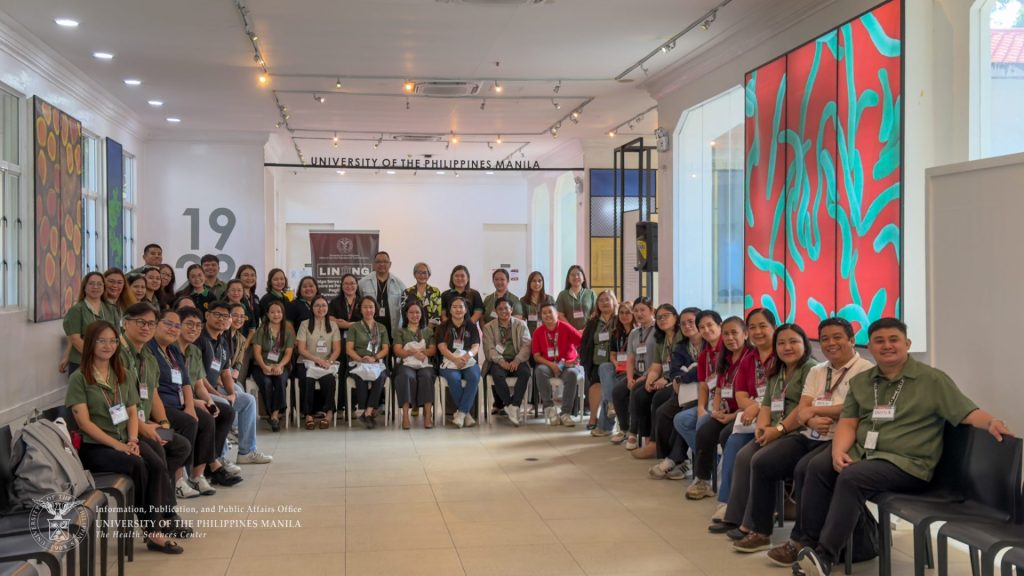
The University of the Philippines Manila began the three-day UP LINANG: Mga Serye ng Pagsasanay para sa Pagpapaunlad ng Paglilingkod sa Pamantasan at Bayan on Oct. 7, 2026, bringing together employees from different offices to strengthen workplace relationships, communication, work attitudes, and the quality of service delivered to the University and the public.
The training series, developed by the UP Office of the Vice President for Administration (OVPA) in collaboration with the UP Manila Office of the Chancellor, Office of the Vice Chancellor for Administration and Finance, and Human Resource Development Office (HRDO), is being held as part of UP Manila’s Foundation Month activities.
The first day of the training was conducted at the UP Manila Museum of a History of Ideas and focused on the Relationship Operations and Sensitivity Enhancement Seminar (ROSES), which addresses communication and trust improvement, reducing misunderstandings, and enhancing efficiency.
Encouraging ideas and clearer communication
Vice Chancellor for Administration and Finance Johanna Patricia Cañal emphasized that the training should encourage participants to examine why they work and how their work contributes to the University and the country.
According to Vice Chancellor Cañal, UP employees should understand that the person directly receiving their service is only one part of a wider chain of clients and stakeholders.
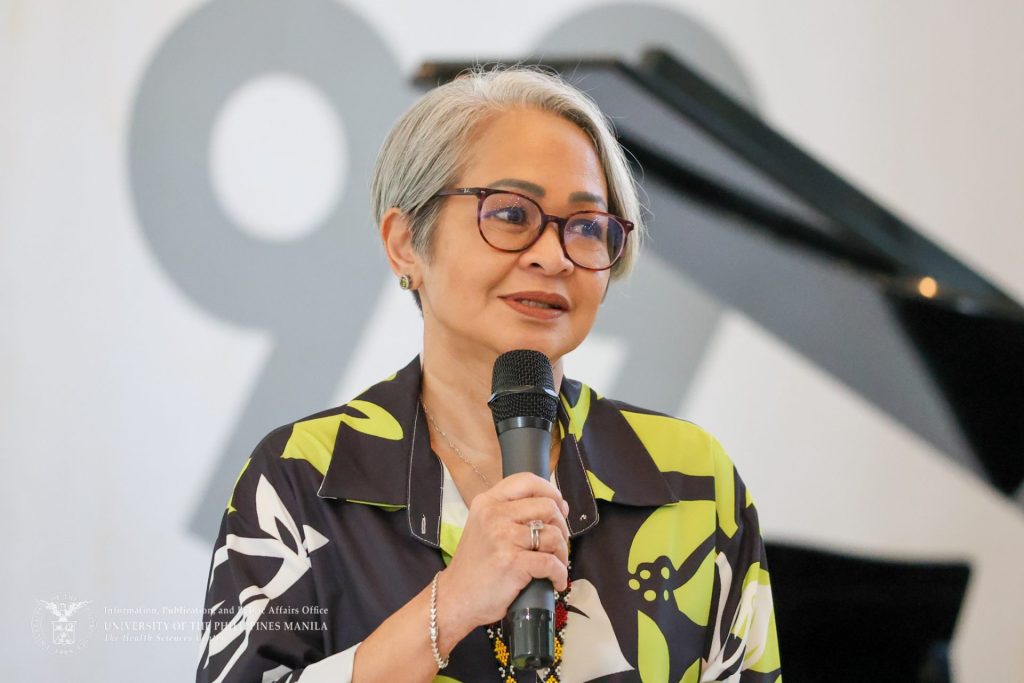
She also encouraged participants to bring forward ideas that could improve processes within the University. She stressed, however, that ideas and corrections must be communicated clearly and respectfully.
She said that the manner in which suggestions are communicated can affect how they are received. “Be very clear in your communications,” she said. “Because it does matter. If you’re clear in your communications, madaming tampo ang hindi mangyayari.”
Building trust begins with understanding oneself
Assistant Vice President for Administration for Organizational Development and Operations Richard Javier, whose work was referenced during the ROSES session, explained the framework behind the module and its focus on developing employees beyond technical competence.
Javier said he recreated the module from a framework on leadership and success expressed as Intelligence Quotient and Emotional Quotient, leading toward Adaptive Quotient and Spiritual Quotient.
“We need to improve on our EQ,” Javier said. “Kasi, makikita niyo, maraming matatalino na talaga, pero paano ka naman makipagkapwa-tao? Paano ka makipag-relate?”
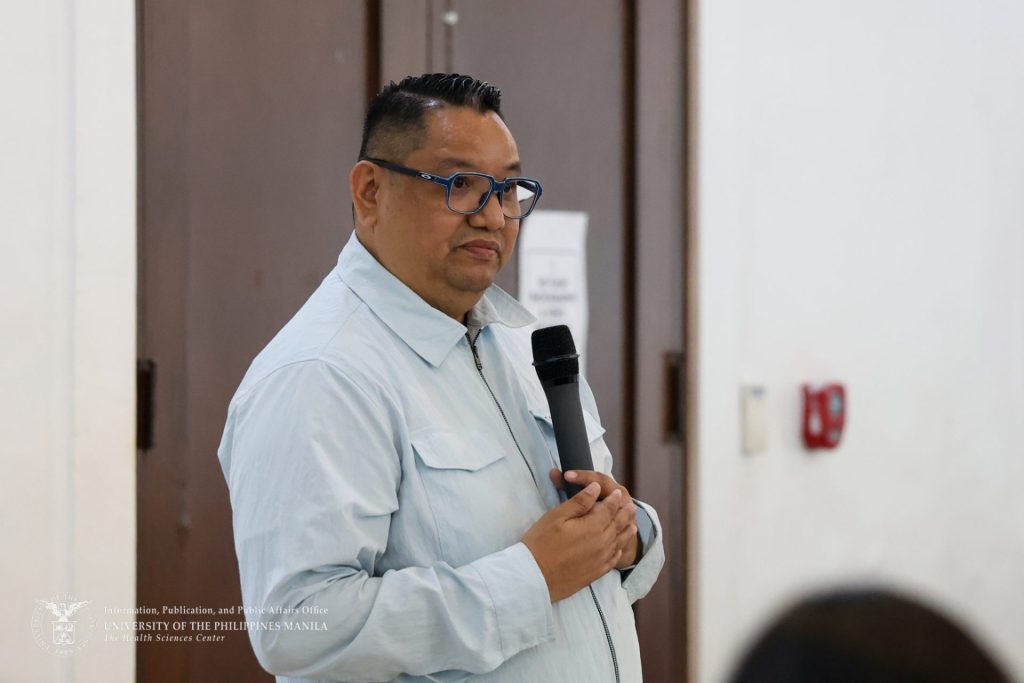
For Assistant Vice President Javier, technical ability alone does not guarantee effective leadership or healthy workplace relationships. The module therefore places particular attention on emotional intelligence, self-awareness, and trust.
“Ang gusto nating ma-build dito is yung trust,” he said. “Yung maging trustworthy tayo, tapos we trust each other, also. Kasi if we want change, pag mayroong trust, we can work together as one, iyon yung tinatawag na synergy.”
He described three areas under emotional intelligence that participants should develop: becoming a “good student of self,” a “good student of synergy,” and a “good student of love.”
Assistant Vice President Javier also emphasized self-regulation as a practical application of self-awareness. He introduced the principle he called P2P: “Pause muna, peace muna.” He explained that pausing before responding can prevent people from saying or doing things that may hurt themselves or others. He said self-awareness also affects how employees relate to one another. By understanding each other’s experiences, preferences, and triggers, employees can reduce misunderstandings and build trust. He said this is why understanding human behavior is essential to workplace relationships.
The session also introduced transactional analysis, allowing participants to examine how past experiences and learned patterns may influence present behavior. Javier connected transactional analysis with participants’ examination of their ego states and the experiences that may shape their responses. He explained that recognizing these patterns can create greater empathy for people whose behavior may be rooted in difficult experiences. He referred to the saying “hurt people, hurt people” to describe how unresolved experiences can be carried into relationships.
For Assistant Vice President Javier, the lessons of ROSES extend beyond communication techniques. They involve understanding oneself, regulating emotions, recognizing the experiences of others, building trust, and maintaining one’s values in everyday decisions.
Three Training Series
LINANG is organized into three training series focusing on relationships and operations, work attitude and values, and quality of work.
The first series, ROSES, or Relationship Operations and Sensitivity Enhancement Seminar, serves as a communication and trust improvement tool designed to reduce misunderstanding and enhance efficiency.
The second series, WAVES, or Work Attitude and Value Enhancement Seminar, is intended to strengthen work attitudes and values toward organizational excellence.
The third, Completed Staff Work (CSW), focuses on decision-making and management.
The succeeding sessions are scheduled on Oct. 9 and Oct.15, with the latter held at the 8th Floor Social Hall.
The resource persons for ROSES are Sheila Mae Comadizo and Juliet Daquiz. Arlene Cecilia Alfaro and Mark Joseph Baja will facilitate WAVES, while Niña Yanilla and Isaiah Noel Ocampo will handle CSW.
A Shared Responsibility for Improvement
UP President Angelo Jimenez described LINANG as an initiative of the Office of the Vice President for Administration intended to support employees in fulfilling the University’s mandate. He linked the program to the UP Strategic Plan 2023–2029.
“Layunin ng LINANG ay magbigay ng gabay at pagkakataon upang lalo tayong maglingkod sa bayan,” he said. President Jimenez identified three areas that the program seeks to develop: relationships, behavior, and quality of work. He also challenged participants to look beyond doing only what is sufficient.
LINANG brought together employees with different backgrounds, employment categories, and lengths of service in UP Manila. Despite their differences, participants identified common workplace challenges, including administrative processes, increasing workloads, staffing concerns, budget limitations, and constraints in technology and other resources.
These shared experiences underscored the need for employees to learn from one another and apply the lessons from LINANG beyond the training sessions. LINANG becomes not only a training program for employees, but also a shared responsibility to continually improve how work is done and how the University serves its people and the nation.
READ MORE:
#FP1 #Environmentthatnurturesourmindandbody