


Text by Jennifer Manongdo
Photos from PATMeGH
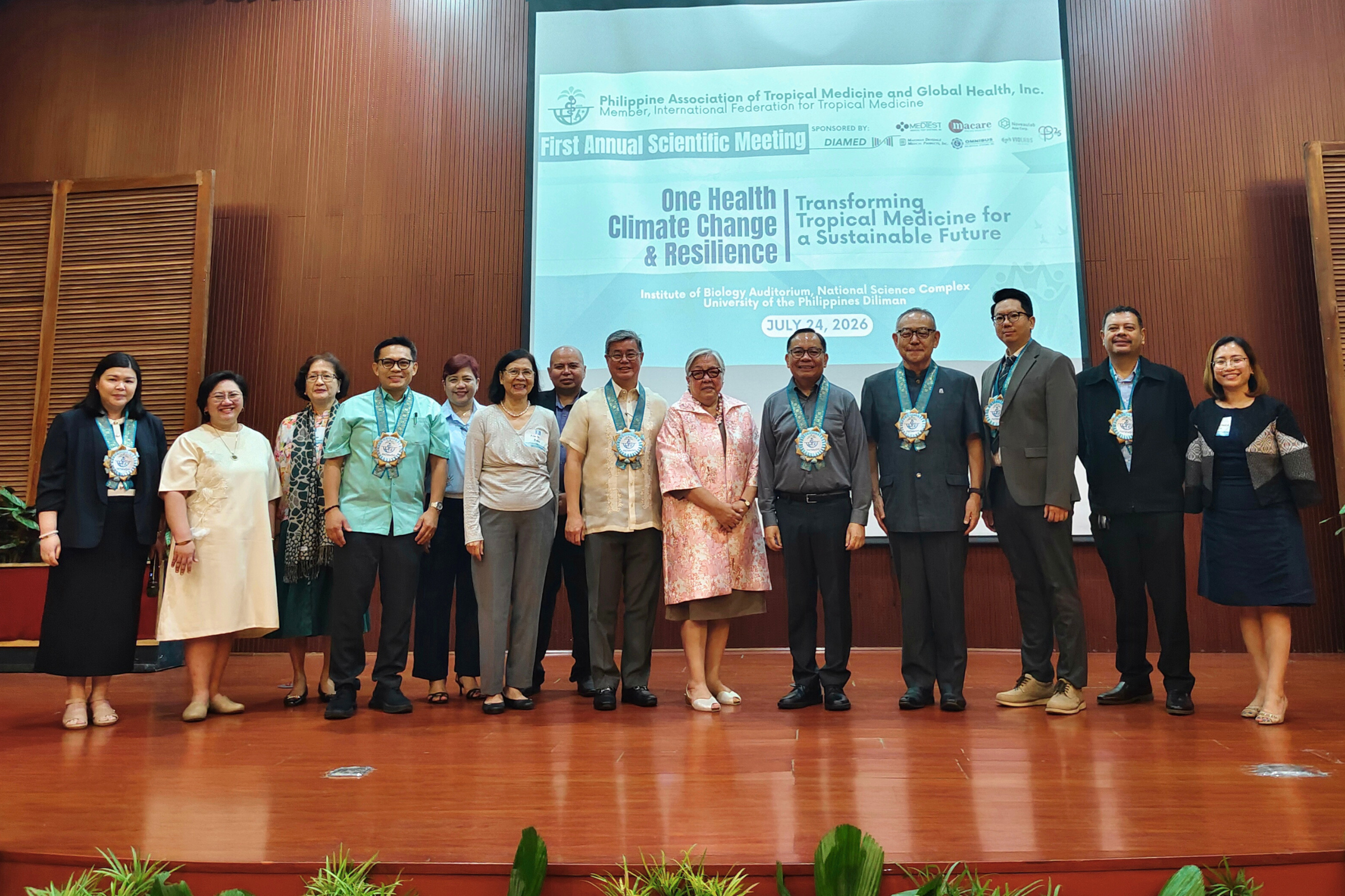
Warmer temperatures and shifting rainfall are driving the increase of climate-driven infectious diseases but tapping satellite technology may lead to faster and more accurate disease surveillance.
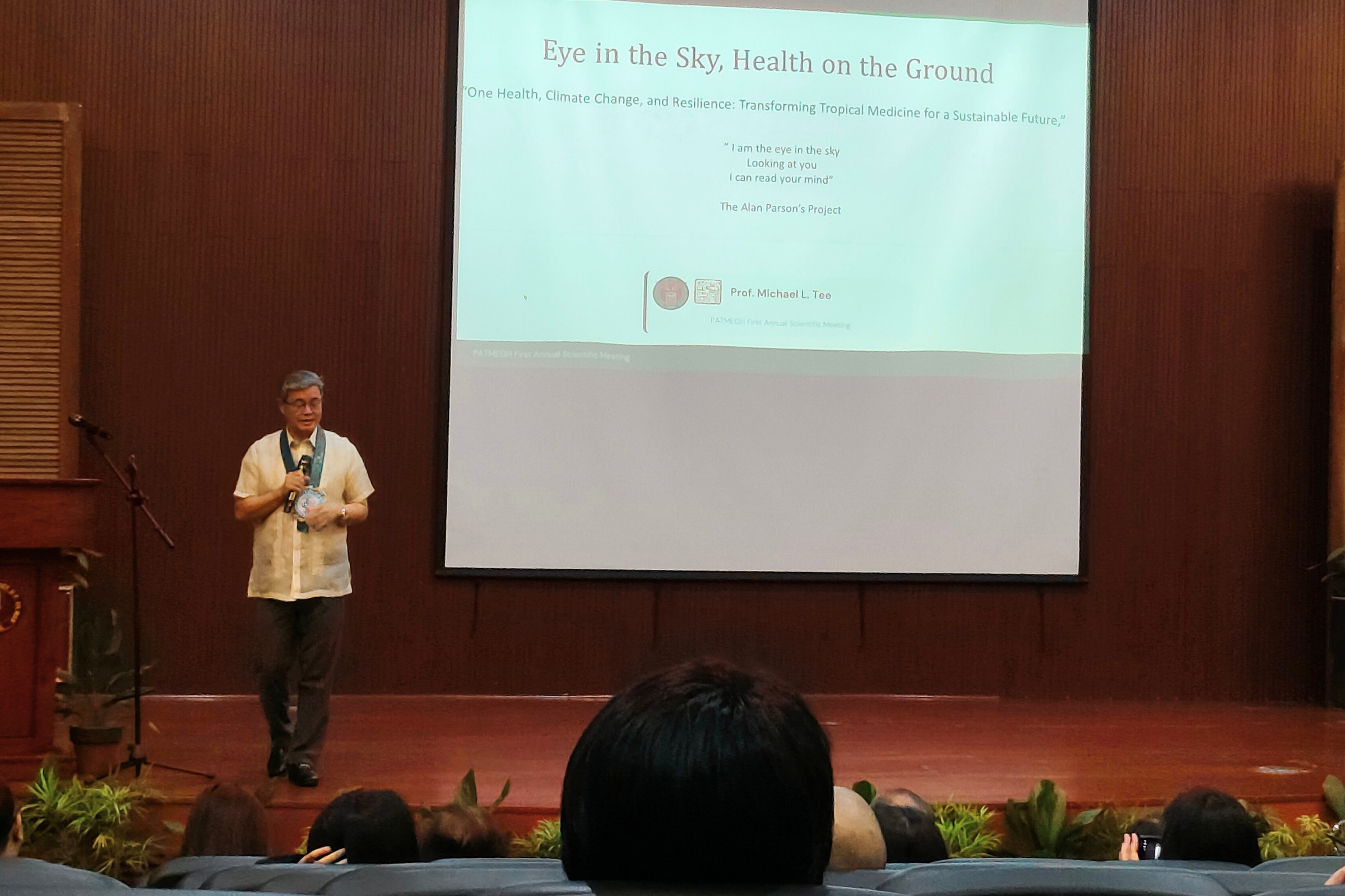
Speaking before experts from the Philippine Association of Tropical Medicine and Global Health, Inc. (PATMeGH) at the National Science Complex, University of the Philippines Diliman on July 24, 2026, UP Manila Chancellor Michael Tee laid out a vision on integrating remote sensing and satellite data into disease surveillance and public health planning to detect environmental factors that influence disease transmission.
“This, I am proposing: What if we all look at the space? Remote sensing mechanics with the satellite to detect abiotic drivers, governing pathogen, vector, life-cycle directly from low earth orbit, sea surface temperature, vegetation index mapping and Land Surface Temperature,” he said during the First Annual Scientific Meeting of the group themed “One Health, Climate Change and Resilience.”
Satellite imagery could also monitor deforestation, urban expansion, wildlife migration, and environmental degradation, factors that increase the risk of pathogens spilling over from animals to humans. Such technologies, he said, could support early warning systems and guide preventive interventions such as targeted larvicide deployment and community disease surveillance.
For many years, scientists have been tracking diseases using satellite data, thus giving them a unique perspective during disease outbreaks.
For instance, a study published in 2010 used geospatial analysis that analyzed the occurence of monkeypox cases in humans at the Democratic Republic of Congo. Remote sensing data found that “the best predictors of human monkeypox cases are proximity to dense forests and associated habitat preferred by rope squirrels.”
Researchers from Indiana University Indianapolis also previously published an article on how they are using satellites to identify at risk of dengue and Zika.
As he closed his keynote lecture, Chancellor Tee called for interdisciplinary collaboration between the national government and concerned experts to build a data-driven One Health surveillance system while ensuring data privacy, equitable access, and data sovereignty.
The scientific meeting also featured local and international experts tackling key issues in tropical medicine and planetary health. Prof. Shigeyuki Kano, director of the Department of Tropical Medicine and Malaria of Japan’s National Institute of Global Health and Medicine discussed “Toward Zero Malaria in Palawan: A One Health Approach for a Climate-Resilient Future,” while Prof. Nina T. Castillo-Carandang of the UP Manila College of Medicine presented “Social DNA of One Health.” Dr. Yu-Huan Tsai of the Department of Medical Biotechnology of Chang Gung University in Taiwan delivered a lecture on “Decoding Human Infectious Diseases from a Reverse Translational Approach,” followed by Dr. Renzo R. Guinto of the SingHealth Duke-NUS Global Health Institute, who discussed “From Ideas to Impact: A ‘Pracademic’ Approach to Translating One/Planetary Health Science to Action in the Climate Era.” Dr. Claro N. Mingala of the Philippine Carabao Center of Nueva Ecija also spoke on the role of agriculture in “Contributions of Livestock Biotechnology to One Health, Climate Change, and Resilience for a Sustainable Future.”
Read More:
#FP1 #AccessibleUPLeadership