

The University of the Philippines Manila opened a Surgical Knowledge Intensive Learning Laboratory thru Simulation (SKILLS) laboratory designed to address the growing demand for cadaver-based simulation training across medical specialties and strengthen the preparation of health professionals before they perform procedures on actual patients.
The SKILLS lab marks a significant milestone in UP Manila’s commitment to advancing healthcare education, clinical competence, and patient safety.

Unlike the conventional anatomy laboratory, which primarily uses cadavers to teach human anatomy and dissection, the SKILLS lab uses cadaver-based simulation to allow trainees to practice clinical and surgical procedures in a controlled environment before performing them on patients. The opening of the SKILLS lab on Sept. 1, 2026, marks a major step in UPCM’s continuing efforts to modernize medical education, strengthen clinical skills training, and promote patient safety by providing a broad range of simulation activities. These include digital anatomy dissection tables and visualizers, surgical and skull-base stations, endoscopic towers, drills, microscopes, and an obstetrics and gynecology station with a hysteroscope.

Its integrated audiovisual and wireless systems allow activities inside the laboratory to be transmitted to other locations, providing additional opportunities for teaching, observation, and demonstration.
AO Spine Advanced Level Anatomical Specimen Course
Following the launch of the SKILLS Laboratory, spine surgery experts from the Philippines and abroad participated in a two-day intensive training program designed to strengthen practical skills in modern endoscopic spine surgery. The whole day courses were held on Sept. 4-5, 2026, at the SKILLS Laboratory.
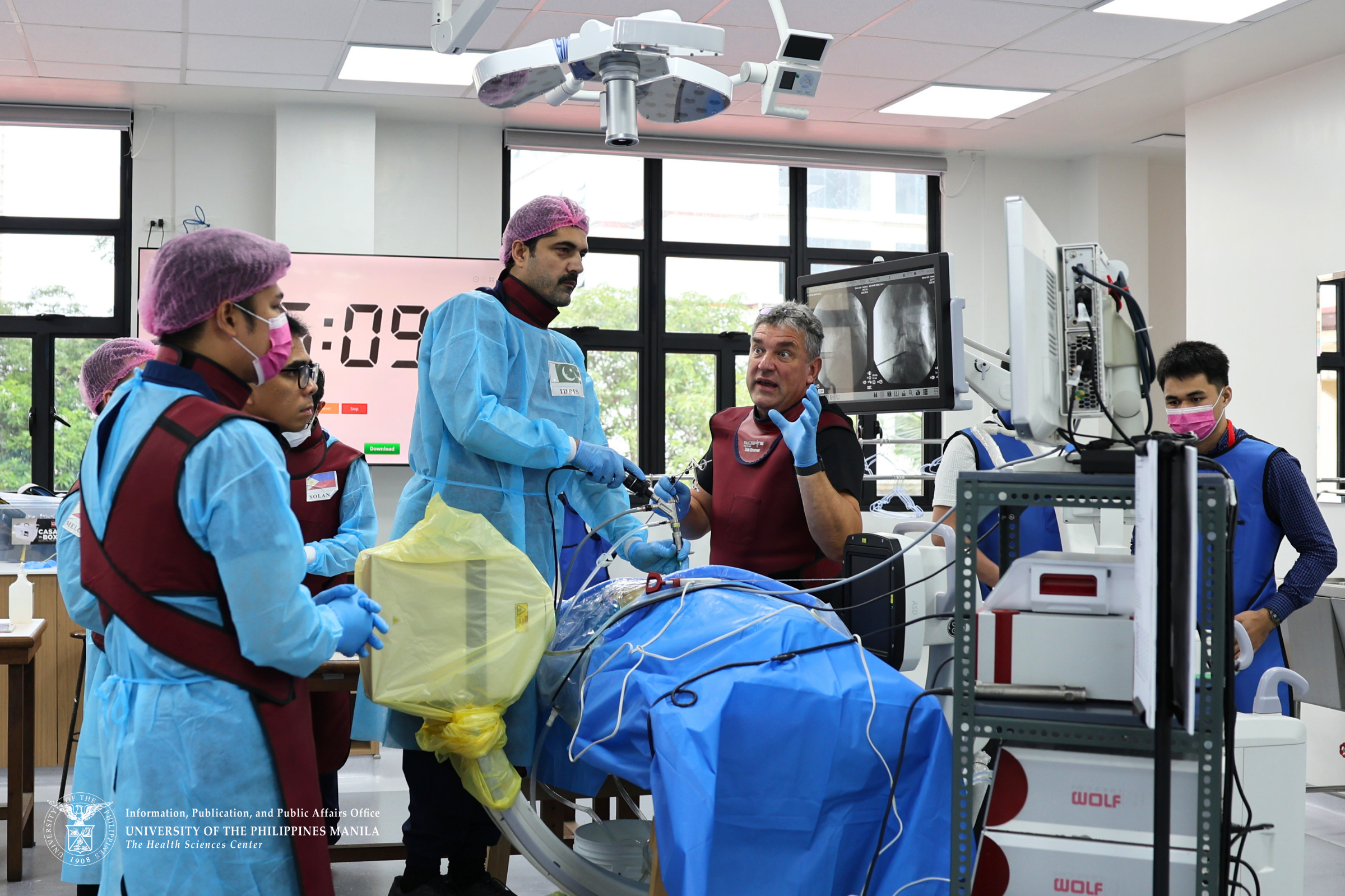
The two-day intensive course was conducted by AO Spine, a global academic community and professional organization for spine surgeons, researchers, and medical specialists. AO Spine was established in 2003 in Switzerland and offers courses or training programs for medical residents or practicing surgeons.
The course was chaired by Dr. Anne Kathleen B. Ganal-Antonio of Philippine General Hospital, with Dr. Rafael Bundoc of the Department of Anatomy serving as co-chairperson. Regional faculty included Dr. Withawin Kesornsak of Bumrungrad International Hospital in Bangkok, Thailand. Philippine faculty included Dr. Eric Astelo Opay Belarmino of Vicente Sotto Memorial Medical Center, while guest faculty included Dr. Gian Karlo Dadufalza of the Philippine Orthopedic Center and Dr. Roy Michael Domacena of St. Luke’s Medical Center.
“AO Spine’s choice to hold an advanced specimen course in our SKILLS Lab is a testament that our facilities and technical expertise are already at par with the world’s best,” Dr. Bundoc said. “Our participants praised our laboratory and the efficiency of our technical staff. Several of those who have attended similar courses elsewhere said that ours is the best of what they have attended so far.”
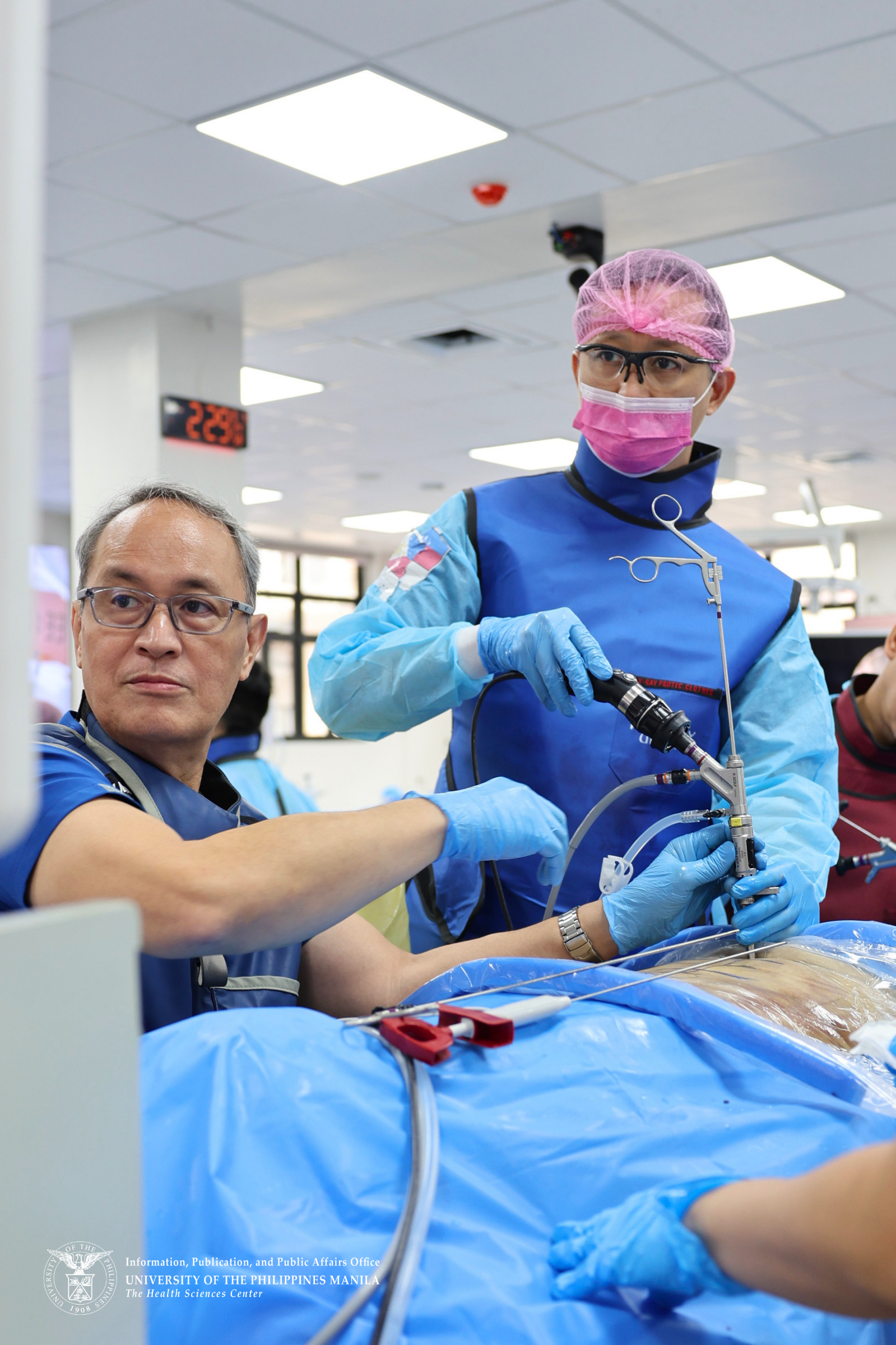
The endoscopy spine surgery training course aimed to equip spine surgeons with fundamental knowledge and hands-on skills in performing basic endoscopic spine procedures using cadaveric specimens. It provided orthopedic spine fellows, young consultants, and neurosurgeons in their early careers in endoscopic practice with a structured environment for learning fundamental techniques through lectures, demonstrations, and hands-on, living-like high-fidelity anatomical specimen sessions.
Press Release