
Text and Photos by Charmaine A. Lingdas
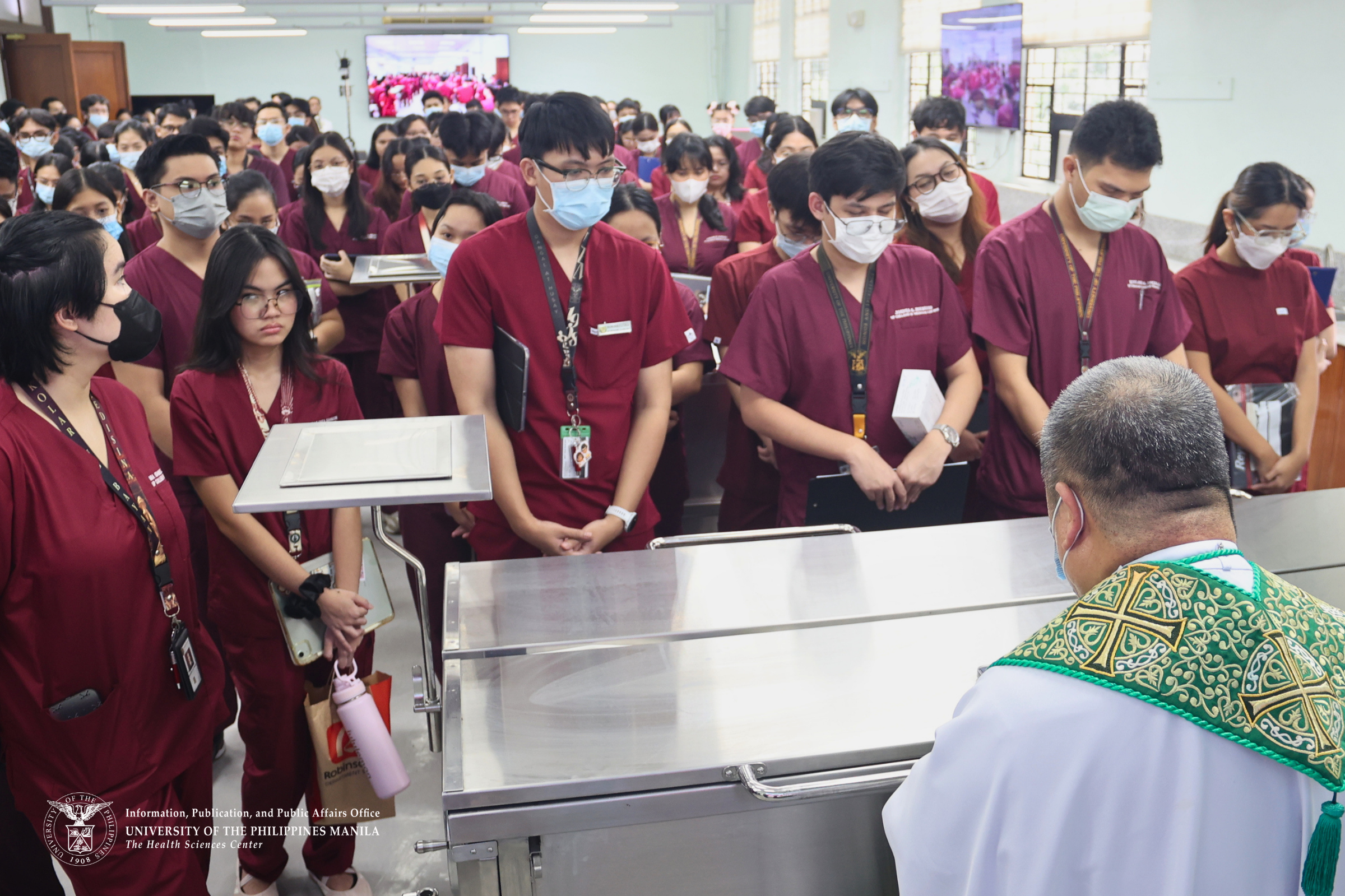
The University of the Philippines College of Medicine (UPCM) welcomed the Class of 2031 to their first laboratory dissection of the school year with a blessing of the cadaver “Silent Teachers” on September 11, 2026, at Calderon Hall.
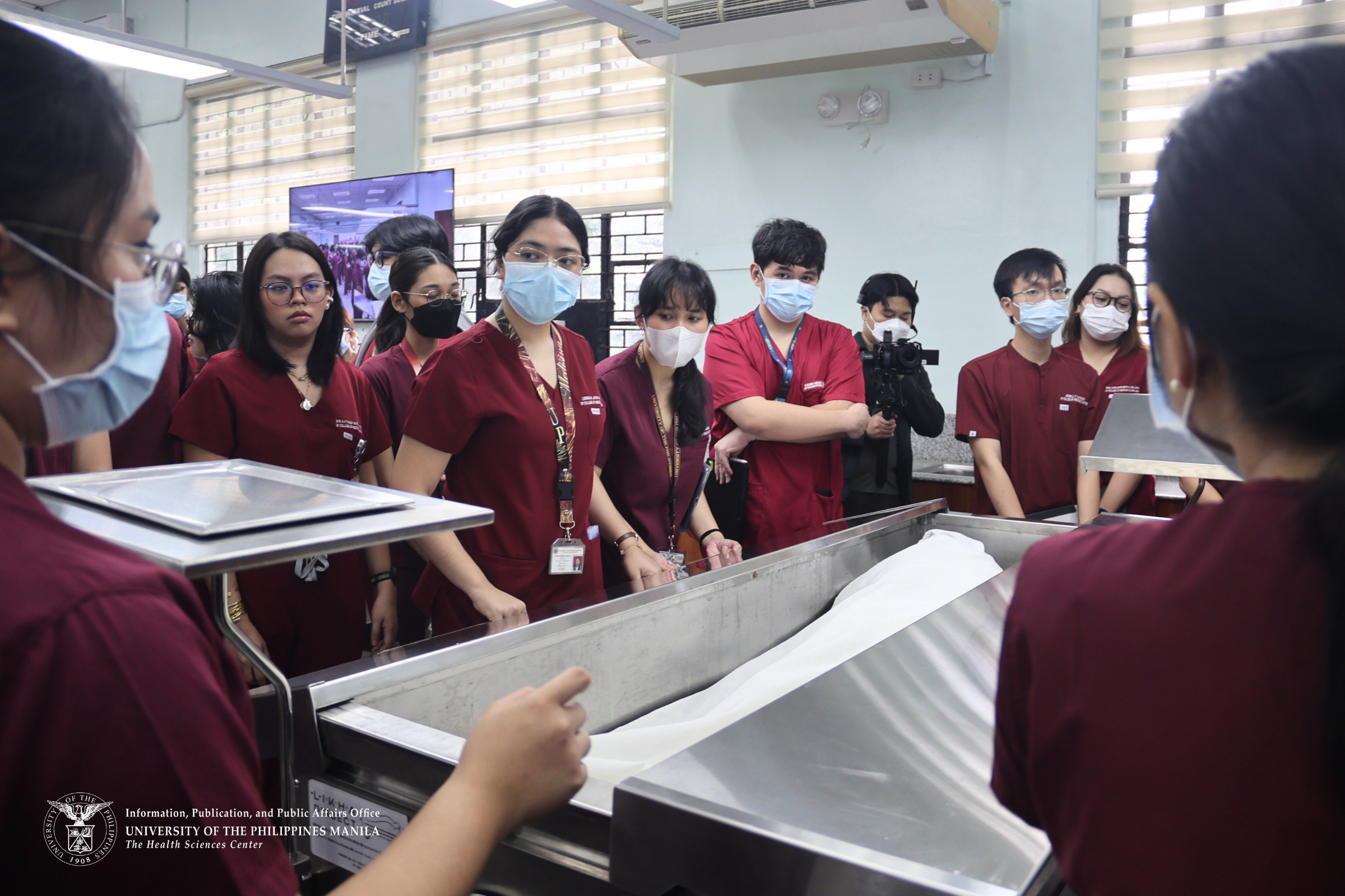
Held at the Dualan and Siberia Laboratory on the third floor of Calderon Hall, the ceremony preceded the anatomy dissection classes of 211 medical students under Learning Unit 3 (LU 3). The blessing covered the cadavers, articulated bones, and Thiel soft-embalmed cadavers that will be used throughout their anatomy studies.
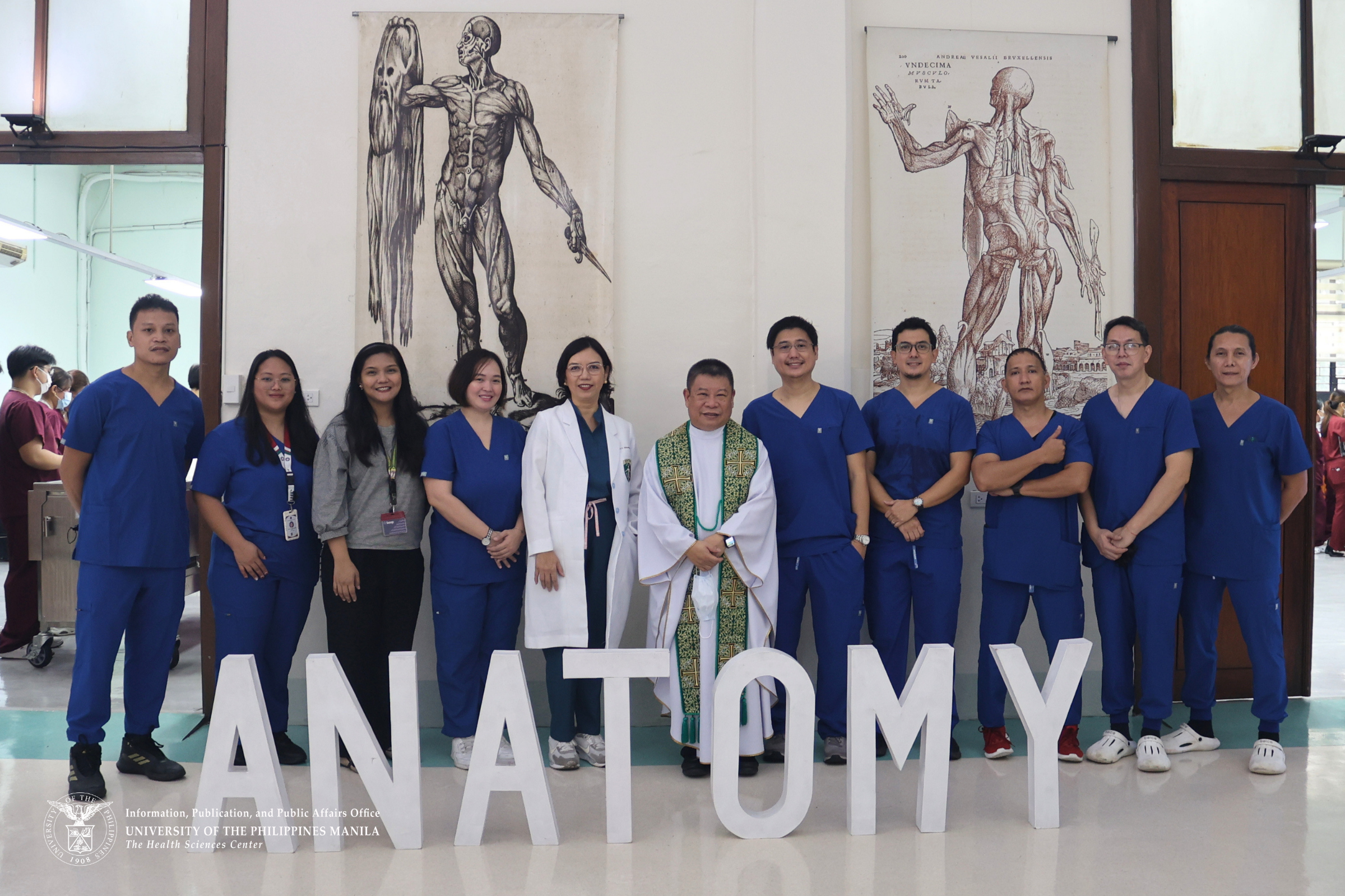
Fr. Wilfredo Samson, chaplain of the Philippine General Hospital Chapel, led the blessing, which was attended by faculty members of the Department of Anatomy.
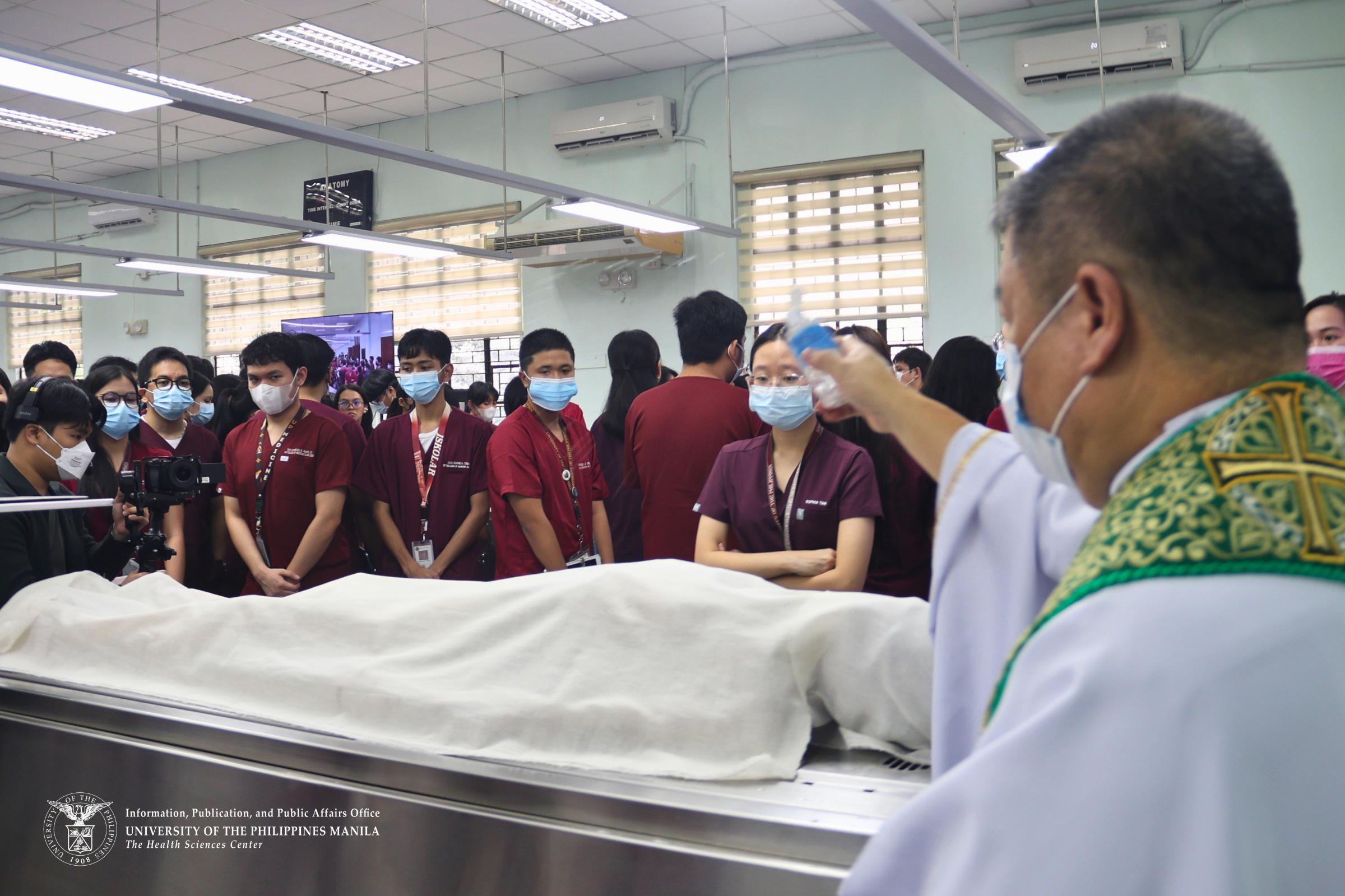
Fr. Samson reminded the students to approach the donated bodies with “utmost reverence, humility, gratitude, respect” as they begin their dissection work. He emphasized that the cadavers serve as an important part of medical education, allowing students to deepen their understanding of the human body and ultimately contribute to the promotion of health, the prolongation of life, and the protection and preservation of human life from illness and other threats.
Dr. Christopher Constantino, faculty of the Department of Anatomy likewise urged the students to see the cadavers not merely as objects of study but as their “silent teachers,” recognizing the donors whose final gift continues to contribute to medical education and research.
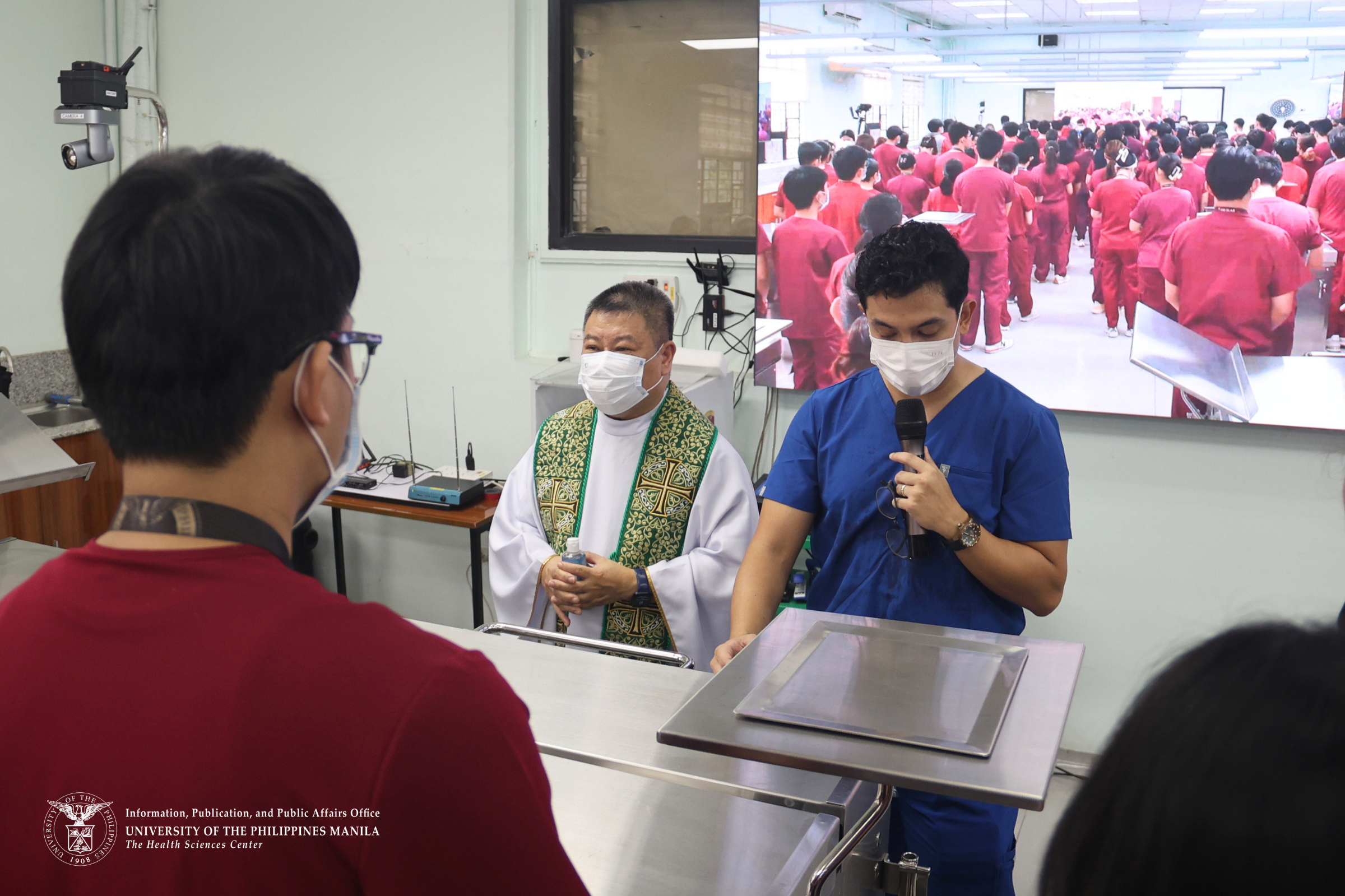
“We hope that, on your journey to dissection, you remember to keep these bodies not as mere tools, but to treat them as humans, our silent teachers,” he said.
Dr. Constantino also drew a connection between the anatomy laboratory and the students’ future encounters with patients. He reminded them that the same respect for the humanity of their cadaver donors should guide them in caring for patients, whom they will also learn from throughout their medical careers.
The cadavers used for the anatomy classes were donated through the National Center for Mental Health (NCMH). Their use in medical education highlights the important role of body donation in providing future physicians with firsthand knowledge of human anatomy.
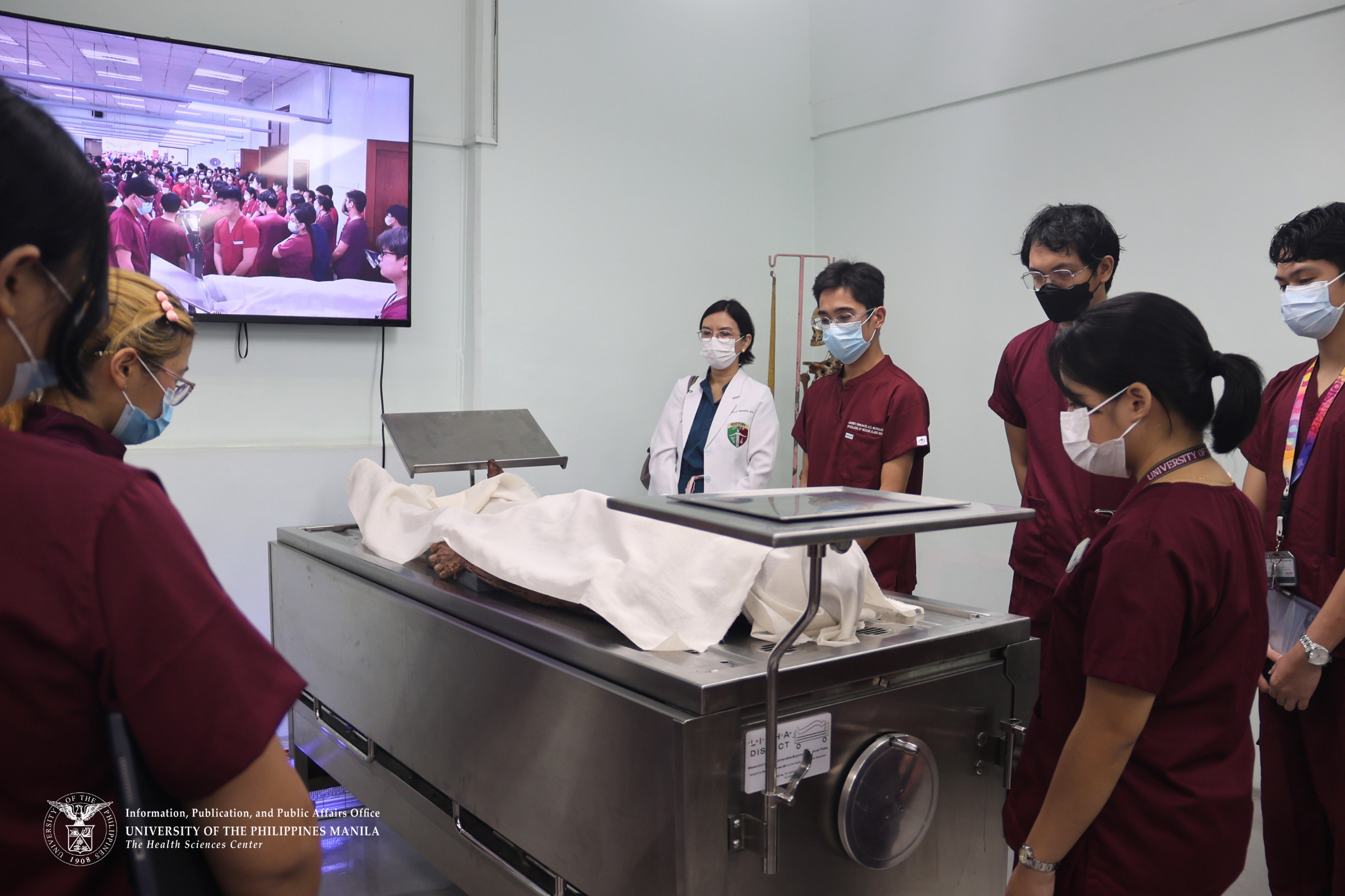
For Class 2031, the blessing marked more than the beginning of their anatomy dissections. It introduced them to the people whose final gift will help shape their understanding of the human body and, ultimately, their practice as future physicians.
Individuals who wish to support medical education through body donation may contact the UPCM Department of Anatomy at anatomy.cm@post.upm.edu.ph. More information about the Department of Anatomy and its body donation program is available at upcm-anatomy.com.
#FP1 #innovationsforlifelonglearningdedicatedtoservice