

Text by Jennifer Manongdo
Photos by Information, Publication, and Public Affairs Office
In this year’s The Network: Towards Unity for Health hosted by the University of the Philippines Manila on Aug. 4–7, 2026, four health leaders unveiled the success formulas that allowed them to reach specific health goals. The third day’s program opened with student reflections, whose narratives complemented and reinforced the themes articulated by the keynote speakers.
Collective leadership
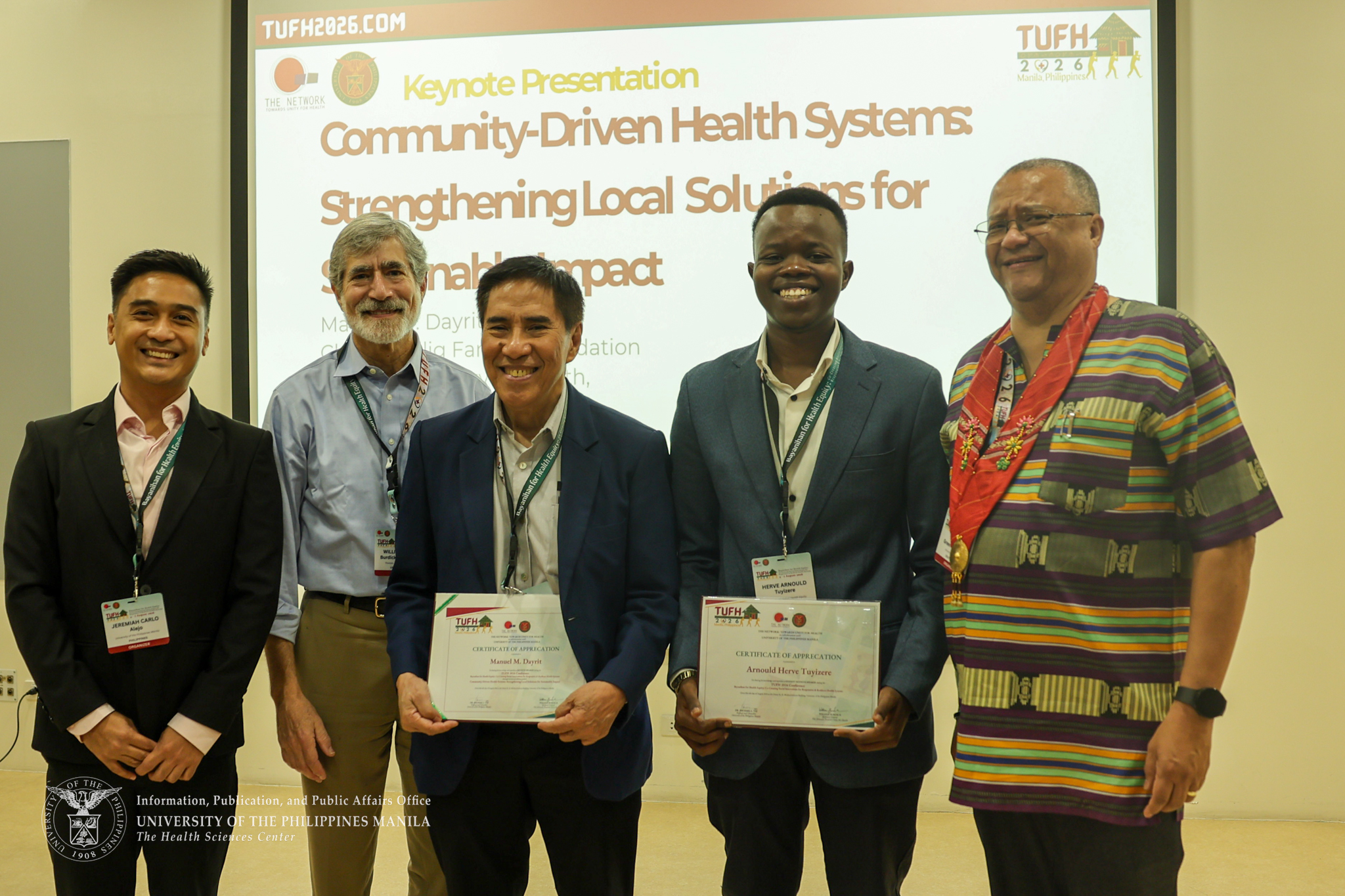
Former Department of Health (DOH) Secretary Dr. Manuel M. Dayrit, currently the chairperson of the Zuellig Family Foundation, discussed Bridging Leadership, an approach that brings together people from different sectors to collaborate as partners toward a common goal.
To illustrate the bridging leadership framework, Dr. Dayrit began by defining a community as a “dynamic group of diverse interests and inherent internal tensions held together by shared goals and social cohesion.”
He structured his discussion on three communities he became part of. The first community he mentioned was Rural Southern Mindanao, where poverty is considered the internal tension. It was in the 1970s when Dr. Dayrit left a residency slot at the Philippine General Hospital to work for eight years as a community physician and primary health care organizer in Davao del Norte, (now Davao de Oro).
“The fork in the road opens to two different paths, both significant and both demanding full-time attention. One path led to the hospital; the other to the community. To be true to the values I held dear, I chose the less-traveled path,” he wrote earlier as one of the authors in the book of essays “Serve” published in 2023 by the Ateneo de Manila press.
The second community he mentioned was the Department of Health bureaucracy, which he led from 2001 to 2005. During his leadership, the spread of SARS was prevented in the country, and the national government recognized the DOH as a top-performing agency. The tension in this community was fear (due to the crisis), but Dr. Dayrit and his team were able to manage the situation well through clear communication, decisive leadership, and collective ownership.
Sulu is the third community in his journey of service, where he is currently working through the Zuellig Family Foundation. He said the region needs local empowerment, institutional alignment, and internal community trust, as it is in a state of reconstruction following many years of conflict.
The former health secretary closed his discussion with a haiku comparing bridging leaders to the Badjaos of Sulu. He emphasized the lessons in the Badjaos’ communal nature especially in navigating turbulent waters together, emphasizing in the end that “True leadership relies on collective strength and trust.”
Investment in health systems
Rwanda’s life expectancy has risen dramatically over the past few decades. At the height of the genocide in the early 1990’s, life expectancy was around 26 years, but at present, it has risen to 80 years.
Dr. Arnould Herve Tuyizere, a clinical intern at the University of Global Health Equity in Rwanda, outlined the five factors that contributed to the dramatic shift in numbers. First, he said the government institutionalized a decentralized care system with the health centers at the base level of healthcare, followed by the district hospitals and the national hospitals. “The national referral system is done because of Mituweli (the public community-based health insurance program in Rwanda). As you go up the chain, you must have a referral note from each person at the decentralized model,” he explained.
Another driver of the rise in life expectancy was investment in human resources. The Ministry of Health established a dedicated human resources department, resulting to a growth in the number of doctors in the country from around 300 in the early 2000s to over 7,000 today.
Third, the government implemented the Mituweli. “They pay around 5,000 Rwandan Francs per individual. That is around two and a half or three US dollars per year. Through that, whenever you go to the health centers, that is where you start to pay around 10% of the co-payment for each. They compute what you earn, so it is a bit affordable,” he shared.
Fourth is community-focused care. Drawing from the accompagnateur model of care pioneered in the 1980s by the organization Partners In Health for HIV and TB patients, the Rwandan government adapted and implemented a similar system that enabled communities who previously struggled to reliably adhere to treatment to do so successfully. Fifth, the organization Partners In Health helped establish a university in a rural northern province that allows doctors to train alongside community health workers and the populations they will serve.
Medical practice is relational, not just clinical
For Rwan Jaffer Zain – alabdeen Alshiekh, medical student at the University of Gezira, Sudan, healthcare is fundamentally relational and not just clinical. Her talk began as a child, dreaming of becoming a doctor and building a successful career. The war changed that.
“I was no longer learning about medicine only from textbooks or from lecture halls, I was learning from my own community. I saw communities displaced. I saw families unable to access even the most basic healthcare. I saw people who were not only searching for treatment, but also for safety, dignity, and hope,” she said.
Rwan joined community initiatives including mobile clinics, outreach humanitarian health work, and began serving displaced people.
She said students have three choices: the choice to serve, the choice to care, and the choice to stay.
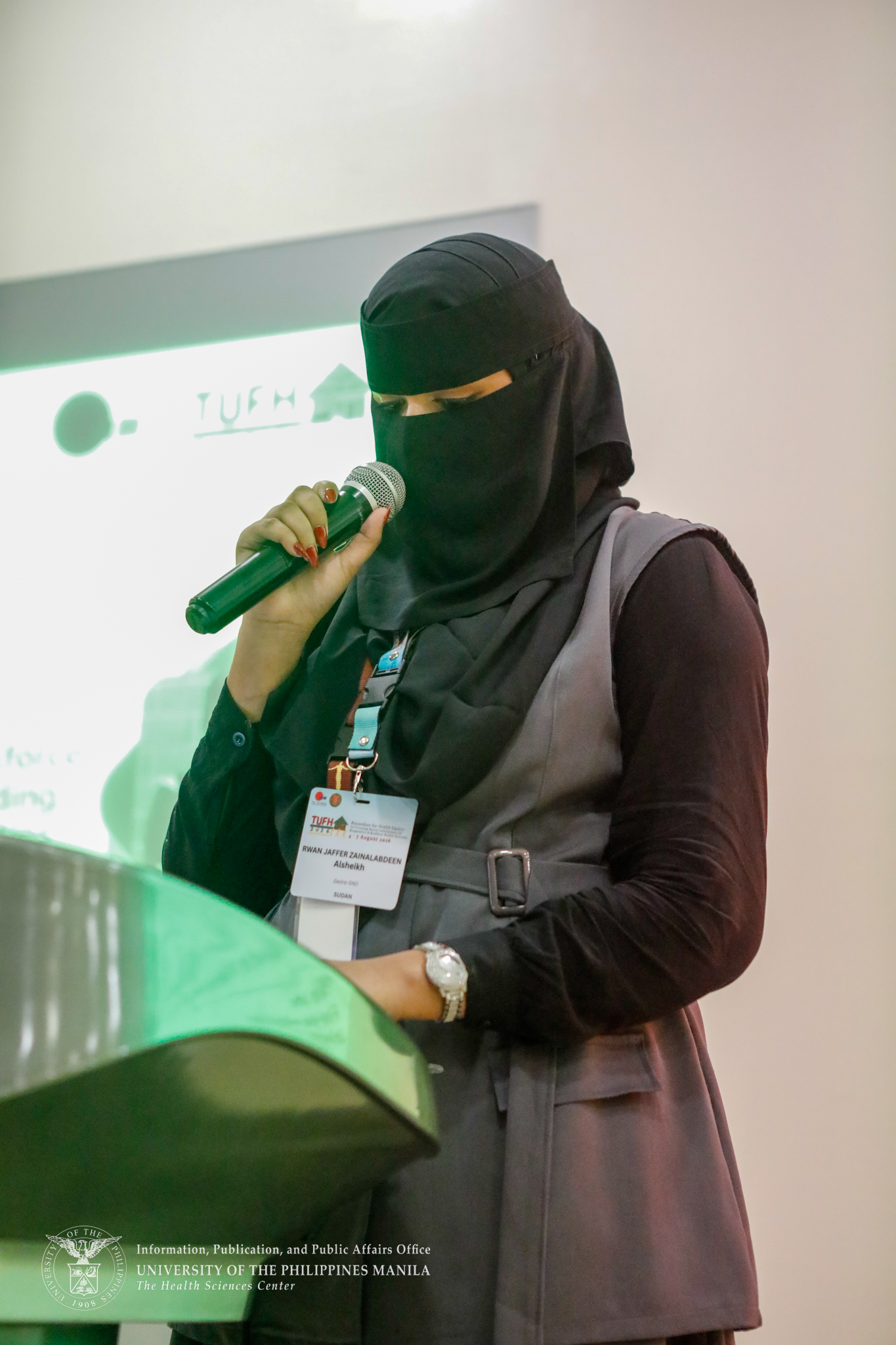
“One of the greatest privileges of working in healthcare is that we are invited into people’s lives during their most vulnerable moments. Every patient we meet is more than a medical case. Every patient is someone’s mother, someone’s father, someone’s husband, someone’s wife, someone’s brother, someone’s sister, someone’s child, someone’s whole world,” Rwan said. “When I began to see every patient as if they were one of my loved ones, my understanding of healthcare changed completely. For me, medicine is not only about diagnosis and treatment. It became about protecting someone’s family, someone’s hope, and someone’s future.”
Lessons on Migration
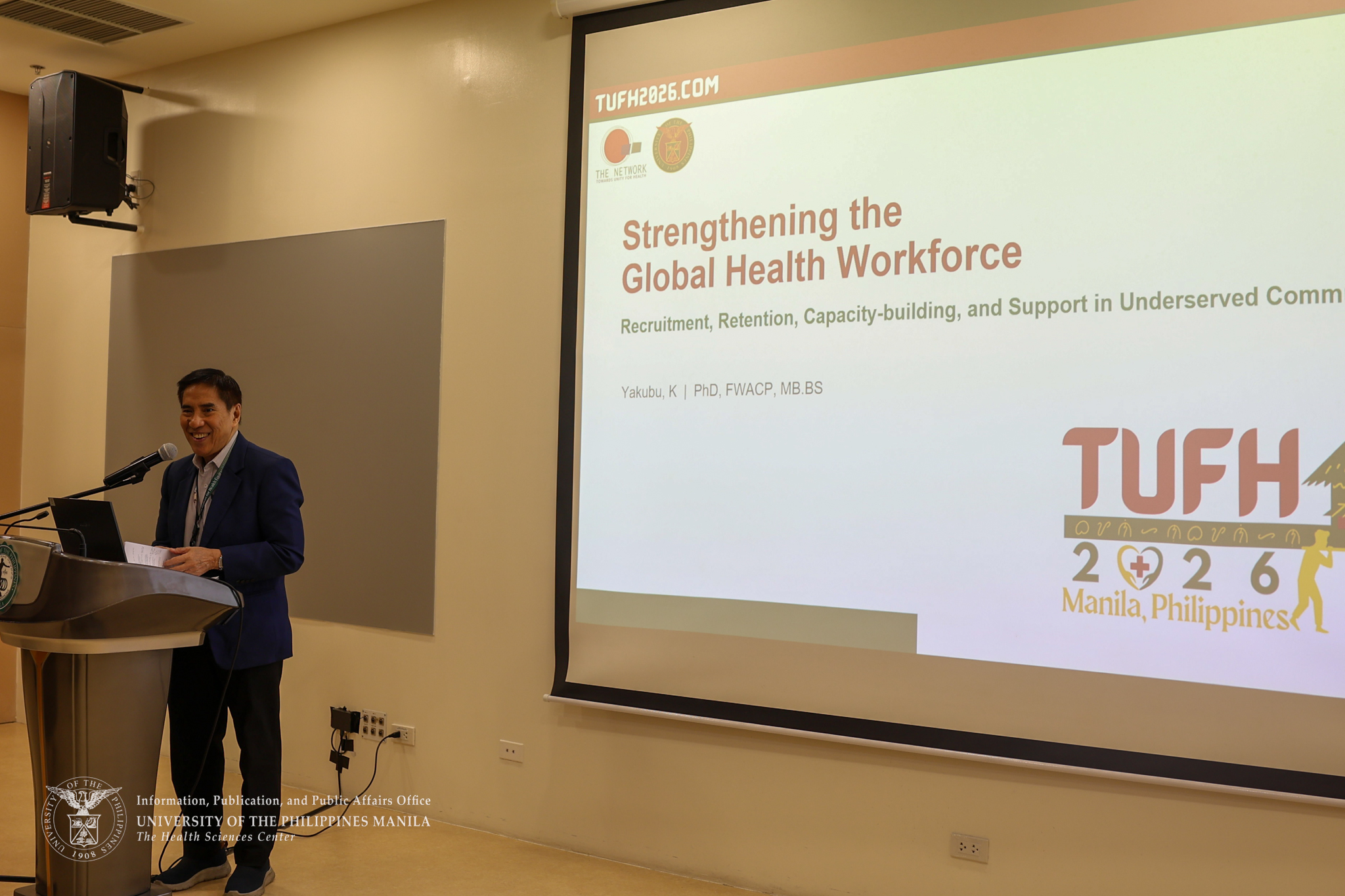
Nigerian-trained family physician, Dr. Kenneth Yakubu, who now works as a Research Fellow at The George Institute for Global Health in Australia, said Nigeria taught him responsibility, obligation, persistence in repairing broken systems and, respect for elders and mentors. On the other hand, he said Australia gave him a strong sense of belonging despite being from a different racial background. “It taught me a different level of care. It taught me to connect what was called overseas and call it home. It taught me to be the bridgemaker between what we call the global north and the global south,” he said.
His PhD research centered on revealing the reasons why his colleagues left Nigeria or why they chose to stay and serve in Nigeria. He said recruitment, retention, and sustainability is not a decision maker or a worker problem but as a social contract between health workers, communities, and decision makers.
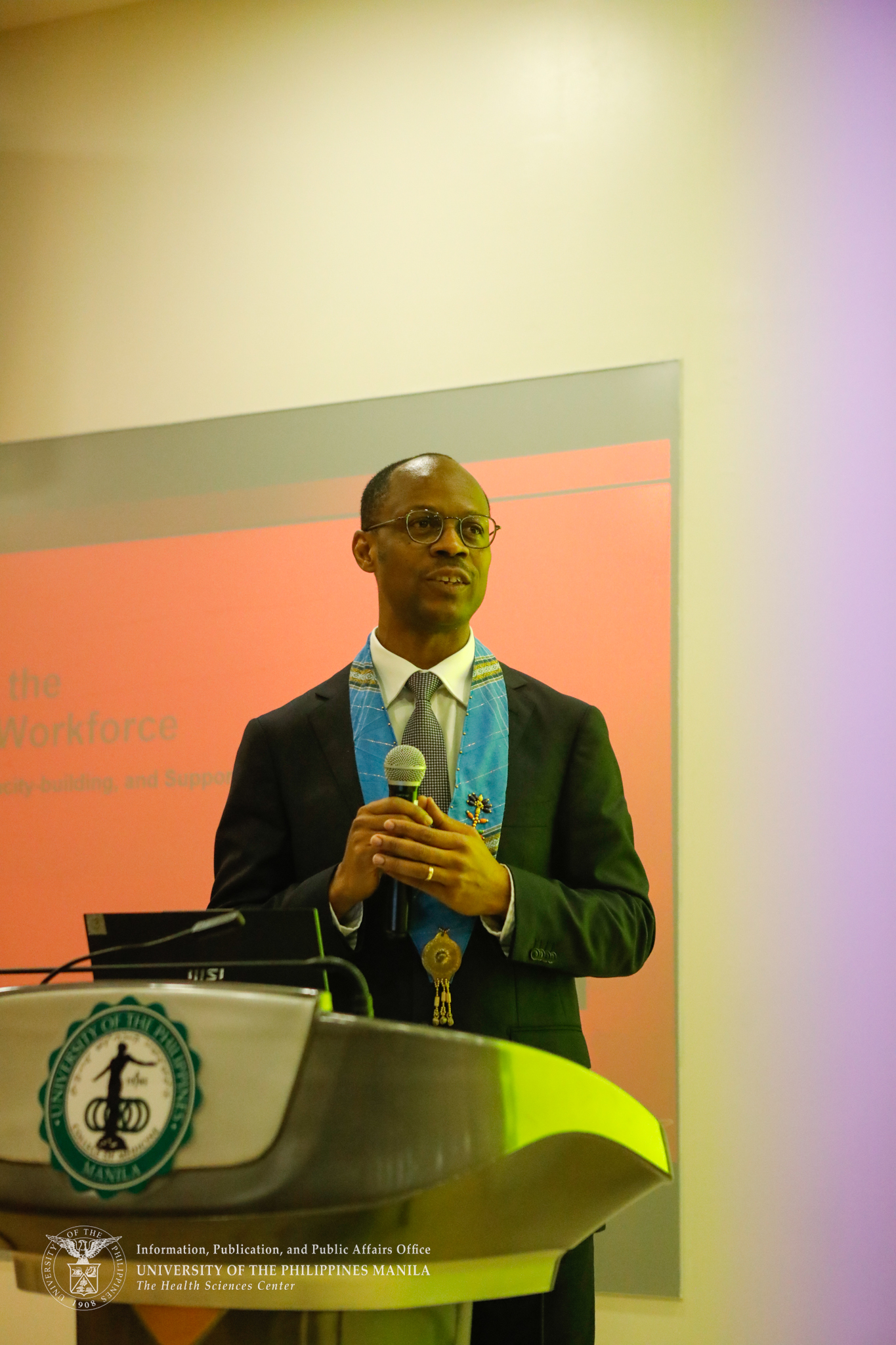
“We can talk about the right skill limits, and we can talk about people. At the center of this is the relationships of trust we build. If anybody is making a choice to stay, that choice is a daily one,” he said. “It’s not permanent. They are making that choice because they feel a sense of belonging.”
Dr. Yakubu also emphasized that sustainability is a shared responsibility where both the needs of the worker and the healthcare industries are met.
The Network: Towards Unity for Health is an international, intersectoral, intergenerational organization that fosters equitable community-oriented health services, education and research with the goal of improving health locally and globally.
Read More:
#fp1 #AccessibleUPLeadership