


Text and photos by Calvin S. de los Reyes, Ph.D.

Akbayan Party-list Representative and House of Representatives Deputy Minority Leader Percival “Perci” P. Cendaña explained the need for the passage of House Bill 7068, which seeks to recognize the right of individuals to designate trusted caregivers and healthcare decision-makers, including partners, chosen family members, and other non-traditional support systems, especially during medical emergencies or periods of incapacity.
Known as the “The Right to Care Act,’ Rep. Cendaña emphasized that the proposed legislation responds not only to the needs of LGBTQIA+ individuals and couples but also to the lived realities of solo parents, senior citizens, overseas Filipino workers, students living away from home, and others whose care networks may not fit traditional legal definitions of family.
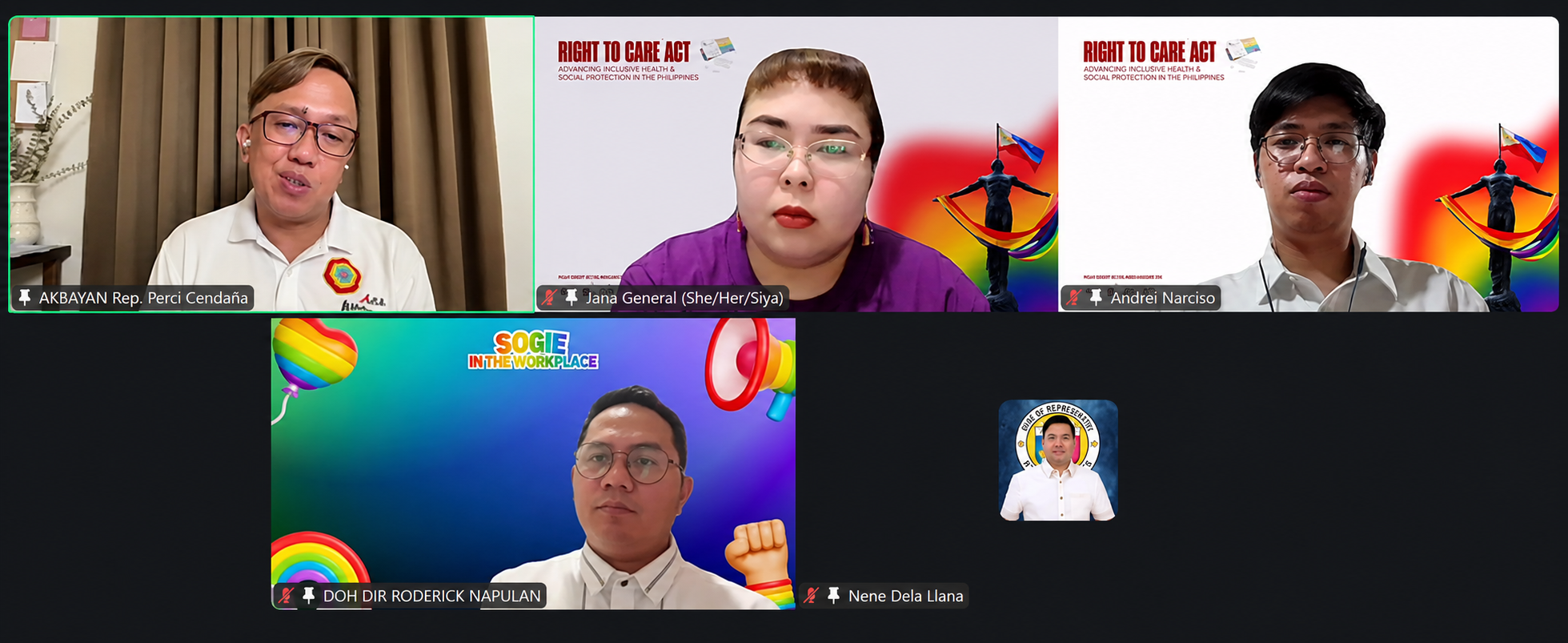
Rep. Cendaña was the featured speaker for the Pride Month celebration program organized by the Department of Behavioral Sciences of the College of Arts and Sciences (CAS), University of the Philippines Manila, through the Graduate Program in Health Policy Studies. Held via Zoom on June 29, 2026, the lawmaker emphasized that the pending bill provides equal protection and addresses issues in healthcare.
“Let’s give everyone the right to care. Let’s give everyone the right to be taken care of,” Rep. Cendaña said.
Themed “Right to Care Act: Advancing Inclusive Health and Social Protection in the Philippines,” the forum aptly highlighted the message that care, dignity, and protection should not depend solely on marital status, blood relations, gender, or sexual orientation, but on trust, autonomy, and love. The online forum was organized in partnership with the Office of the Gender Program of the College of Arts and Sciences and the Community of Organized and Empowered Lesbians, Bisexual Women, Queer, and Trans Men in PH (CONEQT PH). It gathered scholars, advocates, policymakers, health professionals, students, government workers, and members of civil society to discuss the proposed Right to Care Act and its implications on inclusive healthcare, patient autonomy, and social protection.
Jose Maria “Nene” Dela Llana, Councilor of the Sangguniang Panlungsod of Iloilo City and principal author of the city’s Right to Care Ordinance, shared how Iloilo City institutionalized the recognition of healthcare proxies through local legislation, demonstrating how local governments can lead in advancing patient rights, inclusive care, and health equity.
“Iloilo became the first highly urbanized city outside Metro Manila to institutionalize this framework. It demonstrates that local governments can become laboratories of innovation, creating responsive, people-centered policies while the nation continues to deliberate on broader legislative reform,” Coun. Dela Llana said.
Providing a national health policy perspective, Roderick M. Napulan, Director IV of the Health Policy Development and Planning Bureau of the Department of Health, underscored the importance of a patient-centered approach. He emphasized that every competent person should have the choice to decide who may speak on their behalf and noted the need for clear implementation mechanisms to ensure that such policies are operationalized across the health system.
From the community perspective, Jojana Christine P. General, Co-founder of CONEQT PH, affirmed that the Right to Care Act is fundamentally a health rights issue. She highlighted the lived experiences of LGBTQIA+ persons, partners, and chosen families, stressing the need for safeguards, consent, and genuine recognition of care relationships beyond traditional family structures.
The discussion was facilitated by Andrei Narciso, graduate student of the Master of Arts in Health Policy Studies (Health Social Science), who synthesized the key points of the forum through the “BIBINGKA approach,” emphasizing the need for action from both the national and local levels. He noted that national legislation and local ordinances must work together to build health-enabling systems and communities.
Dr. Joan Tara R. Reyes, Coordinator of the Office of the Gender Program, delivered the opening message of Dr. Ma. Teresa G. De Guzman, CAS Dean. Dr. Reyes also presented an overview of the Gender Program and its continuing commitment to diversity, equity, inclusion, and rights-based health advocacy.
Dr. Calvin S. de los Reyes, organizer and coordinator of the Graduate Program in Health Policy Studies (Health Social Science), reaffirmed the call for “Health for All and All for Health” at the conclusion of the program, emphasizing that the struggle for inclusive and equitable healthcare continues beyond Pride Month.
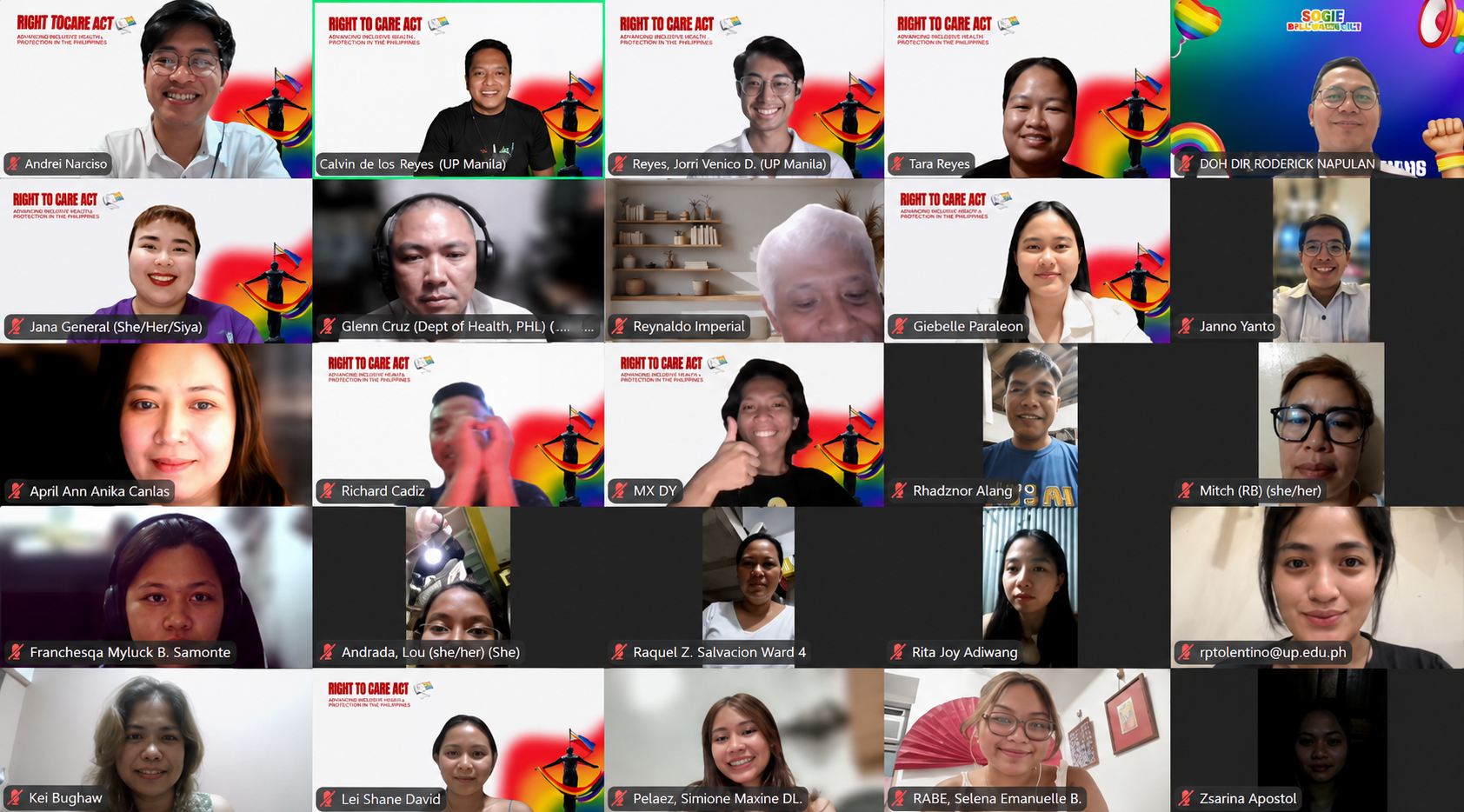
Participants of the forum hailed from various academic institutions, government offices, public health agencies, advocacy organizations, and communities from the National Capital Region, CALABARZON, and other regions across Luzon, Visayas, and Mindanao.
Read More:
#FP6 #UPManila #Environmentthatnurturesmindandbody