


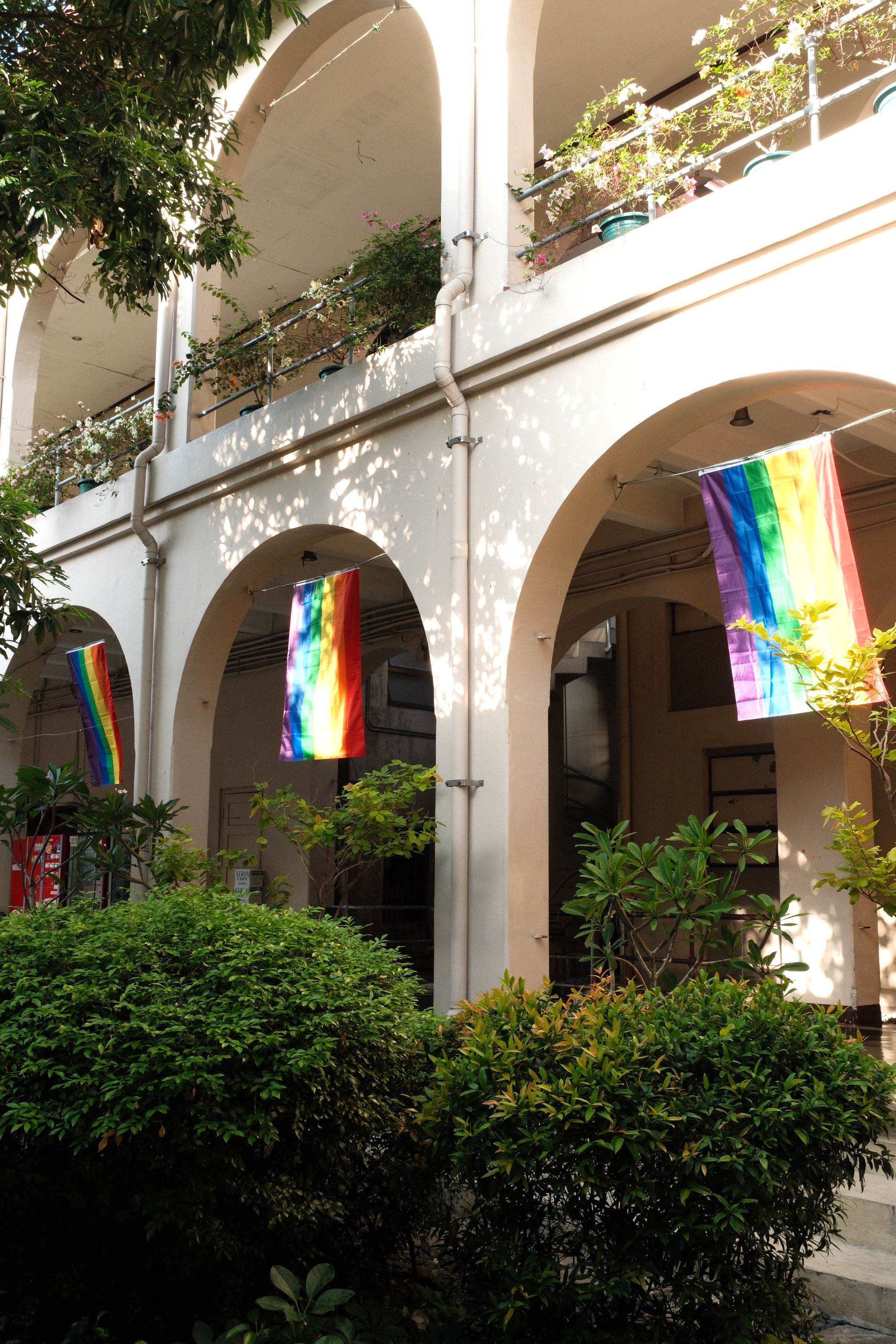
Every June, rainbow flags start to appear across UP Manila’s hallways, bulletin boards, and even the university’s social media pages. At the Philippine General Hospital, you’ll often spot these flags quietly standing in the main atrium, catching sunlight as hospital staff pass by during the morning flag ceremony. To some, they might seem like just decoration or a seasonal gesture that comes and goes. But for many of us who have long felt unseen, these small bursts of color carry real weight. They are more than symbols. They serve as a quiet but powerful reminder: You are seen. You belong.
As someone who graduated from the College of Arts and Sciences and is now serving as one of the Psychiatry chief residents in the UP-PGH, I have seen how UP Manila has slowly grown in its efforts toward inclusivity and gender sensitivity. There is definitely progress: clearer policies, more visible signs of support, and grassroots efforts that are finally getting the recognition they deserve. But there is still a long way to go before we can truly say that all our spaces are safe, affirming, and empowering for everyone.
As the country’s national health sciences center, UP Manila does not just train future healthcare workers. It also helps shape the kind of care we believe in: one that’s compassionate, inclusive, and rooted in social justice and equity. The creation of the Center for Gender and Women Studies (CGWS) was a big step forward. It pushed for gender sensitivity not just in classrooms, but in research, policies, and how we deliver healthcare. It is a reminder that health is not just about diseases and symptoms. It is also about who we are, and the many ways the system either sees or erases us.
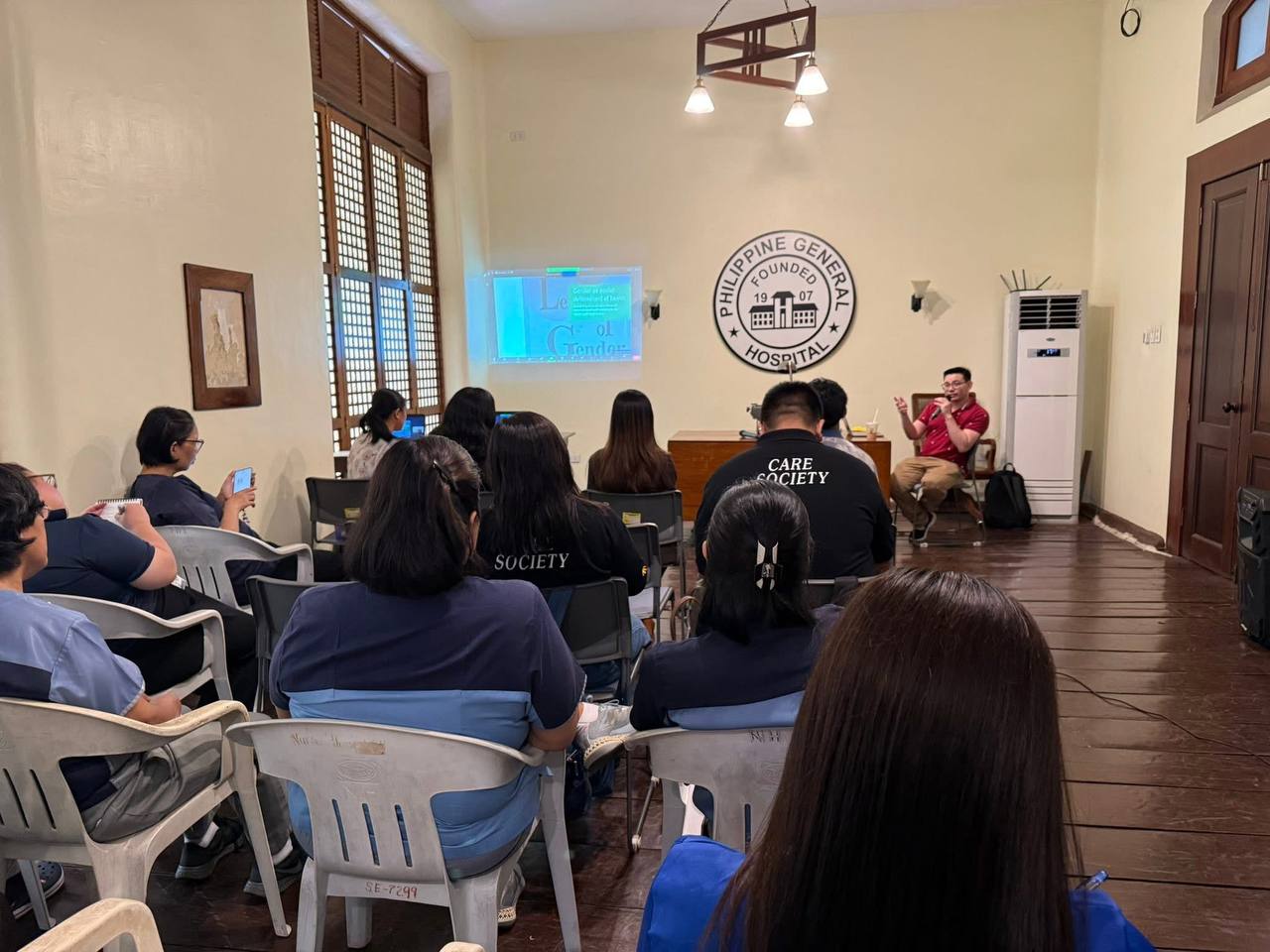
At PGH, the Gender and Development Committee quietly does the work of making sure every department has a focal person looking out for inclusivity and non-discrimination. Just last year, the committee launched a month-long program aimed at raising awareness of LGBTQIA+ health needs. The acronym refers to people of diverse sexual orientations, gender identities, gender expressions, and sex characteristics—including those who identify as lesbian, gay, bisexual, transgender, queer or questioning, intersex, asexual, and others represented by the “+”. The committee also promoted gender-responsive healthcare through lectures, workshops, and conversations with healthcare workers. And there are groups that go beyond what’s expected, like the PGH Care Society, led by nurses who have organized talks on SOGIE (Sexual Orientation, Gender Identity and Expression) awareness, championed LGBTQIA+ mental health, and brought gender sensitivity training into everyday hospital life. In these corners, inclusivity is not just a buzzword. It is something people are trying to live out, day by day.
Still, it is important to remind ourselves that real inclusivity is not about rainbow flags or hashtags alone. It is about how safe our LGBTQIA+ students, faculty, staff and patients feel when no one’s looking: how much space they’re given to speak, to lead, and to simply exist without fear.
Clearly, UP Manila does show its support for the LGBTQIA+ community, especially every Pride Month. The rainbow flags go up, and messages of solidarity are shared. But support, if it is to mean anything, should never be seasonal.
We have to ask the harder questions too. Are our queer students and employees really safe from judgment or harassment in the wards, offices, classrooms, or even during clinical rounds? Do we recognize same-sex partners as legitimate caregivers? Do our forms and systems reflect people whose identities fall outside the binary? And beyond that, are there LGBTQIA+ voices at the table when big decisions about policy, training, or student life are being made?
Just as importantly, how prepared are we, both as individuals and as an institution, to notice the quieter, more subtle forms of discrimination that still exist? Do our efforts to be inclusive continue throughout the year, or do they fizzle out once Pride Month ends? Is there actual adequate funding, planning, and long-term vision backing our statements of support?
These are not meant to criticize. They are questions we need to ask if we want to grow and if we truly care.
The truth is, we’re not quite there yet.
In some spaces within UP Manila and PGH, LGBTQIA+ professionals are already visible in leadership, and their presence matters. It reminds us that representation is possible, meaningful, and worth celebrating. But representation alone should not be the finish line. The challenge is to make sure that this visibility is supported by a culture where LGBTQIA+ students, staff, faculty, healthcare workers, and patients can feel safe, respected, and empowered across all levels of the institution. Inclusion becomes more real when it does not depend only on the courage of individuals to be visible, but on systems that allow everyone to belong without fear.
We also need to take a good look at how inclusivity plays out in everyday situations. Some members of our community, including those who came from earlier generations of training and leadership, may still hold views shaped by more traditional or heteronormative norms. That does not make them bad. There is no shame in this–only an opportunity to evolve. It just means we have to be intentional about unlearning and relearning. Mandatory, targeted gender sensitivity training, especially for those in positions of power, could go a long way. Because being inclusive is not a sweet title we give ourselves. It is something we prove through the ways we listen, grow, and show up for one another: even when it’s uncomfortable.
Supporting the LGBTQIA+ community is not just about inclusion but rather liberation. And in institutions like universities and hospitals, liberation means real, structural change. It means revisiting what we teach and how we teach it: by making sure that health education, social sciences, and medical ethics include the lived experiences and needs of LGBTQIA+ individuals. It means having gender-inclusive restrooms in every building and office, not as an afterthought, but as a basic right. It means recognizing queer couples in healthcare policies, just as some cities like Quezon City and San Juan have already done.
It also means taking queer mental health seriously, by ensuring access to safe, affirming mental health services, and by training providers who can respond with empathy and competence. It means facing bullying and harassment head-on, and putting in place clear, enforceable protections. It means investing in queer-led student groups, advocacy circles, and creative collectives: not just allowing them, but helping them thrive.
And maybe most urgently, it means using our position as the national health sciences center to speak up and support the SOGIESC Equality Bill. It is a long-overdue piece of legislation that would give LGBTQIA+ Filipinos the recognition and protection they deserve under the law.
Inclusion is not a checkbox we tick off once a year. It is a continuous, sometimes uncomfortable process: one that starts with showing up, but does not end until every queer student, patient, worker, and faculty member feels safe to exist fully and openly. Because as long as students fear ridicule, as long as trans patients are misgendered in charts, as long as LGBTQIA+ professionals hesitate to come out for fear of backlash, then we still have work to do.
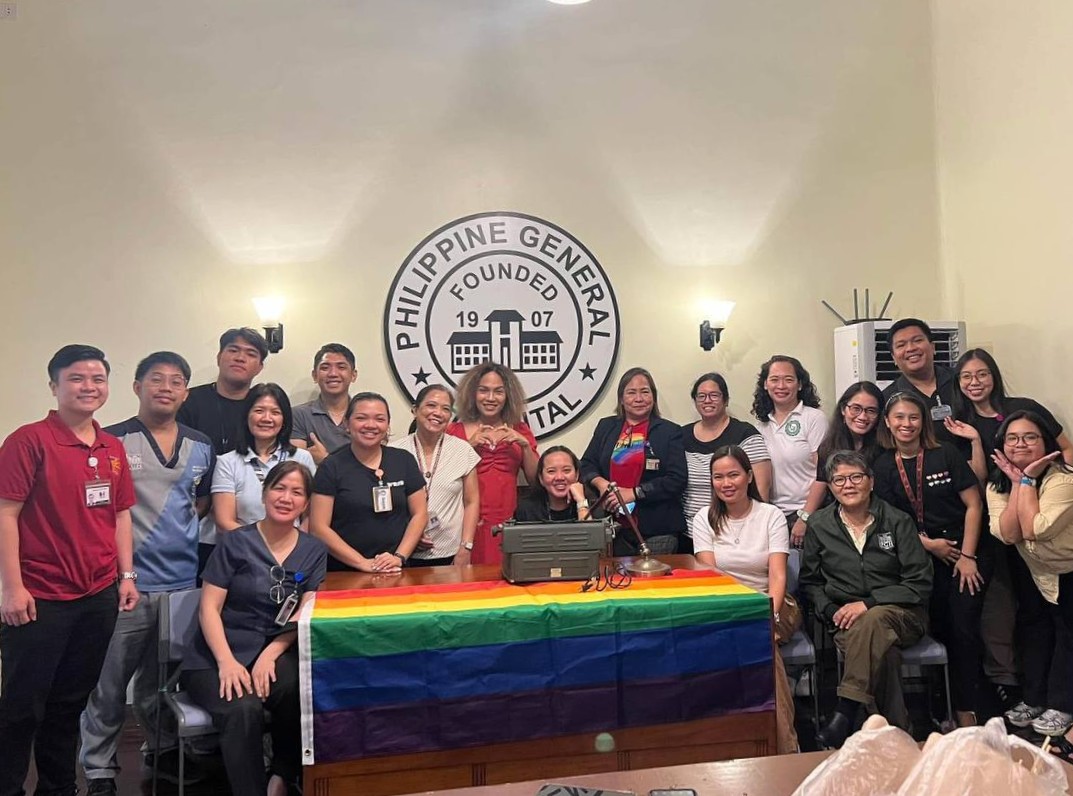
In trauma-informed care, there’s this concept of “holding space” or of being fully present for someone without judgment, without rushing to fix them or explain things away. It is about allowing people to be exactly who they are, with all their truth, pain, and strength. I think that is something UP Manila has started doing, but there’s still room to grow.
Holding space should not stop at symbols or statements. It needs to show up in the way we teach, treat, speak, and lead. It needs to be woven into the way we care for our students, patients, colleagues, and communities, especially those who’ve been made to feel invisible for too long.
At its core, healthcare is about dignity. And dignity starts with being seen in your full humanity. So this Pride Month, let’s not just raise flags. Let’s raise our standards, our questions, and our commitment. Let’s continue to build a university where every student, worker, patient, and professional, regardless of their SOGIE, feels safe, valued, and free to be who they are.
That’s the kind of UP Manila I want to belong to. And I hope it’s the one we all work toward together.
Opinion Article
Texts by Ziara Carmelli G. Tan, MD-MBA
Photos by PGH CARE Society and Ziara Carmelli Tan, MD-MBA
#FP1 #Environmentthatnurturesmindandbody