

Contributed by College of Medicine (Pharmacology)
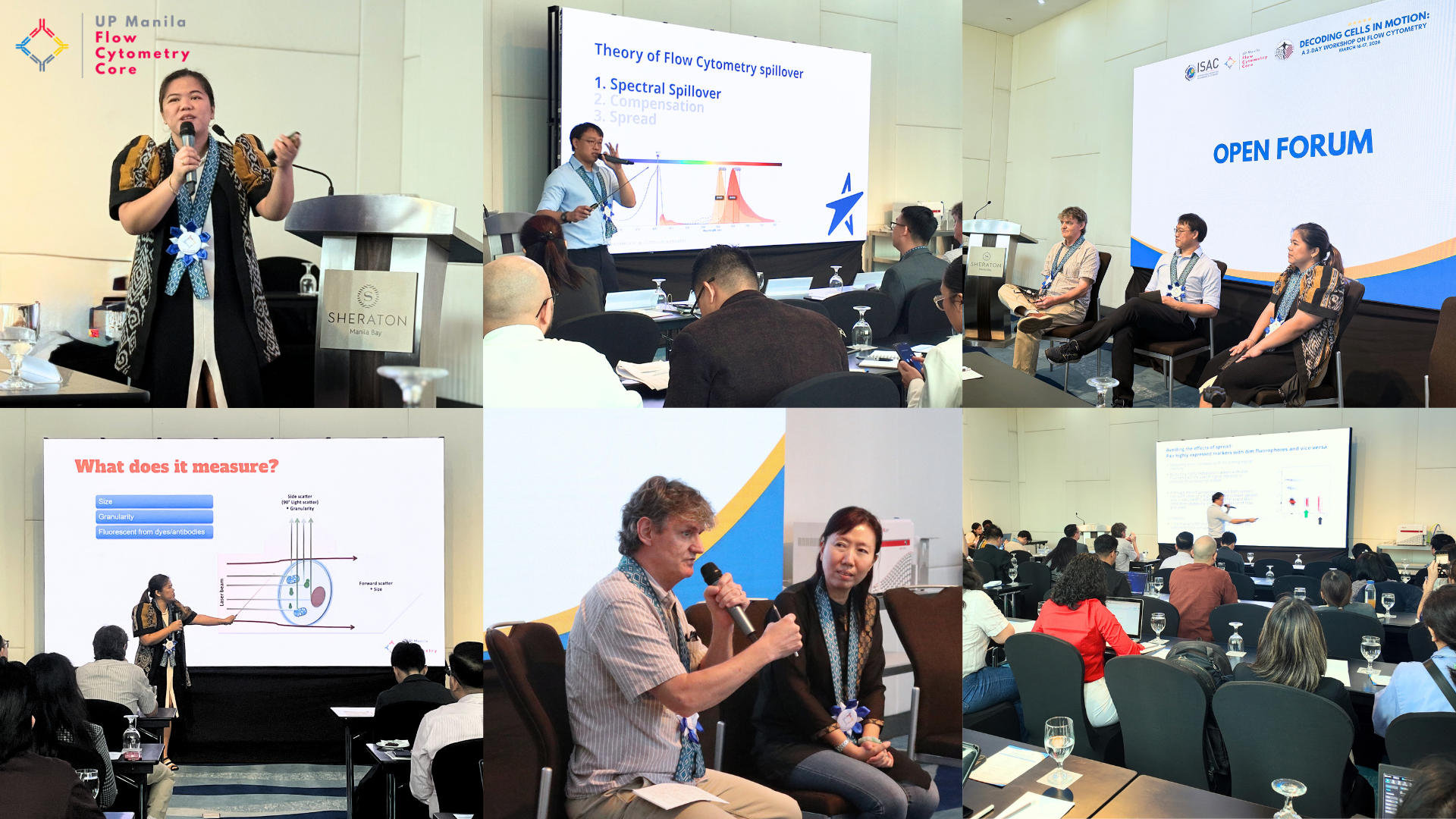
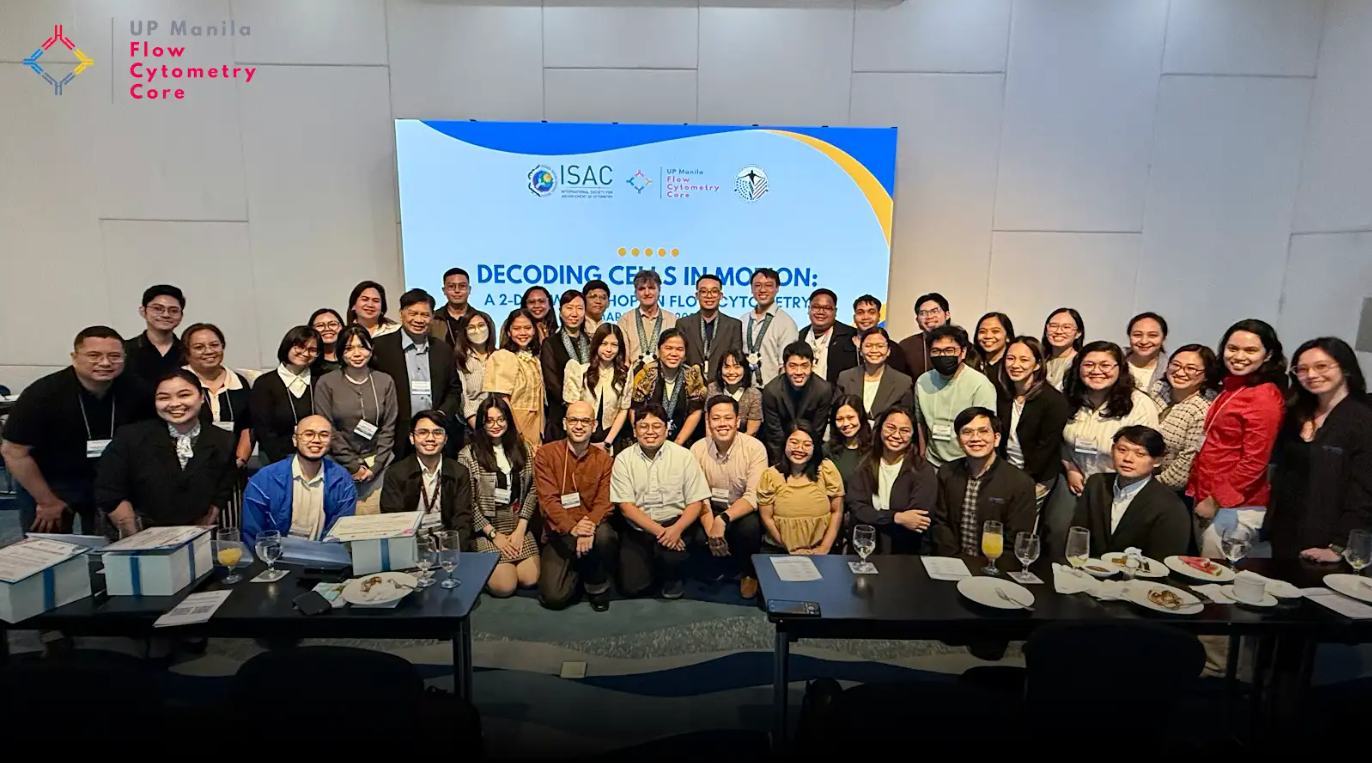
The UPM Flow Cytometry Core successfully conducted its first nationwide flow cytometry workshop titled “Decoding Cells in Motion: A 2-Day Workshop on Flow Cytometry,” held on March 16–17, 2026, in collaboration with the International Society for Advancement of Cytometry (ISAC).
Day 1 featured an engaging lecture series held at Sheraton Manila Bay, bringing together students, researchers, clinicians, and academicians from across the country. The speakers covered fundamental principles of flow cytometry, including panel design, compensation, post-acquisition analysis, and its applications in infectious diseases. They also provided an introduction to spectral flow cytometry and the detection of nanoscale particles, overall giving participants a comprehensive understanding of both traditional and advanced flow cytometry techniques.
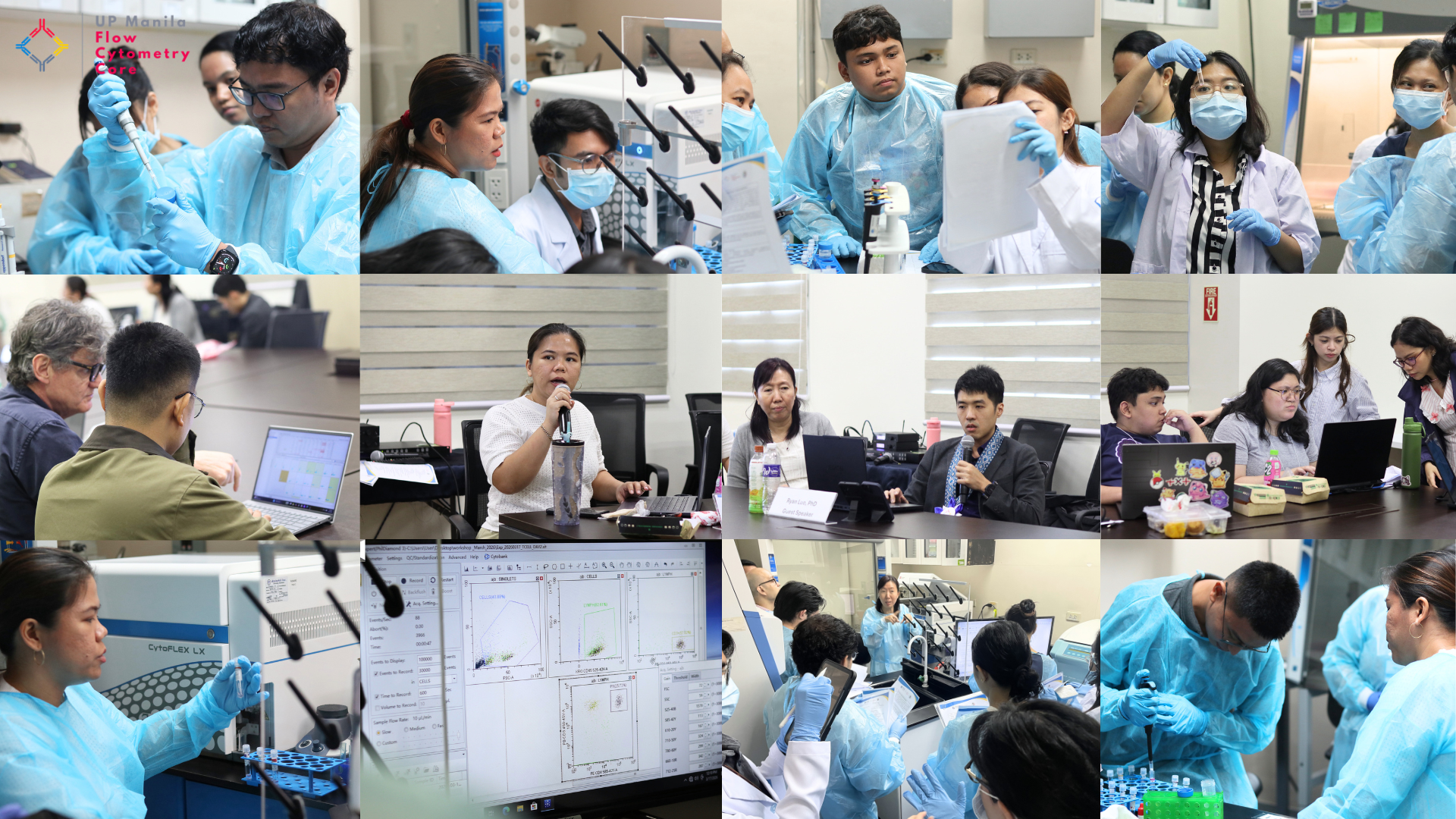
Day 2 of the hands-on training, held on March 17, 2026, was conducted in two batches at the UPM Flow Cytometry Core, National Institutes of Health Building. The laboratory session included hands-on small particle detection, 10-color compensation and 10-color T cell immunophenotyping experiments. This was followed by a FlowJo analysis session, where participants were guided through gating strategies, cell population identification, and data interpretation, as facilitated by Dr. Ana Joy Lozano.