
Text by: Jennifer Manongdo
Photos by: Sarah Hazel Moces Pulumbarit
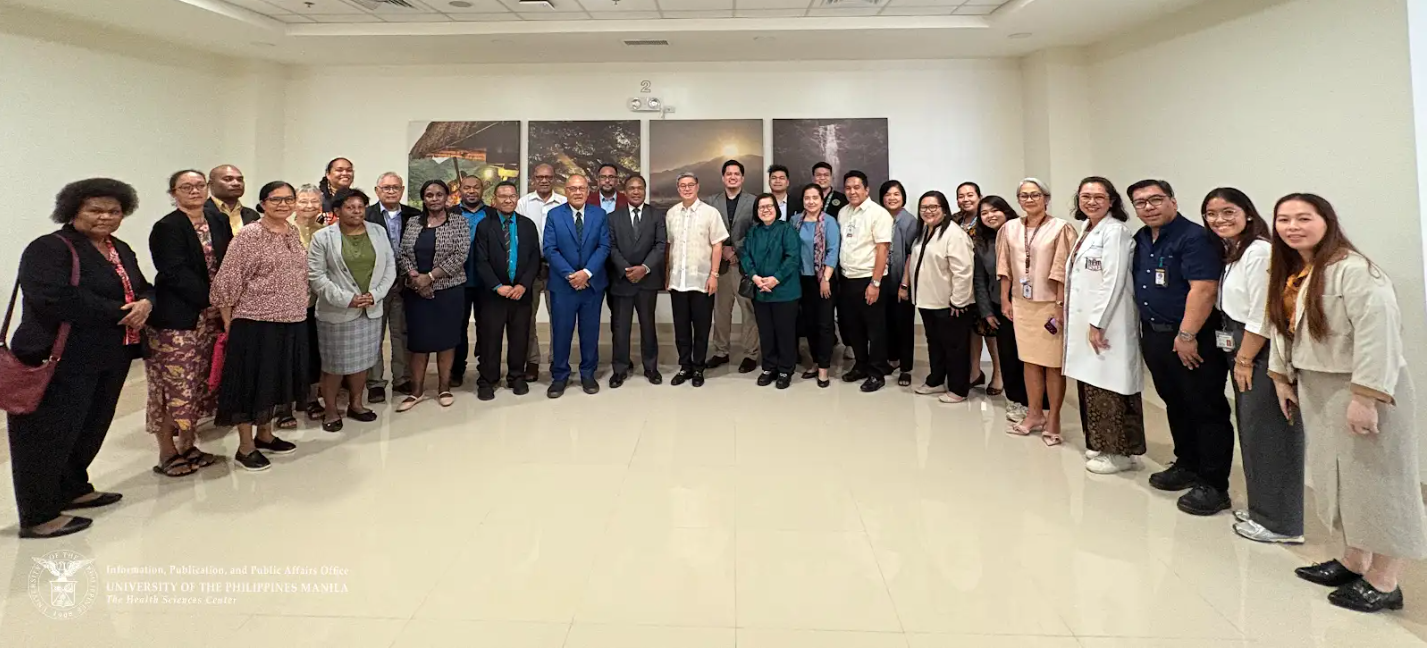
Officials from the University of the Philippines Manila and Papua New Guinea convened on April 21, 2026, for a future collaboration aimed at developing the island nation’s medical education and health workforce competencies.
The meeting builds on earlier discussions between Philippine officials and Papua New Guinea (PNG) counterparts at the World Health Organization Western Pacific Regional Office in Fiji in 2025. This gave way to a letter of intent signed by both countries seeking to formalize a memorandum of understanding on health cooperation.
PNG’s healthcare workforce is heavily reliant on foreign practitioners, a number of whom are Filipinos. “There are nurses practicing there. There are also some private doctors practicing and pharmacists…Manila is only five hours away. We have [traditionally been used] to talking to colleagues in Australia, the United Kingdom and the United States while we are just so close here. I think this is a great opportunity to share and build our capacity,” PNG National Department of Health Secretary Pascoe Kase said.
Officials are aiming to improve their student recruitment process at the School of Medicine and Health Sciences (SMHS) at the University of Papua New Guinea (UPNG) by admitting Grade 12 graduates and preparing them early for medical education. Kase said the institution is targeting the launch of its inaugural class by 2027, with an initial cohort of around 250 students. He said this number is not confined to medicine students but also to the fields of pharmacy, ambulance services, and related areas. This approach is aimed at addressing the growing demands in the health sector.
He also highlighted the need to recruit additional faculty members particularly in the fields of biotechnology, physiology, and anatomy. At present, they only have a limited number of experts: four anatomists, some retired surgeons, and a physiologist.
“Two-thirds of the teaching and academic staff has to be recruited. I believe [it seems to be an area] that could be explored with some of our Asian countries,” he said.
Dr. Lionel Peters of the Department of Health – Bureau of International Health Cooperation shared that a memorandum of understanding on health cooperation between the Philippines and Papua New Guinea is currently in its final stages of completion, with a focus on health workforce development, which he described as a “jumping point for collaborations.”
Meanwhile, Chancellor Michael Tee offered them assistance through UP Manila’s digital learning resource like the “UP HEAL” (Histology, Embryology, Anatomy, and Learning System Library), describing it as a valuable bridging tool for both students and faculty alongside courses in biochemistry and physiology. He also invited them to learn from UP Manila’s simulation-based medical education (SBME) which ensures patient safety and quality education as it allows students to gain realistic experiences through the use of high-fidelity manikin.
UP Manila also introduced the PNG health ministry to the SHS academic framework, an innovative curriculum which integrates midwifery, nursing, and medical education into a unified step-ladder program. This approach enables students to progress seamlessly through different academic and professional levels, equipping them with comprehensive skills while responding to the country’s evolving healthcare needs.
Also during the meeting, the deans of the colleges of public health, nursing, medicine, and dentistry delivered audiovisual presentations highlighting their programs, innovations, and areas for potential collaboration.
Read More:
#FP6