
Text by Gabrielle Velasquez
Photos by The Wave Studios PH
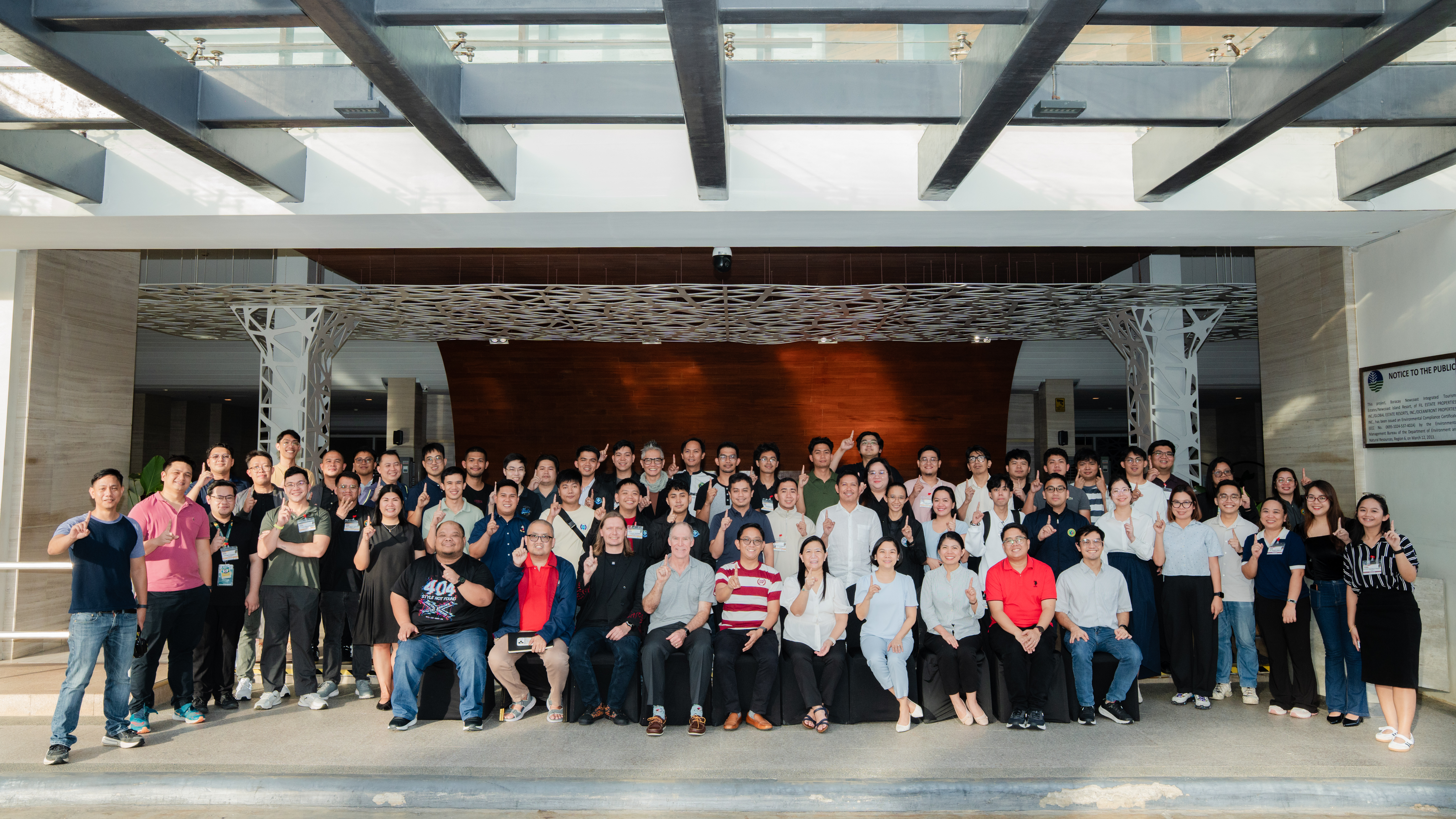
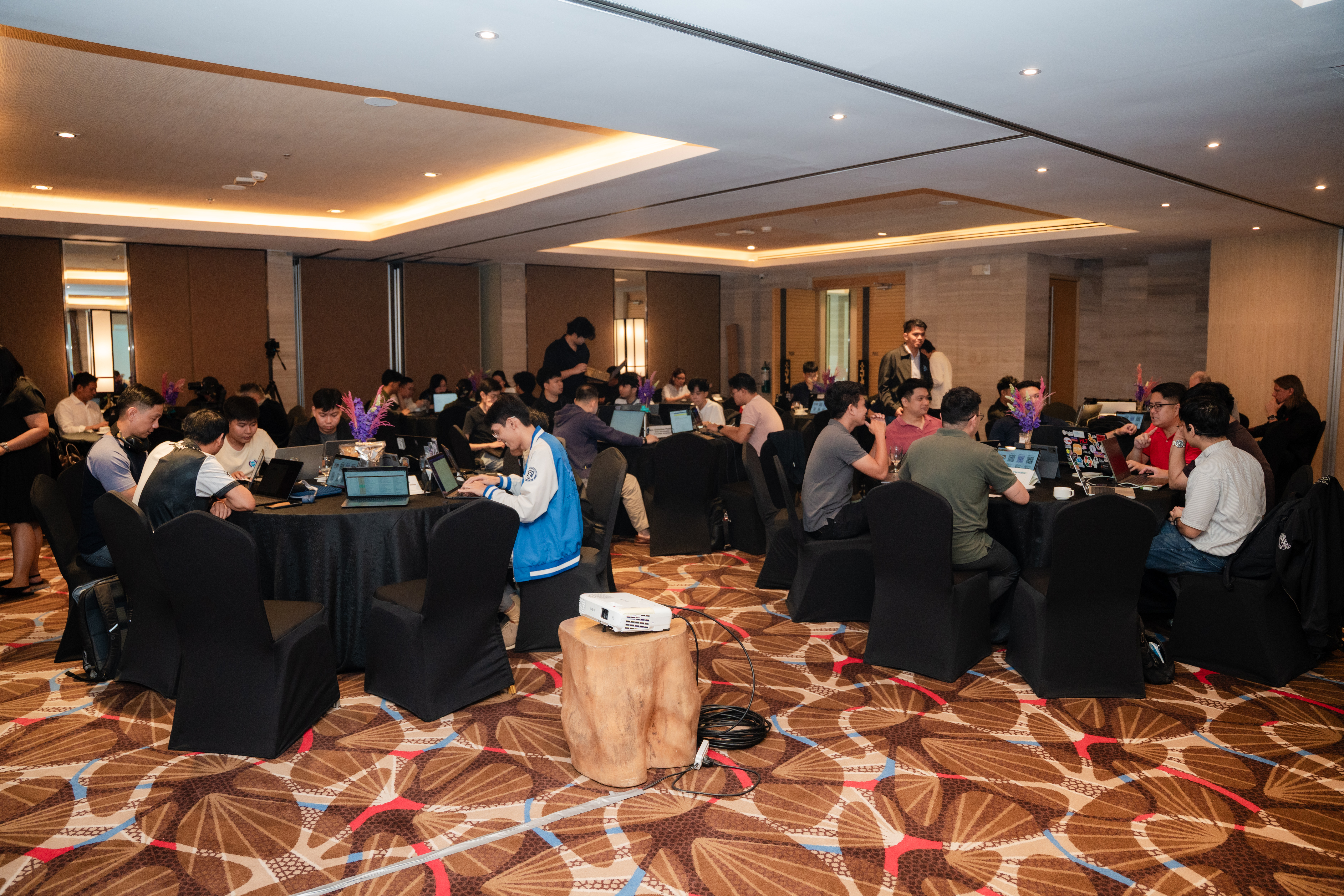
Thirteen electronic medical record (EMR) teams from across the Philippines for the Philippine FHIR® Connectathon, a three-day hands-on testing event where eleven of the participating systems successfully demonstrated live, end-to-end electronic referrals across a diverse mix of vendor and in-house platforms.
The Connectathon was convened by the University of the Philippines Manila National Telehealth Center (UP NTHC) to build, test, and validate the draft Philippine Core (PH Core) and Philippine eReferral (PHeReF) FHIR® Implementation Guides (IG) – the technical standards that allow different health information systems to exchange patient data reliably and securely.
Referrals that follow the patient
The centerpiece of the event was a series of live, system-to-system demonstrations in which EMRs exchanged real referral data through shared infrastructure. Using a synthetic clinical scenario – a pregnant patient with signs of severe pre-eclampsia referred from a rural health center to higher-level facilities – participating teams showed a complete referral journey: creation at a primary care facility, emergency transmission to a district hospital, and onward referral to an apex medical center.
Receiving facilities were able to retrieve the full referral package before the patient physically arrived, allowing clinical teams to bypass redundant registration and begin time-critical care immediately. The demonstrations spanned multi-tier referral chains across facilities in Aklan, South Cotabato, Iligan, Zamboanga, and Baguio, as well as direct vendor-to-vendor exchanges, with referral status changes propagating between sending and receiving systems in real time.
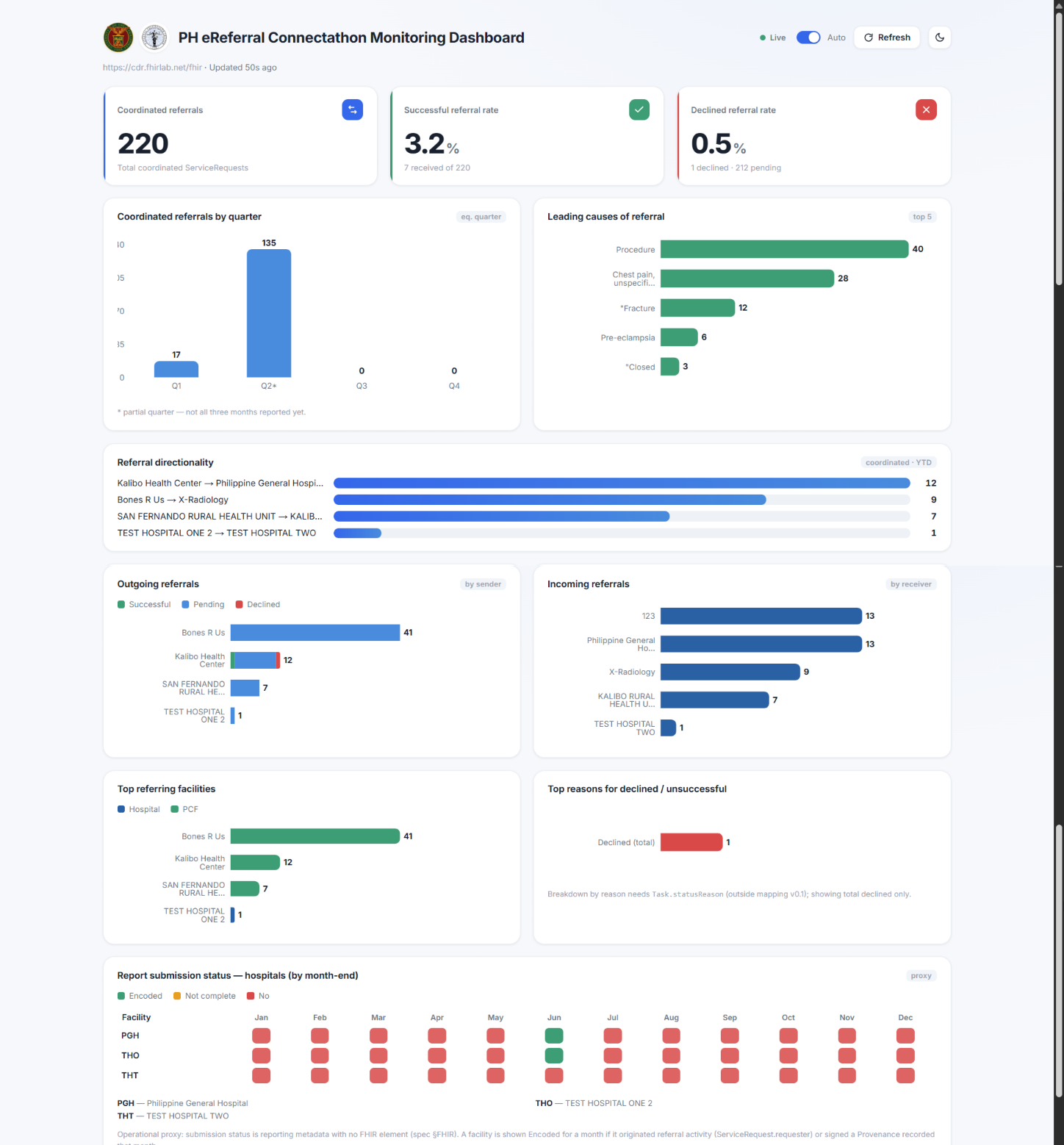
A governance-level dashboard was also shown, computing population-level indicators on de-identified, aggregated data (top referring facilities, reasons for referral, and acceptance rates) without exposing any individual patient record.
Director Arturo Ongkeko Jr. of UP NTHC, who provided technical commentary throughout the demonstrations, reflected that systems – which only days earlier could not communicate at all – are now exchanging real referrals across provinces and facility levels. He framed the week as a tangible step toward a Philippines where a person’s health record follows them wherever care takes them, so that no Filipino has to tell their story twice.
“We were able to exchange at the technical level using the IGs that we developed,” he said. “There are many elements that we need to discuss. I feel like we opened up a Pandora’s box, [and] there are a lot of opportunities also to improve this.”
A foundation for the Aklan health information exchange
The event was deliberately anchored in the lived realities of Aklan, a province of municipalities and barangays where continuity of care across distance remains a daily challenge. The Connectathon serves as the technical rehearsal for the Aklan Local Health Information Exchange (LHIE), which is moving toward a January 2027 eReferral prototype in the municipality of Ibajay and a phased provincial scale-up.
Provincial Health Officer Dr. Leslie Ann Sedillo framed the demonstrations as the first concrete step toward that pilot, renewing her call for EMR vendors to work as builders of one shared national system rather than as competitors.
Australian partnership and funding
The Connectathon is part of a multi-year collaboration under the Strengthening Standards Capability Project (SSCP), co-funded by CSIRO Australia and the Australian Government Department of Foreign Affairs and Trade (DFAT) through Australian Aid. The project is delivered in partnership with UP NTHC and in close collaboration with the Department of Health (DOH), the DOH Western Visayas Center for Health Development, and the Provincial Government and Provincial Health Office of Aklan.
CSIRO digital health specialists John Carter and Ilya Beda supported the teams throughout the event. Mr. Carter noted that the cohort had moved “from the servers didn’t work to all these incredible demos in just a couple of days,” confirming that the core technical capability is no longer in question; the work ahead is to make the exchanges progressively more complete and more real over the runway to the Aklan pilot.
Director Cherrie D. Esteban of the DOH Knowledge Management and Information Technology Service, speaking on behalf of Undersecretary of Health Albert Francis Domingo, called the work accomplished over the three days foundational. She observed that participants had come from different parts of the country yet had fulfilled a shared mission of connecting their systems, and affirmed that the workflows validated at the event would ultimately improve patient care, user experience, and system security nationwide.
About SSCP
The Strengthening Standards Capability Project (SSCP) is a multi-year initiative to advance standards-based digital health interoperability in the Philippines and across the Indo-Pacific. SSCP, housed at the UP NTHC, hosts connectathons, develops and tests national health data standards, and supports government digital health initiatives including the Philippine Core and eReferral FHIR® Implementation Guides.
FHIR® is a registered trademark of Health Level Seven International (HL7®). The PH Core and PHeReF Implementation Guides referenced are draft artifacts under active development and are not yet intended for production use.
Read More:
#FP6