
Text by: Charmaine A. Lingdas
Photos by: Sarah Hazel Moces S. Pulumbarit
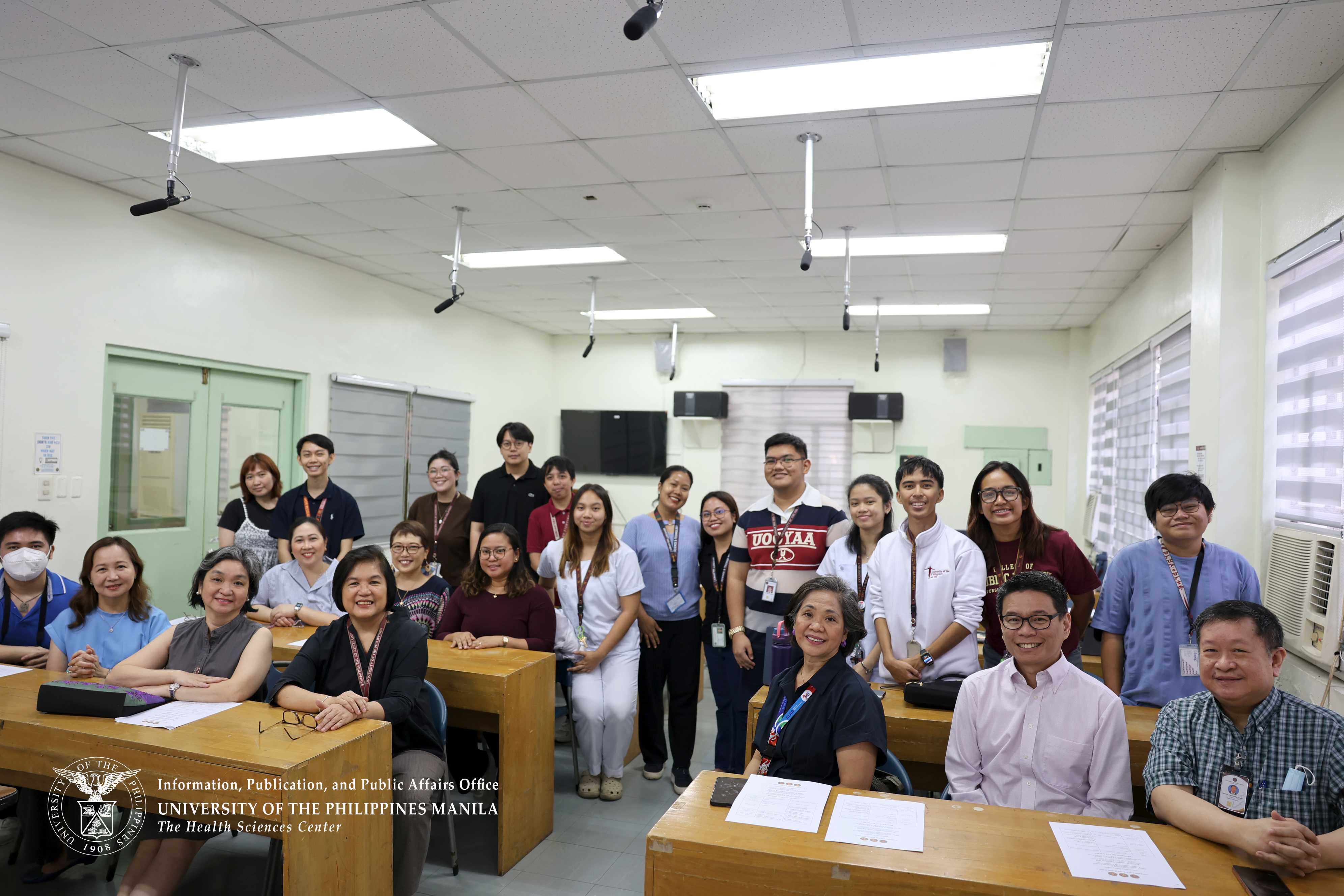
“NSTP is more than a course. What we want in UP Manila is maging malayo ang marating ng ginawa ninyo sa NSTP,” said Vice Chancellor for Research and Extension Leslie Michelle Dalmacio during the first-ever National Service Training Program (NSTP) Project Translation Workshop 2026: From Ideas to Impact on April 23 at the College of Public Health. She highlighted the value of NSTP outputs not only as learning tools but also as potential contributions to research, policy development, and intellectual property. She emphasized the need to add value to student and faculty work by guiding them toward publication, policy influence, and product development.
Organized by the UP Manila NSTP in collaboration with the Office of the Vice Chancellor for Research and Extension and the Research Management and Translation Office (RMTO), the workshop gathered faculty and student participants to explore how community-based projects can be translated into papers (manuscripts), policy briefs, and innovative products, collectively referred to as the “3Ps.”
Service Learning, Tatak UP Manila
Vice Chancellor for Academic Affairs Bernadette Heizel Manapat-Reyes called for a shift in perspective, framing NSTP as a sustained and meaningful form of service learning. She noted that UP Manila students engage in deeper and more continuous community work compared to short-term activities commonly seen elsewhere.
She emphasized that service learning should not be limited to one-day engagements such as medical missions or cleanup drives, but should involve clear learning outcomes, critical reflection, and lasting impact on communities. She also encouraged continuity in projects and a move toward multidisciplinary and interprofessional approaches to maximize impact. She also underscored the importance of aligning NSTP with other community-based programs to strengthen student competencies and service orientation.
According to Vice Chancellor Dalmacio, the university aims to instill a distinct ‘tatak UP Manila’ among its graduates, one that reflects meaningful community engagement and sustained impact. She stressed that NSTP initiatives should go beyond academic requirements and contribute to long-term community development.
Writeshop sessions
The workshop featured expert-led sessions on manuscript writing, ethical considerations, research integrity, policy brief development, and innovation. Participants also took part in writeshop sessions focused on drafting manuscripts and policy briefs.
Speakers included Publication Assistance Committee Chair Dr. Roland Dominic G. Jamora; Research Ethics Board Chair Dr. Cecilia A. Jimeno; Office of Research Integrity Director Dr. Jean Anne B. Toral; College of Public Health faculty member Dr. Romulo F. Nieva Jr.; and Technology Transfer and Business Development Office Director Dr. Lourdes Marie S. Tejero. They provided technical guidance on publication, ethics, policy writing, and product development.
A call to translate ideas into outputs
The workshop served as a call for participants to translate their ideas into tangible outputs that contribute to knowledge generation, policy improvement, and innovation, reinforcing the university’s commitment to public service and academic excellence.
NSTP Director Josephine Agapito described the workshop as a milestone for the program, citing insights from the NSTP Fair held on October 21–24, 2025, where student outputs showed strong potential for research, publication, and broader societal impact. She also acknowledged Vice Chancellor Reyes for her instrumental role in initiating the NSTP Fair.
“I am very happy that we are holding this workshop and deeply appreciate the support of our administration in making this possible. I am excited to learn a lot today and hope that our intended outcomes will soon become a reality,” Dir. Agapito said.
READ MORE:
#FP1 #discoveryandresearch