

Text by Charmaine A. Lingdas
Photos by Jericho Paolo L. Mabansag
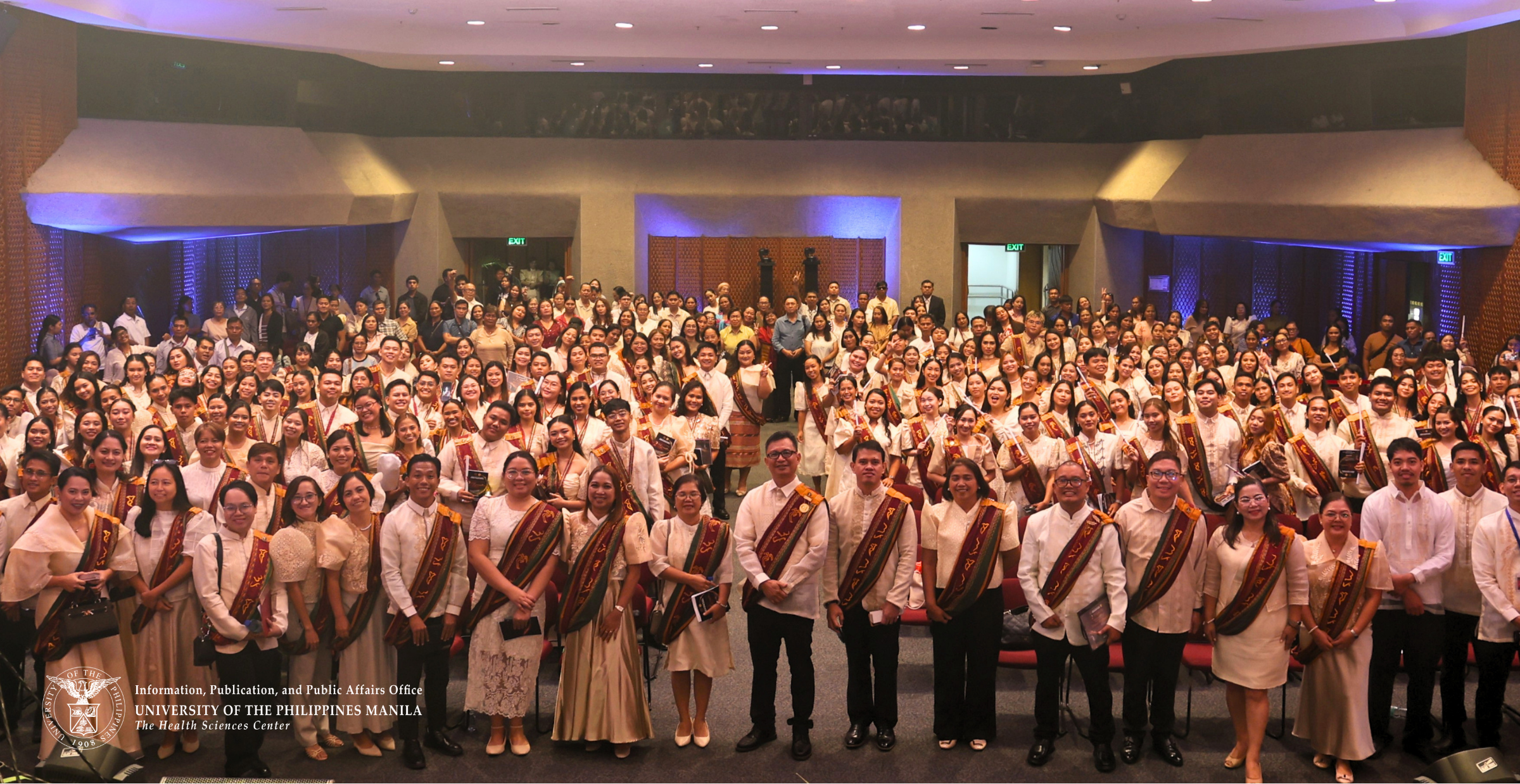
For Registered Midwife Jayvee Dotarot, the valedictory address she delivered before fellow graduates was not written in a quiet study room. It took shape while traveling for nearly two hours to a remote barangay in Samar, where she serves as a Department of Health midwife bringing essential healthcare services to underserved communities.
“UPM SHS gave me the courage to dream beyond what I thought was impossible. It gave me opportunities that shaped me not only into a healthcare professional but also into a person who believes that service is life’s greatest purpose,” she said during the 2nd UP Manila School of Health Sciences (SHS)-Wide Recognition Rites on Aug. 3, 2026, at the Philippine International Convention Center (PICC).
The event recognized graduates from the SHS campuses in Palo, Leyte; Baler, Aurora; Koronadal, South Cotabato; and Tarlac for completing the Diploma in Midwifery, Bachelor of Science in Nursing, and Doctor of Medicine programs. The ceremony also marked the 50th anniversary of the UP Manila School of Health Sciences, celebrating five decades of producing health professionals rooted in community service.
A Journey Shaped by Communities
Representing the graduating class, Dotarot reflected on growing up in a fifth-class municipality in Southern Leyte, where higher education once seemed beyond her reach. She credited UPM SHS for opening opportunities that changed the course of her life.
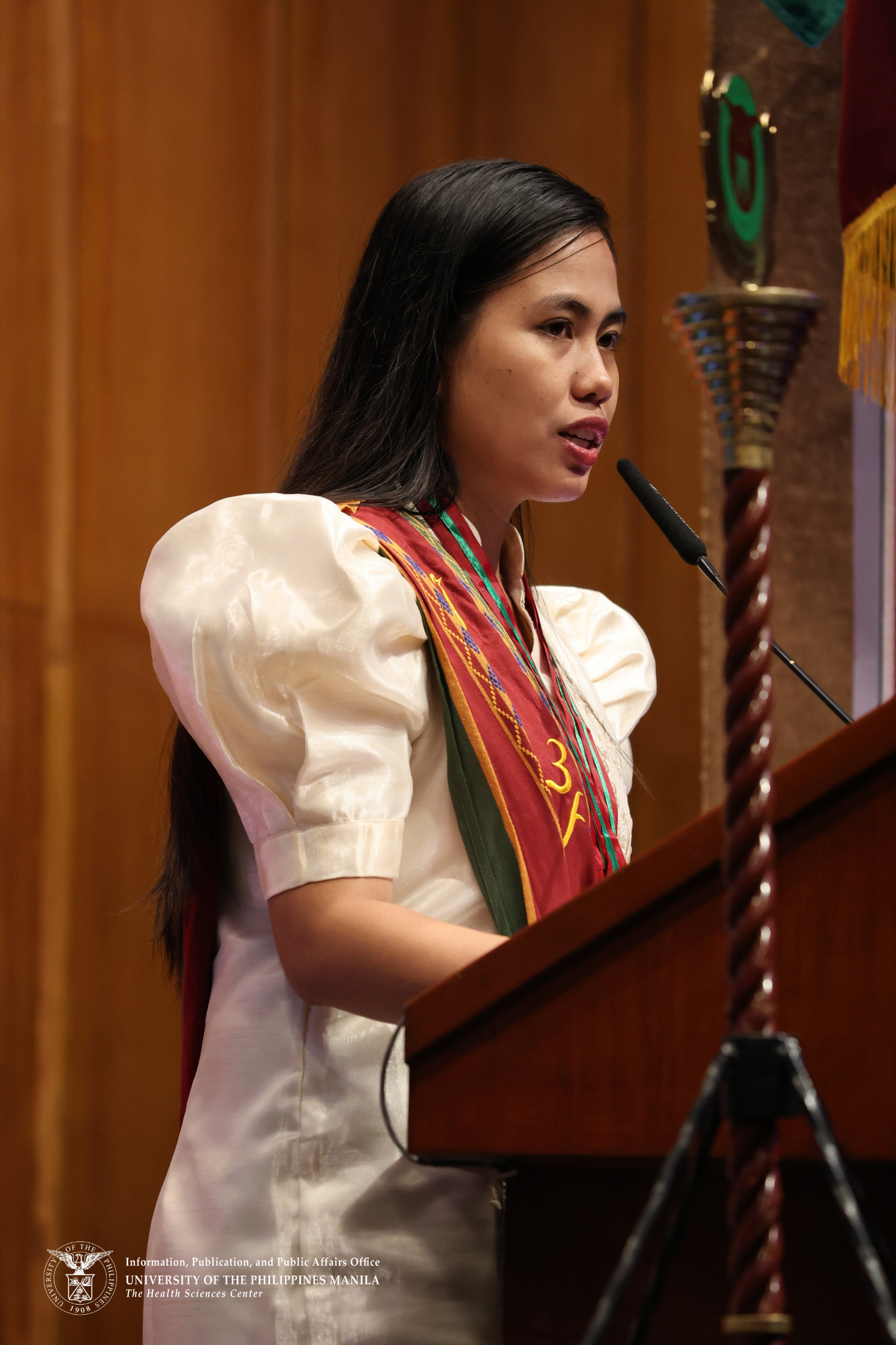
She expressed hope that opportunities like the ones SHS gave her would continue to reach young people from underserved communities.
“Umaasa akong ang mga may kakayahang tumulong ay hindi magsasawang magbukas ng mga oportunidad para sa mga estudyanteng tulad namin. Nawa’y patuloy na maabot ng UPM SHS ang mga kabataang nangangarap mula sa mga malalayong komunidad, tulad ng minsang pag-abot nito sa akin.”
Dotarot also looked back on her seven-year journey at the SHS Palo Campus, where she completed the school’s step-ladder curriculum from midwifery to nursing. Unlike most nursing programs in the country, SHS requires students to render community service after earning the Diploma in Midwifery before advancing to the next level of training.
“My journey in midwifery built the academic and practical foundation that became the stepping stone toward my nursing education.”
She emphasized that their education extended beyond lectures and clinical rotations, as students were immersed in communities from the beginning of their training.
“From the very beginning, we were immersed in community engagement. We learned to integrate ourselves into communities, establish rapport with the people, and understand that healthcare is best learned not only inside classrooms but through real-life experiences.”
The experience, she said, taught her that SHS is more than an academic institution; it is a lifelong community of health professionals. Wherever she has been assigned, whether in Leyte or Samar, she has encountered fellow UPM SHS graduates, some of whom have spent decades serving their communities. Those encounters, she said, remind her of the mission they all share.
“We carry the same mission of serving communities.”
A School That Dared to Be Different
Serving as keynote speaker, Dr. Fely Marilyn E. Lorenzo, one of the pioneers who helped establish the School of Health Sciences, reminded graduates that SHS was founded to address inequities in healthcare by preparing health professionals committed to serving communities most in need.
“Dare to be different with meaning, for a purpose,” Lorenzo challenged the graduates.
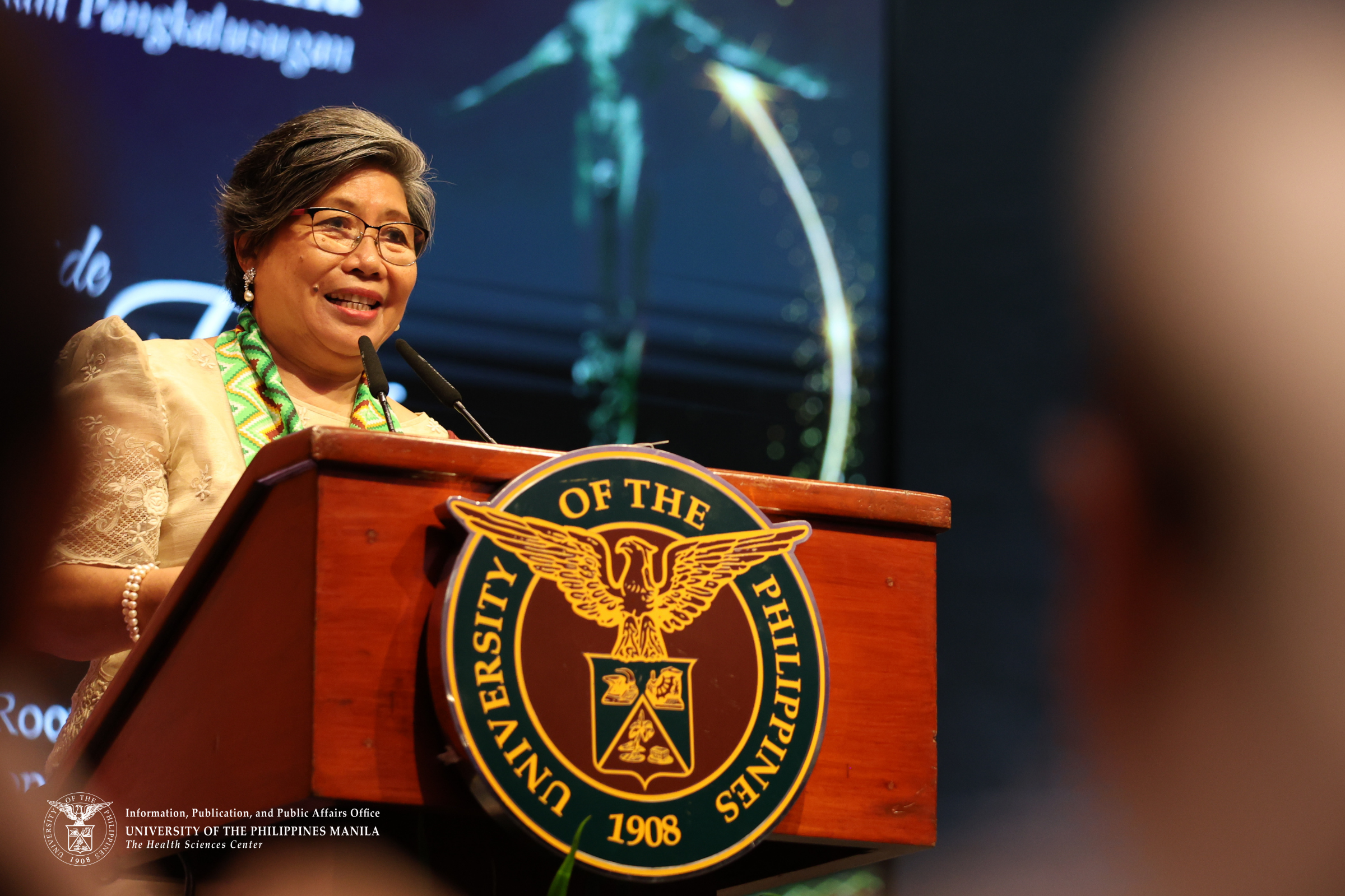
She recalled that when the school was established in 1976, it introduced innovative approaches to health professions education, including competency-based assessment and a community-based curriculum that would later gain international recognition.
Lorenzo said SHS was built on two core principles: that everyone is educable and that true excellence is measured by meaningful service to communities. Rather than selecting students solely through academic examinations, the school recruits scholars nominated by underserved communities, believing they are most likely to return and serve where they are needed.
Despite early skepticism, she said, SHS graduates have consistently demonstrated their competence by passing licensure examinations and excelling in their professions. Over the past five decades, SHS has produced around 5,000 licensed health professionals, including approximately 1,500 midwives, 1,379 nurses, and 260 physicians, while maintaining an estimated 80–90% retention rate in the Philippines.
She pointed to graduates such as Nonette, who overcame academic challenges to become an award-winning midwife, and Dr. Nilda Makiling, who served her community for 20 years before seeking permission to leave, as examples of the school’s enduring commitment to public service.
Lorenzo called on UP Manila to strengthen and expand the SHS model across more regions of the Philippines, arguing that its community-based, primary healthcare approach should become the standard for health sciences education rather than conform to conventional curricula.
“Ang excellence ay ang relevance—kung nakakatulong ka sa iyong komunidad, kung ikaw ay naa-appreciate ng iyong komunidad, at, higit sa lahat, kung ikaw ay naroon para sa iyong komunidad. That is excellence.”
Recognizing Excellence Across Campuses
The recognition rites celebrated graduates who demonstrated excellence in academics, clinical practice, leadership, research, and community service.
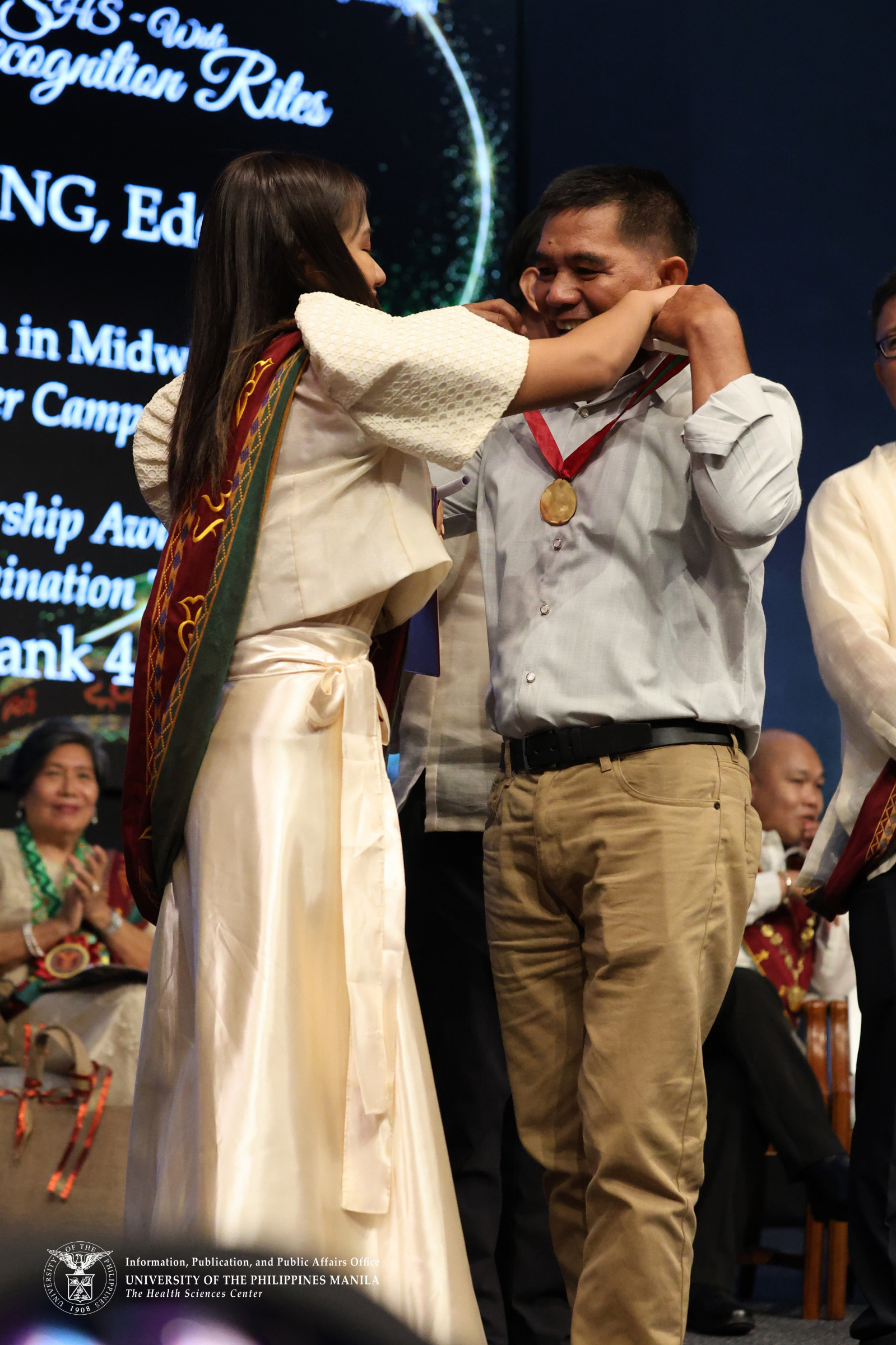
Dotarot received the Academic Excellence Award for the Bachelor of Science in Nursing program at the Palo Campus before delivering the response on behalf of the graduating class. Academic Excellence Awards were also presented to Kryzza Jkah Ramalla (Diploma in Midwifery, Palo), Marie Chris Valdez (Palo), Franzane Laurine Sibolinao (Koronadal), Kathleen Tabucol (Tarlac), Cyrine Catusalem (Bachelor of Science in Nursing, Baler), and Khloe Belle Lejisma (Koronadal).
The Best Clinical Performance Award was conferred on Jeliane Gargantilla, Rochelle Toledo, Jamaicah Myce Julie, and Daruel Samgelo Naelgas for the Diploma in Midwifery program, while Mylene Docena, Faye Corinne Abnasan, and Ivy Joy Tenorio were recognized in the Bachelor of Science in Nursing program.
Excellence in community immersion was recognized through the Best in Community Practicum Award, presented to Jasper Ian Patiga, Lyka Leiz’l Angeli Pagbilao, Jerald Fajutag, and Chedylyn Santos for the Diploma in Midwifery program, and to Rona Fe Cepris, Nicole Mortel, and Jobert Lawas for the Bachelor of Science in Nursing program.
Leadership awards were presented to Ivan Joseph Pedrera, Eden Sakiting, Zyra Belinario, and Athea Vienice Miranda for the Diploma in Midwifery program, and to Judd Aeiou Bolatete, Jun Dimson Esteva, and Lalaine Doroteo for the Bachelor of Science in Nursing program. In the Doctor of Medicine program, Wilmary Capoquian received the Community Leadership Award for exemplifying community-oriented medical service.
Outstanding student research was likewise recognized through the Best Community Research Awards. At the SHS Palo Campus, Carl Alain Bernardo, Rona Fe Cepris, and Jayvee Dotarot were recognized for their study, Factors Affecting the Preferences on Accessing HIV Testing Facilities Among Young and Middle-Aged Adults in the Visayas Islands: A Cross-Sectional Quantitative Study. At the Baler Campus, Faye Corinne Abnasan, Giesel Faith Bayachan, Cyrine Catusalem, Garmelyn Cayao, Cherry May Lucio, and Jhela Mae Pacleb received the award for Knowledge, Attitude, and Practices Towards Vaccination among Indigenous Communities in Dipaculao, Aurora: A Cross-Sectional Study. The same study was also recognized at the Koronadal Campus, where it was conducted by Lieca Angelica De La Peña, Kris Angela Guerrero, Jobert Lawas, Orly Jhon Magbanua, and Jerluyde Piñas. Meanwhile, Doctor of Medicine graduates Arsheil Gudia, Zeny Jean de los Reyes, and Irian Jaya Bungalan were honored for Alang-alang Heroes Against Tuberculosis (AHA TB): Empowering Community Health Team Members to Effectively Implement the End TB Strategy, which highlighted community empowerment in tuberculosis control.
A Legacy That Continues
Looking beyond the school’s first five decades, university leaders challenged the Class of 2026 to carry the SHS mission into communities where quality healthcare remains out of reach.
UP President Atty. Angelo Jimenez described the School of Health Sciences as one of the University of the Philippines’ most transformative programs, saying its community-based, step-ladder curriculum prepares graduates not only to excel in their professions but also to serve where they are needed most. He urged the graduates to go beyond what is expected of them in the service of others.
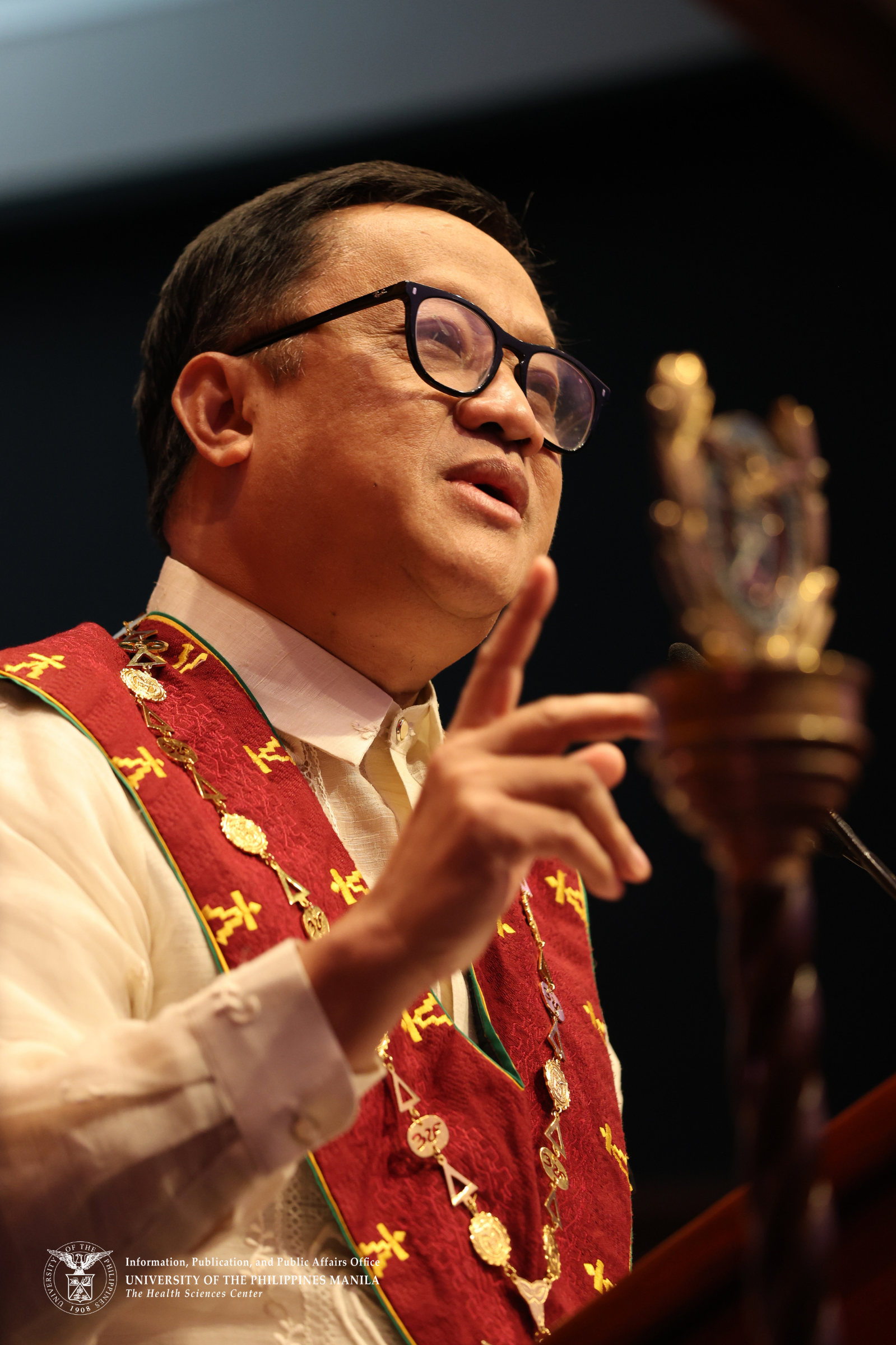
“Leadership can be demonstrated and displayed in the quiet corners of our country, where people are needed most—where no one sees what you’re doing except perhaps you and God. Every life touched by the hand of care from you is a miracle of existence itself.”
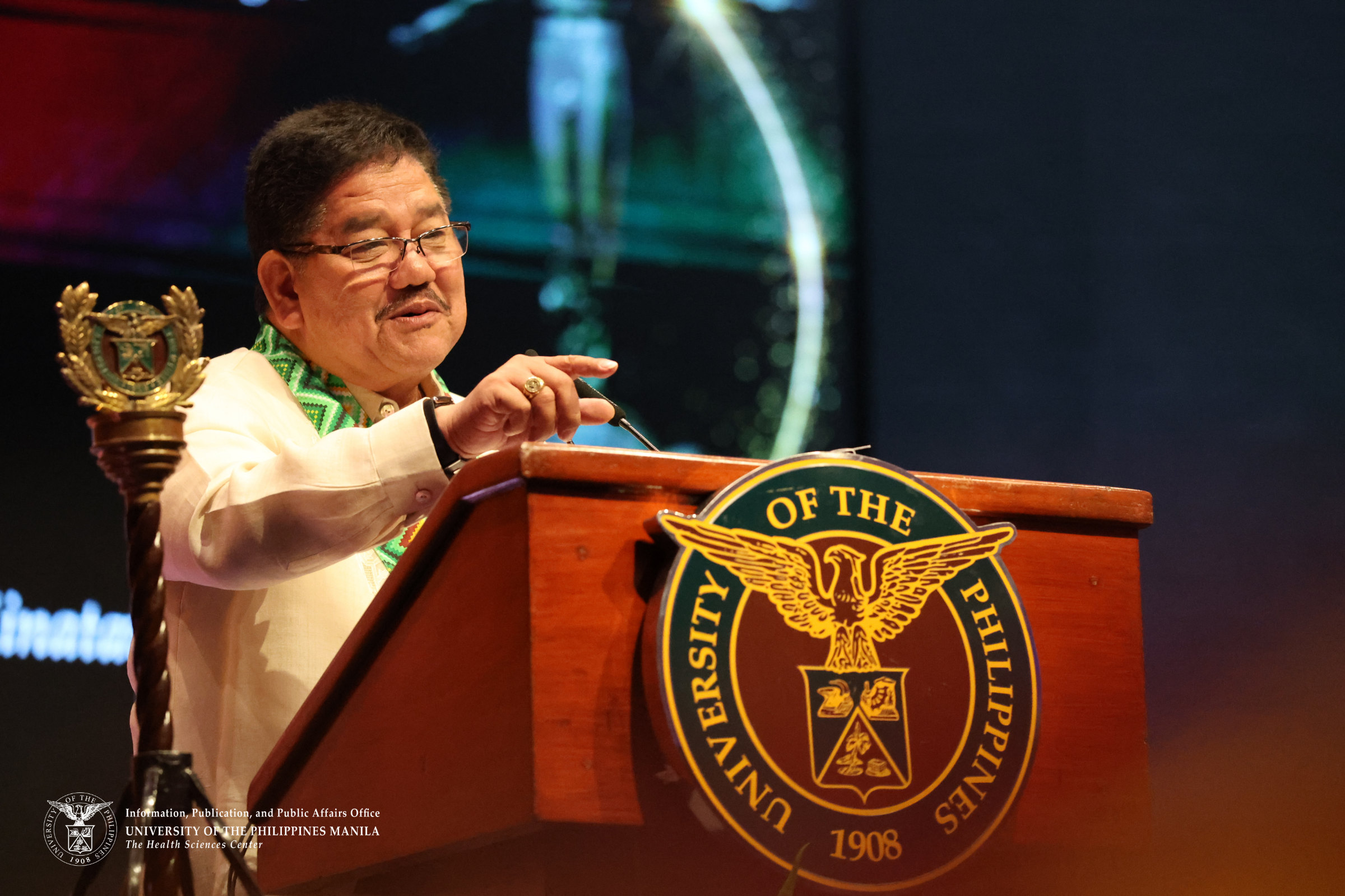
“Your knowledge can change lives. Your presence can give hope. Your service can transform entire communities.”
Faculty Regent Erly Sol Gadong called on the graduates to return to the communities that nurtured them while urging institutions to continue supporting SHS graduates through safe workplaces, professional development opportunities, fair compensation, and enabling conditions that would allow them to flourish as health professionals.
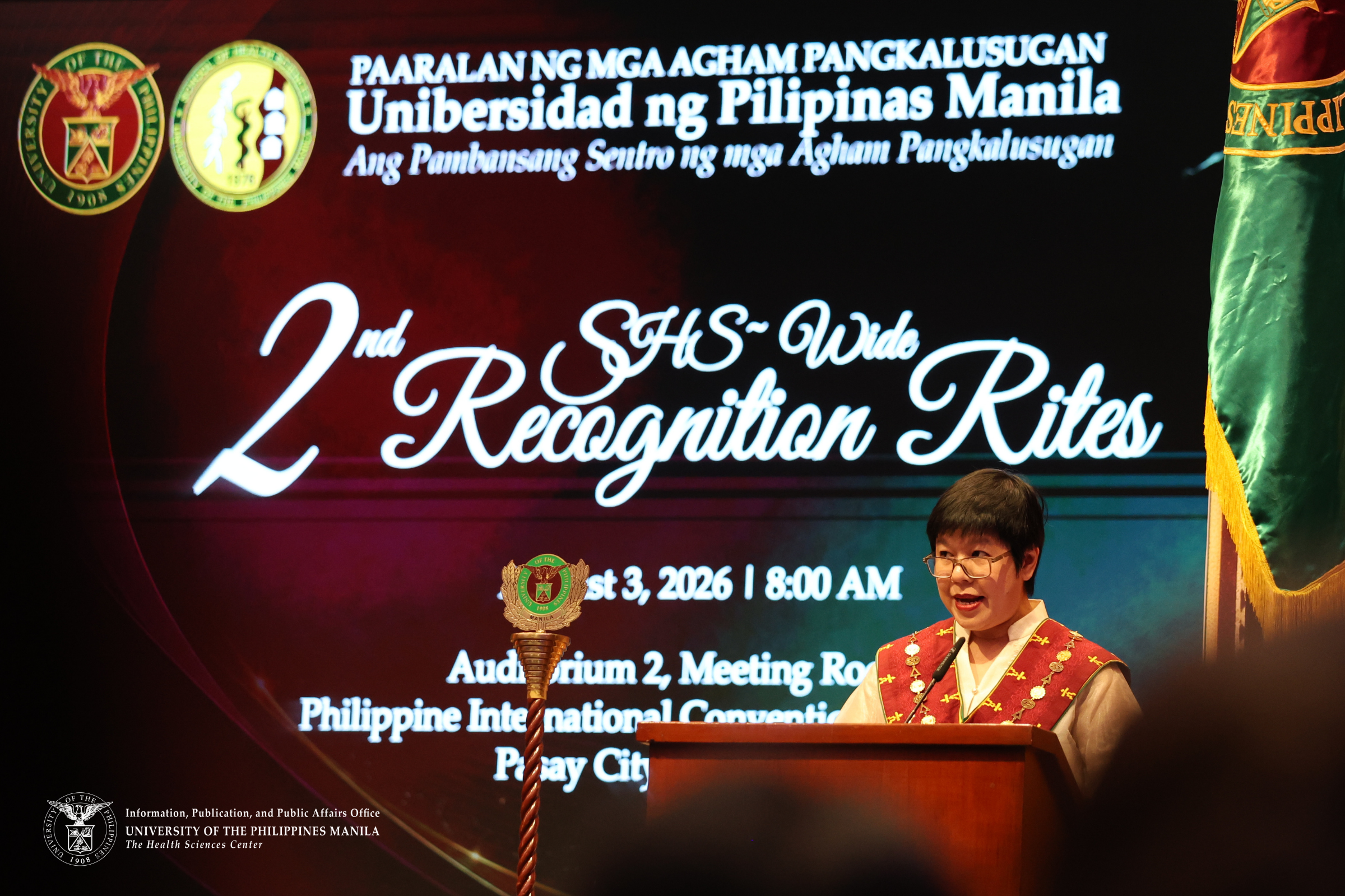
“Sana ay mabigyan kayong lahat ng pagkakataong maglingkod sa mga komunidad na inyong pinanggalingan, dahil doon kayo pinakakailangan.”
As SHS enters its next 50 years, the challenge to the Class of 2026 was clear: to continue building on a legacy of community-oriented health professions education by serving where they are needed most and ensuring that the school’s mission endures through the lives they touch.
#UniversityofthePhilippines #UP #UPManila #UPM #FP1 #innovationsforlifelonglearningdedicatedtoservice
READ MORE: