

Text by Charmaine A. Lingdas
Photos by Sarah Hazel Moces S. Pulumbarit
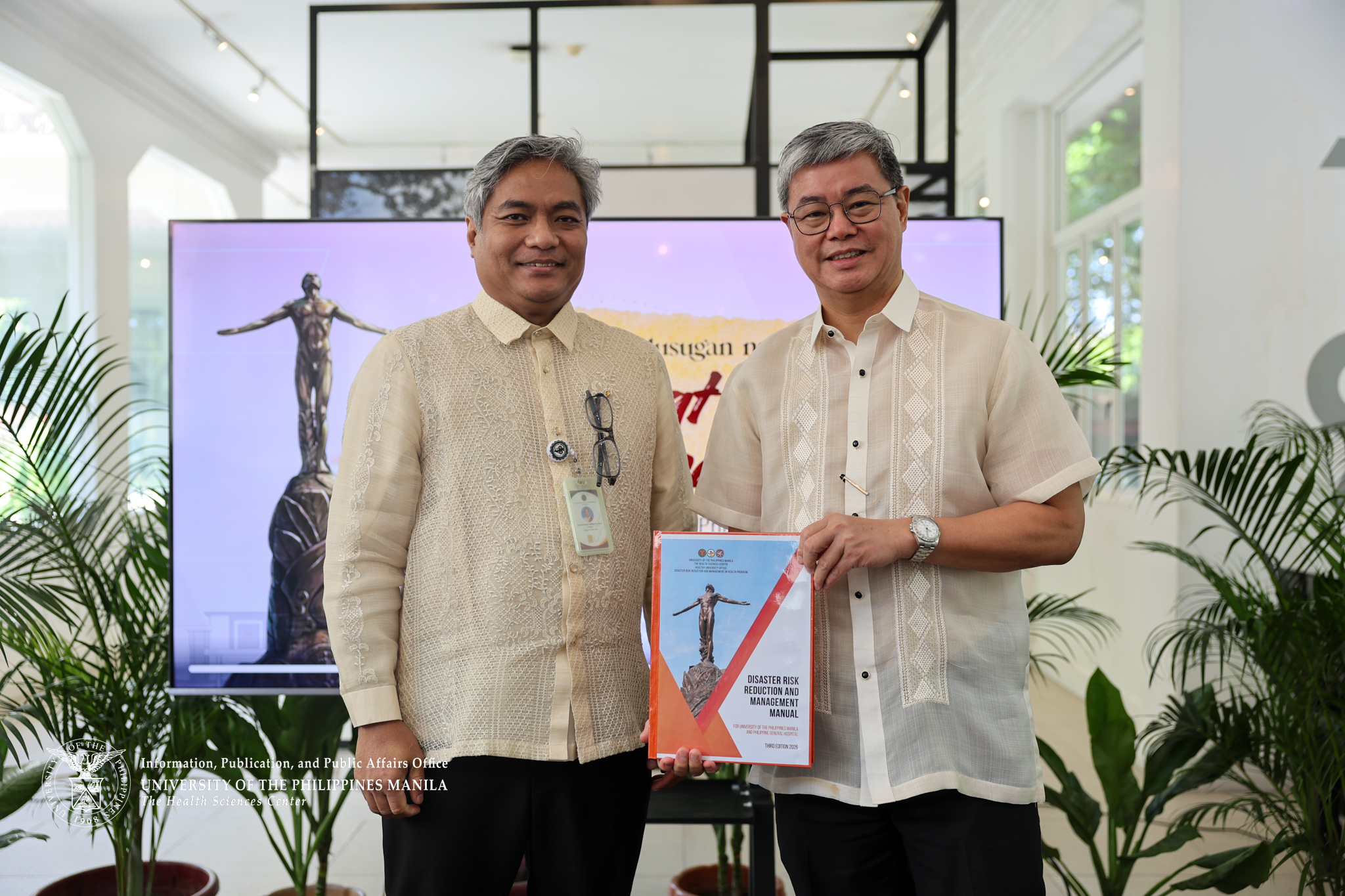
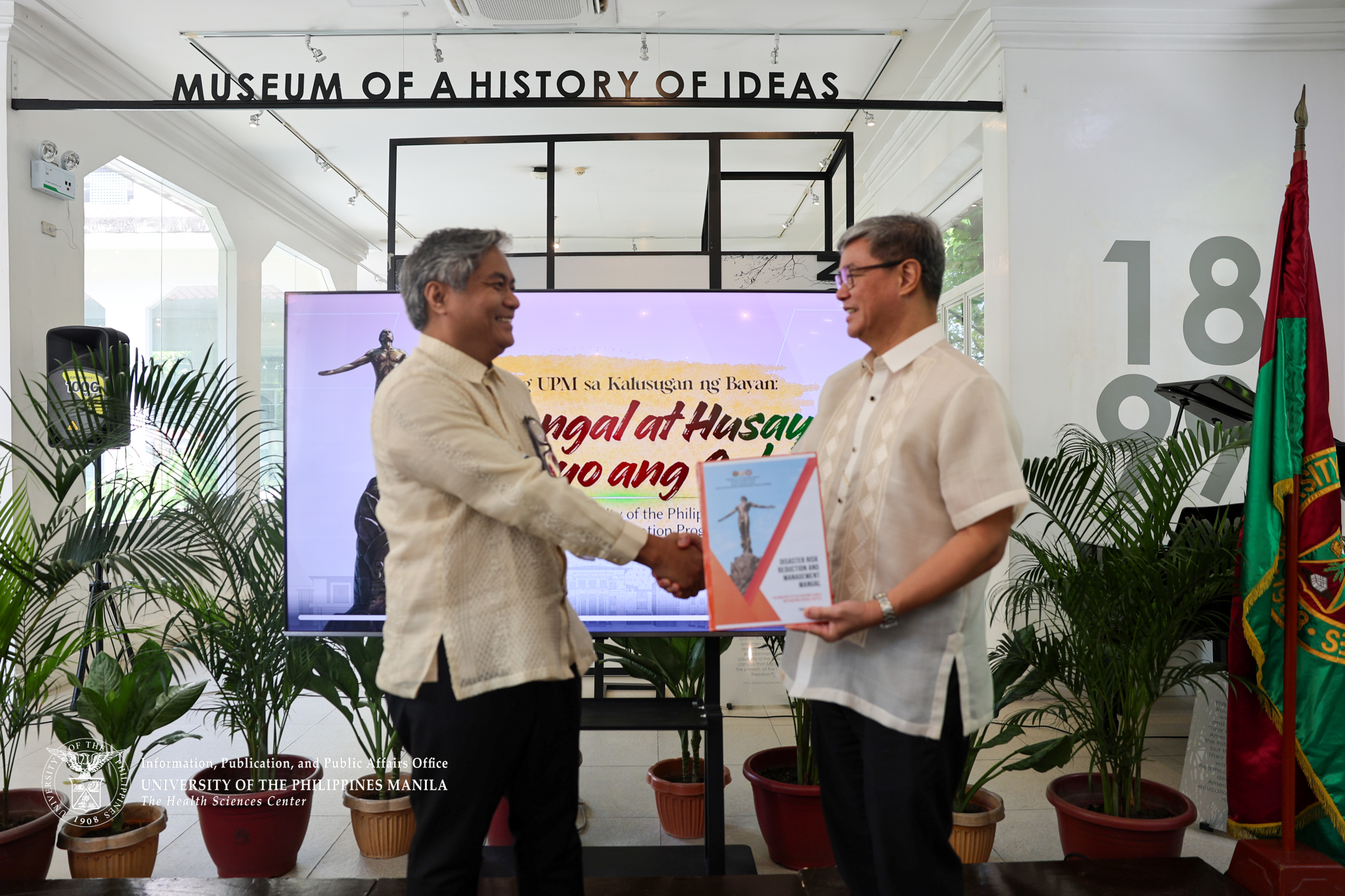
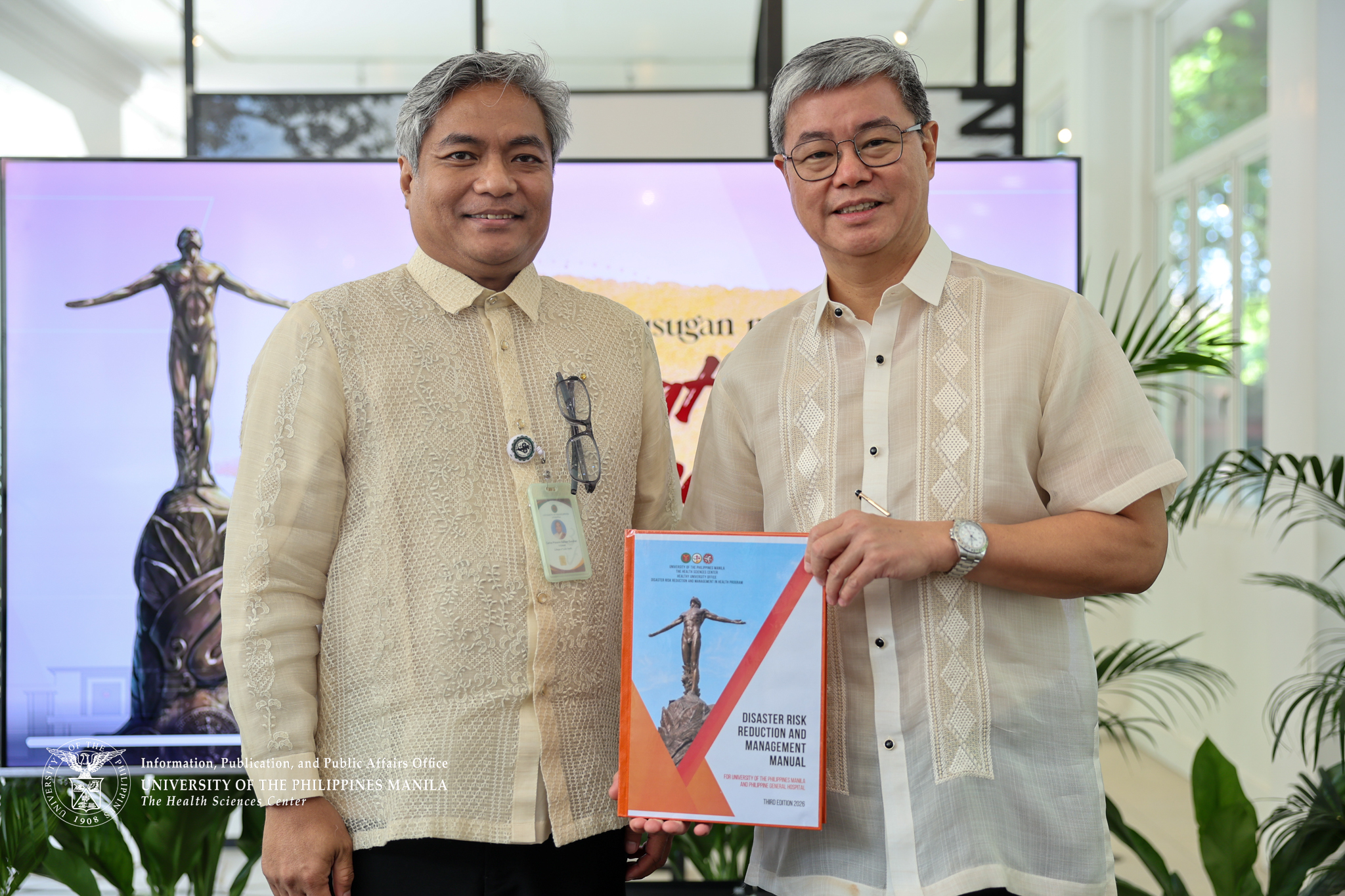
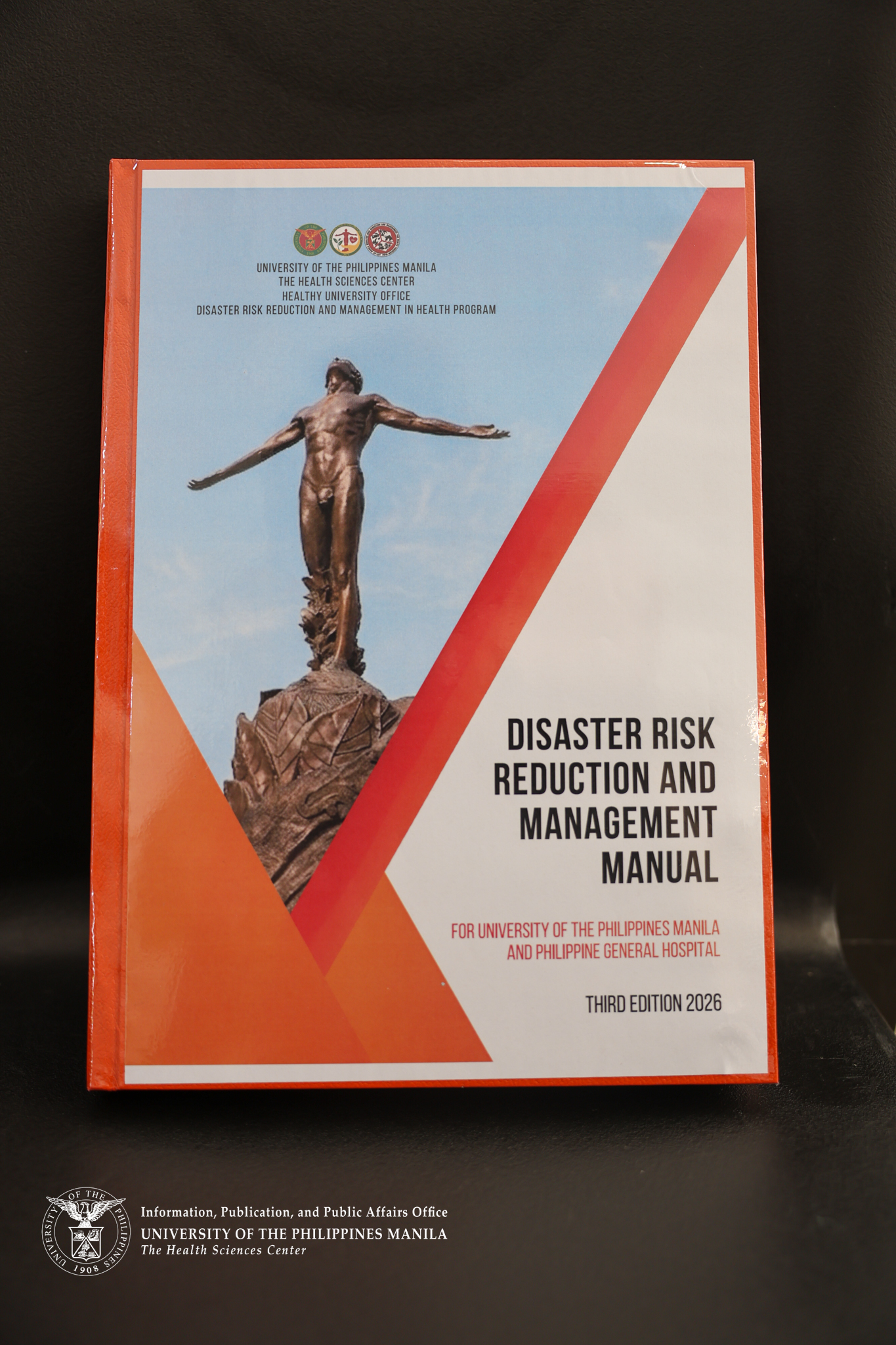
The University of the Philippines Manila (UP Manila) officially launched the third edition of its Disaster Risk Reduction and Management (DRRM) Manual during the opening ceremony of the 118th UP Foundation Celebration on June 16, 2026, at the UP Manila Museum of a History of Ideas. The launch highlighted UP Manila’s continuing efforts to enhance its disaster preparedness systems and serve as a model for other higher education institutions.
The Disaster Risk Reduction and Management (DRRM) Manual for the UP Manila and the Philippine General Hospital (PGH) serves as a practical guide for mitigation and prevention, preparedness, response, and post-disaster recovery and rehabilitation.
“Maraming krisis sa Pilipinas, pero kung alam natin kung paano kumilos at maghanda, nagiging kaya nating i-manage ang mga ito para hindi mauwi sa mas malalang sakuna. Kaya mahalaga ang disaster preparedness—para maagapan ang krisis at mabawasan ang mga disaster incidents sa bansa. Dapat handa tayo upang ang ating pagtugon ay hindi bara-bara, kundi organisado, maayos, at mas epektibo,” said Dr. Carlos Primero Gundran, head of UP Manila Disaster Risk Reduction and Management in Health Program (DRRM-H).
Evolution of the DRRM Manual
The newly released manual is the third edition of UP Manila’s disaster risk reduction and management guide, reflecting more than a decade of institutional experience and continuous improvement. The first edition was developed in 2012 during the term of then Chancellor Manuel Agulto and was considered the first DRRM manual created by a university in the country, making UP Manila a pioneer in disaster preparedness and risk management among higher education institutions. The manual was first updated in 2021 during the COVID-19 pandemic.
The latest edition of the manual introduces substantial updates aimed at strengthening disaster preparedness and emergency response across the university. One of its key enhancements is the inclusion of job action sheets, which provide clear and specific guidance on the duties and responsibilities of every member of the emergency response team during disasters and other emergencies.
Dr. Gundran explained that each position now has a corresponding guide that outlines the actions expected of personnel assigned to critical roles. This allows responders to quickly understand their responsibilities and carry them out effectively during an incident. The job action sheets cover all members of the emergency response team, from incident commanders to other designated responders. He added that these job action sheets were adapted from the disaster plans used at the Philippine General Hospital and were modified to suit the needs and operational structure of a university setting.
The manual also includes updated information on various hazards and emergency scenarios. Dr. Gundran noted that the guide covers basic disaster concepts, the Incident Command System, emergency response team structures, and protocols for responding to fires, typhoons, earthquakes, floods, chemical incidents, biological hazards, radiological and nuclear events, and hazardous materials.
A key component of the manual is the continuity of operations plan, which outlines how UP Manila can sustain essential services during major disasters.
“Part ng UP Manila is PGH. Ang PGH dapat nagko-continue siya ng operations maski anong disaster ang mangyayari,” he said. He explained that the plan identifies resources that can be mobilized across UP Manila’s constituent colleges, including personnel from the Colleges of Nursing, Pharmacy, Medicine, Public Health, and the Allied Medical Professions, to support hospital operations during emergencies.
Accessibility and System-wide Adoption
Dr. Gundran also expressed hope that the manual would be adopted by other campuses within the University of the Philippines System. To increase accessibility, UP Manila plans to make the manual available online, continuing the practice established with the second edition. He added that making the manual publicly available can further position UP Manila as a leader in disaster risk reduction and management.
A Collective Effort Toward Resilience
Dr. Gundran acknowledged the support of Chancellor Michael Tee, Vice Chancellors, the Department of Science and Technology (DOST), members of the crisis committee, emergency response teams, and faculty and staff across the university who contributed to the development of the manual and the implementation of disaster preparedness initiatives.
The third edition of the DRRM Manual was edited by Dr. Irma Makalinao and Dr. Nemuel Fajutagana. It was developed through the contributions of multiple experts from UP Manila and partner institutions, reflecting a wide range of expertise in disaster risk reduction, emergency response, and public safety.
Contributors include experts from the College of Public Health, Dr. Perla Sarausad Macaraeg, Dr. Carlos Primero Gundran, and Prof. Marohren Altura; the College of Medicine, Mr. Fevito Obidos Jr.; the College of Dentistry, Dr. Tristan Nathaniel Ramos; and the National Institutes of Health, Ms. Carlota Surat. Atty. Ruel Nario of the UP Manila Chief Legal Office also contributed legal expertise to the manual. From PAGASA, Christopher Perez provided technical inputs on hydro-meteorological hazards, while Arch. Rosalie Flores Bernardo of the Campus Planning Development and Maintenance Office contributed to infrastructure and planning-related aspects.
From the UP Manila Police Office, PMGEN Honorio Agnila (Ret.), PMAJ Bienvenido Reydado, and Mr. Allan Manlimos supported the development of security and emergency response protocols. Further technical expertise was provided by Dr. Joselito Pascual and Dr. Carissa Paz Dioquino of the National Poison Management and Control Center, Philippine General Hospital. Together, their collective work underscores the manual’s interdisciplinary approach and UP Manila’s continuing commitment to strengthening disaster preparedness and response systems.
As UP Manila continues to strengthen its disaster resilience initiatives, the third edition of the DRRM Manual serves as both a practical guide and the university’s commitment to protecting lives, ensuring continuity of services, and fostering a culture of preparedness.
READ MORE:
#FP1 #Environmentthatnurturesourmindandbody