

Text by: Charmaine A. Lingdas
Photos by: Sarah Hazel Moces S. Pulumbarit
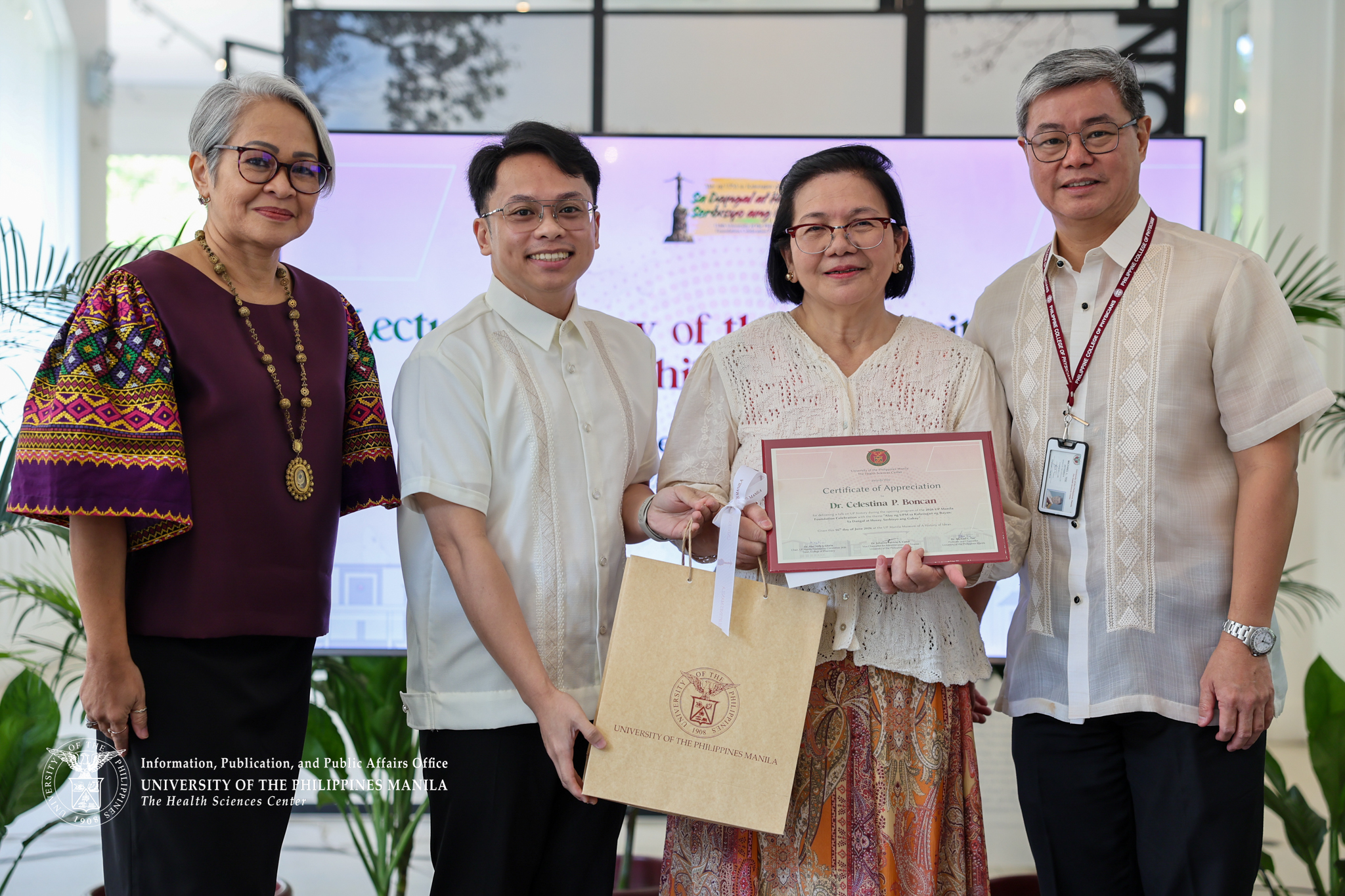
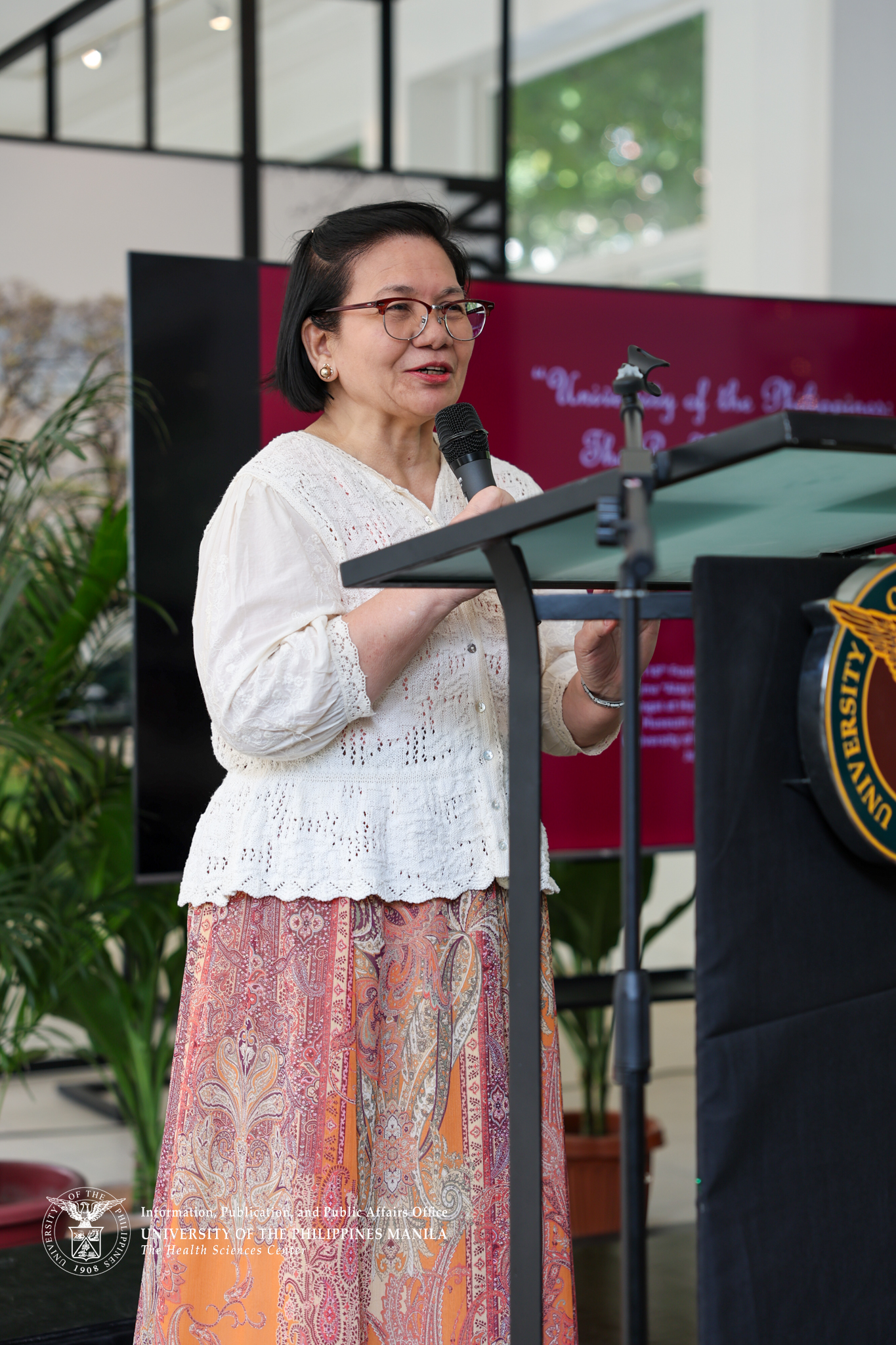
As the University of the Philippines (UP) Manila opened its 118th Foundation Celebration, retired professor and historian Prof. Celestina Boncan took members of the UP Manila community on a journey through the formative years of the University, highlighting how its early history shaped the institution’s enduring commitment to public service, excellence, honor, and integrity.
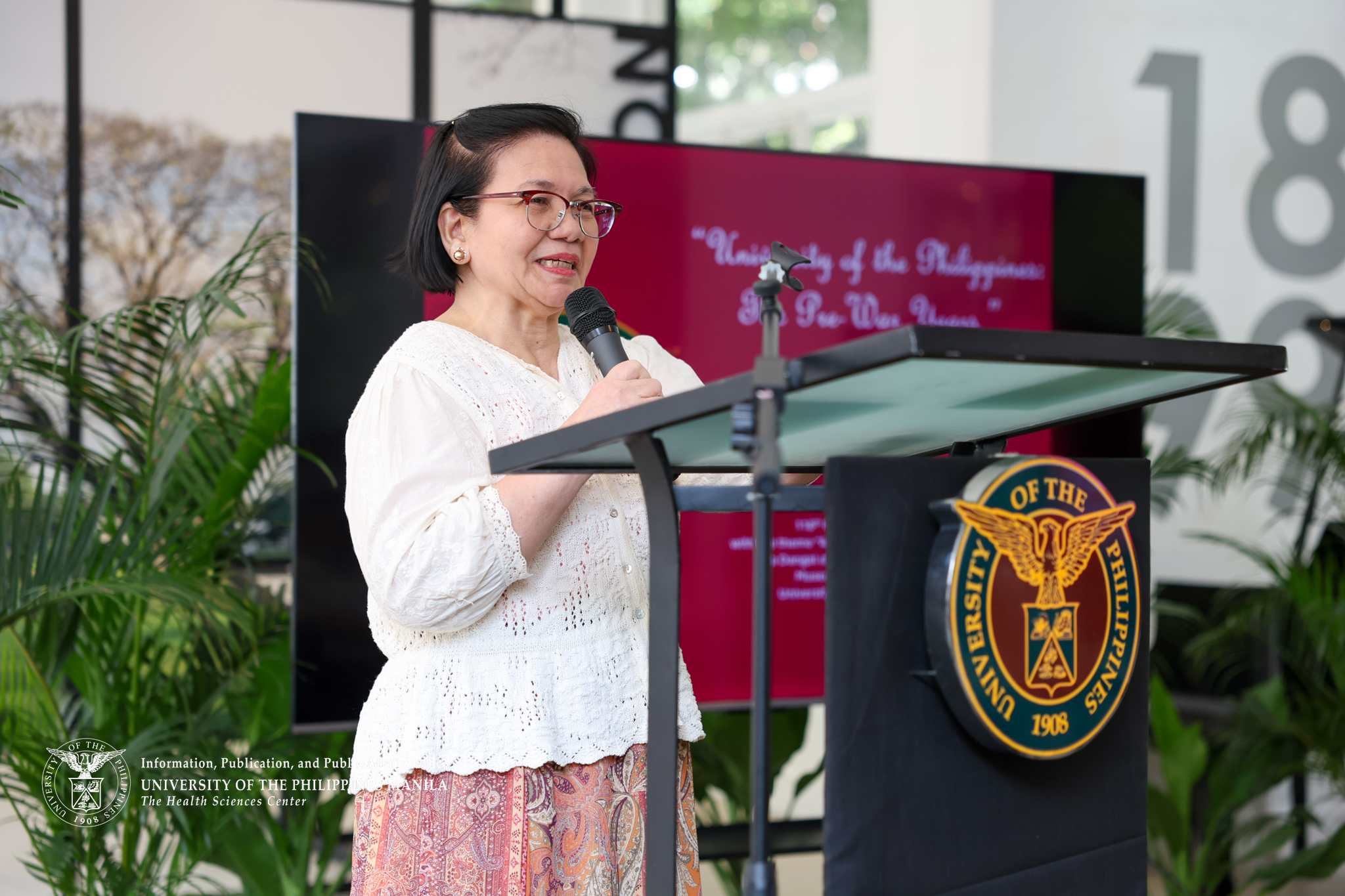
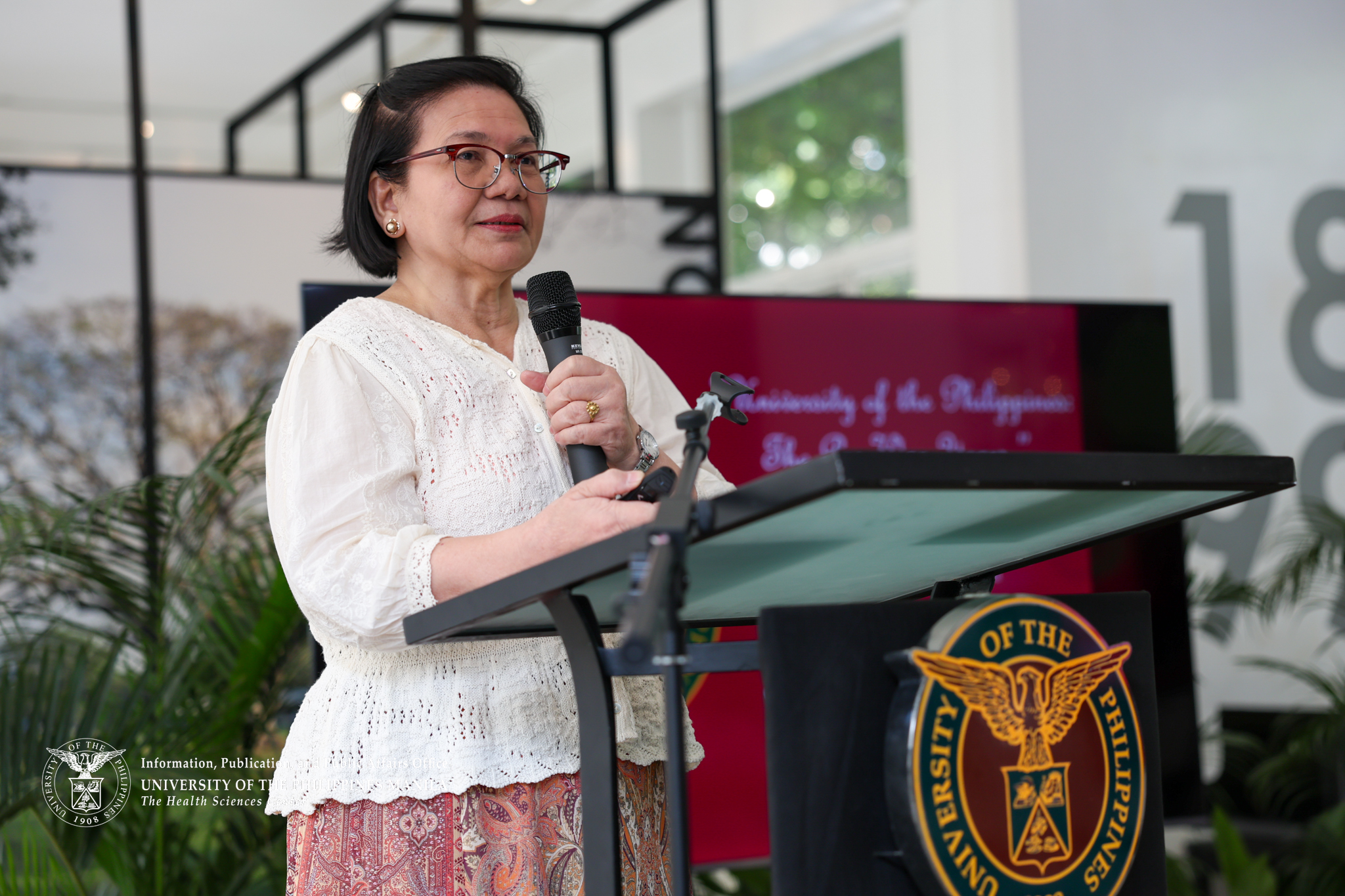
Delivering a special lecture at the UP Manila Museum of a History of Ideas on June 16, 2026, Prof. Boncan focused on the pre-war years of the University of the Philippines, tracing its development from its establishment in 1908 until the outbreak of the Second World War.
“The pre-war years established the origins and defined the mission and vision of the University of the Philippines,” Prof. Boncan said. “From out of the open fields of the sleepy, unassuming, still rural district of Ermita, a university committed to public service, excellence in the arts and sciences, honor and integrity above all, began to take shape.”
She emphasized that it was during this period that UP pioneered new fields of learning while introducing modern concepts and technologies to established disciplines.
“In its pre-war years, the University of the Philippines laid down the foundation that would make it today the National University of the Philippines,” she added.
Drawing from copies of The Philippinensian yearbook, essays published during the University’s centennial celebration, and oral accounts from members of the UP Class of 1941, Prof. Boncan recounted UP’s earliest decades. She explained that UP was created through Act No. 1870, enacted on June 18, 1908, with the mandate to provide advanced instruction in literature, philosophy, the sciences, and the arts, while also offering professional and technical training. Prof. Boncan underscored a principle embedded in the law that remains relevant today: students could not be denied admission based on age, sex, nationality, religion, or political affiliation.
Through historical photographs and archival materials, Prof. Boncan introduced the audience to UP’s earliest colleges, their pioneering faculty members, and distinguished alumni who would later become national leaders, scholars, artists, and public servants. She described how the University grew from open fields and a handful of buildings into a center of higher learning.
Particularly significant for the UP Manila community was her discussion of the College of Medicine and Surgery, the School of Pharmacy, the School of Dentistry, the Philippine General Hospital School of Nursing, and the School of Hygiene and Public Health, all of which laid the groundwork for UP Manila’s present role as the country’s premier health sciences institution.
The lecture served as a meaningful opening event for the 2026 UP Manila Foundation Celebration, whose theme, “Alay ng UPM sa Kalusugan ng Bayan: Sa Dangal at Husay, Serbisyo ang Gabay,” underscores the University’s enduring commitment to advancing the health and well-being of the Filipino people through excellence, integrity, and service.
READ MORE:
#FP1 #innovationsforlifelonglearningdedicatedtoservice