


Text by Charmaine A Lingdas
Photos by Sarah Pulumbarit, Armando Cervantes, Ronald Verceles, Jericho Mabansag, Magtanggol Patuga, MJ Salumbides, Jaira Purificacion, and John Paul Ocampo
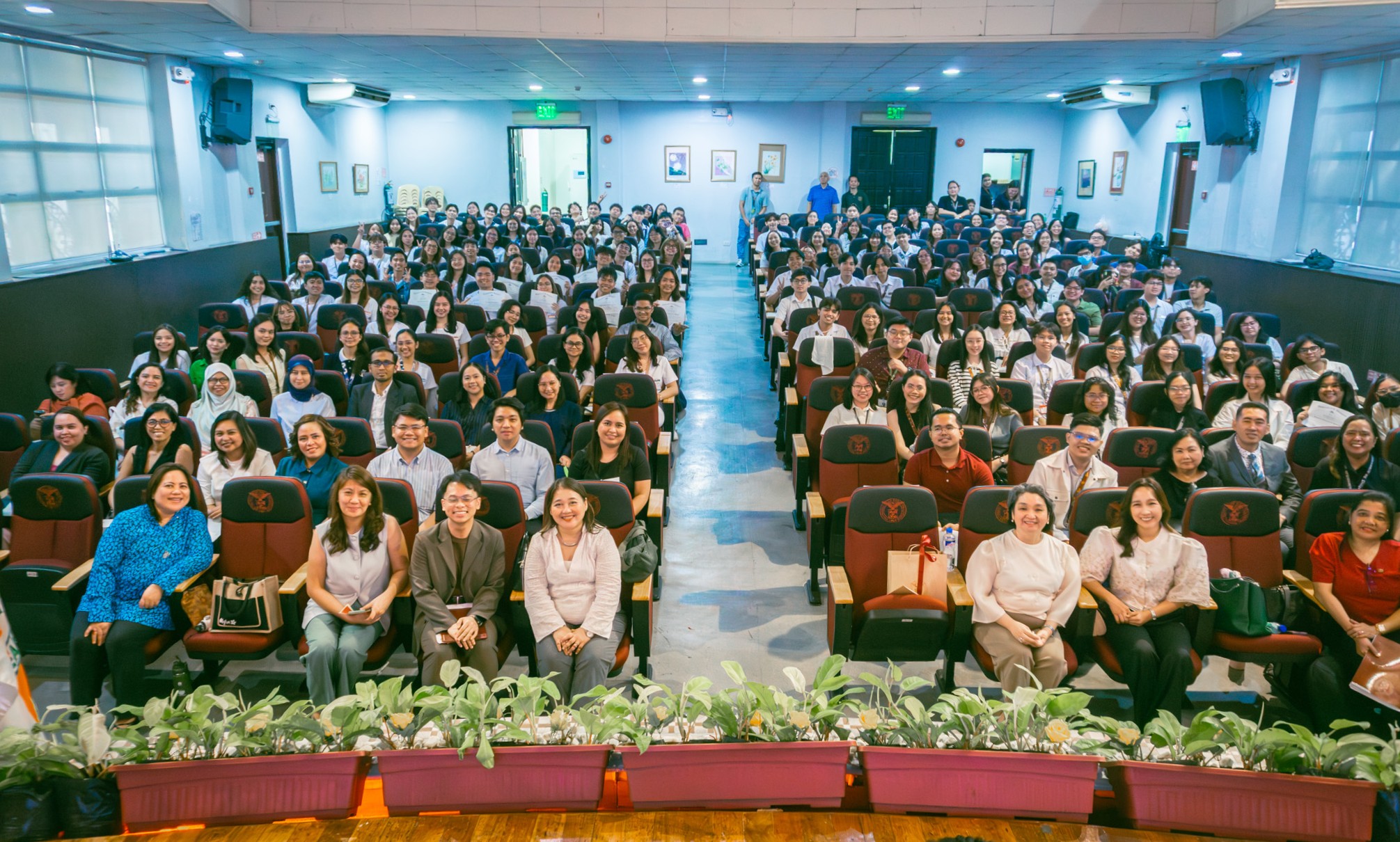
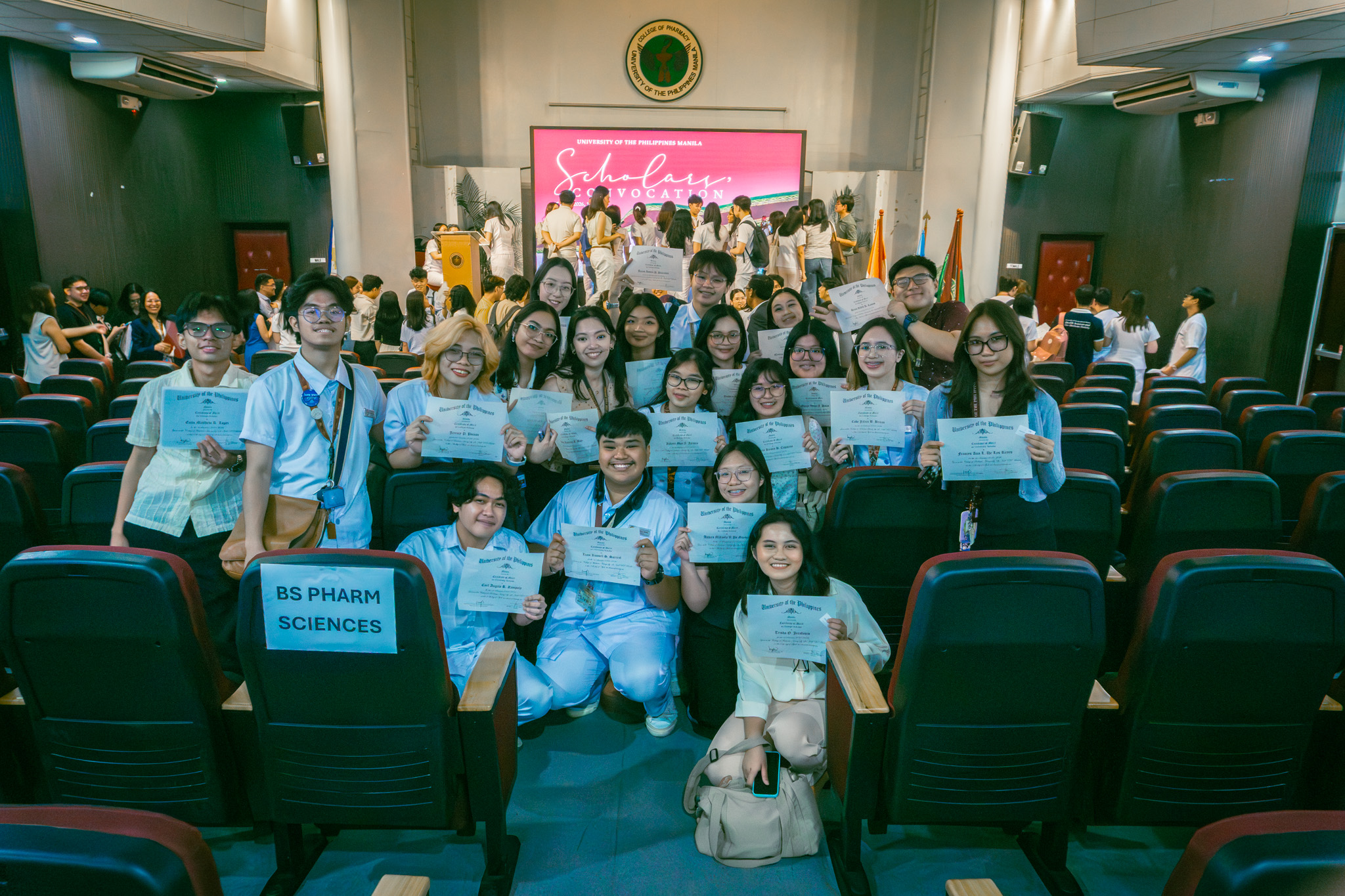
More than a celebration of academic achievement, the University of the Philippines Manila’s 2026 Scholars’ Convocation urged scholars to look beyond the classroom and turn excellence into meaningful service. Held simultaneously at the College of Pharmacy Emilio T. Yap Auditorium, College of Nursing Auditorium, College of Medicine Plenary Hall at the Henry Sy Sr. Building, and the College of Arts and Sciences UP Manila Theater, the annual convocation recognized 2,019 university scholars and 2,351 college scholars from recent semesters.
The event highlighted the lived experiences, responsibilities, and social roles of the Iskolar ng Bayan, with Chancellor Michael Tee reminding students to reflect on the “why” of becoming a scholar and stressing that excellence gains deeper meaning when one becomes someone who “nagsisilbi sa ating bayan nang may husay at dangal.”
Confronting realities beyond the university
In the scholars’ response, student speakers reframed academic success as the product of persistence rather than perfection, drawing attention to the unseen realities behind each recognition—burnout, self-doubt, and competing responsibilities.
“This achievement did not come easy. It was earned through persistence, resilience, and the strength to keep going… So, your presence in this moment is proof of what you are truly capable of. Please hold this achievement with great pride,” said College of Allied Medical Professions student Maria Chazleigh Dayne Oblepias.
She reflected on the uncertainty of early university life, where simply getting through each week already felt like an accomplishment, a struggle shared across colleges and disciplines.
Joseph Legaspi Jr. of the College of Dentistry and Mariel Eleina I. Halili of the College of Arts and Sciences expanded the reflection by situating academic success within broader social realities, emphasizing that access to education carries with it accountability in a society marked by inequality.
“That privilege is never just a gift; it is a weight, a responsibility we are expected to answer for. To be a scholar of the nation is not simply to succeed; it is to understand that every opportunity we receive is tied to those who were never given the same,” Legaspi said.
Halili added, “Ang tagumpay na nakamit namin ngayong araw ay hindi lamang para sa amin. Dahil kung ang aming tagumpay ay magtatapos lamang sa aming sarili, ito ay mananatiling utang. Ngunit kapag ito ay ibinabahagi, ito ay nagiging mas makapangyarihan.”
Meanwhile, Jose Adan Luis Marquez of the College of Pharmacy emphasized that education extends beyond academic spaces and is shaped by immersion in the communities being served, where engagement deepens awareness of persistent social injustices.
College of Medicine student, Paolo Miguel Chaves, underscored that while scholars may become experts in their fields, Iskolars ng Bayan are called to serve underserved Filipinos. He stressed that health care must account for patients’ social, economic, and political realities, calling for physicians “with a heightened social consciousness, committed to the development of Philippine society,” noting that “we not only stand to heal our patients, we also heal communities; we heal sectors.”
Collectively, the scholars reframed education as a shared responsibility whose value lies not in individual achievement alone, but in its capacity to uplift others.
Excellence in serving others
Guest speaker Dr. Daisyrie Aidyl Pamogas of the Rural Health Unit of Dulag, Leyte, urged the scholars to ground their achievements in purpose, responsibility, and service. She underscored in her inspirational message: “The community is not in need of the best doctors. The community is not in need of the best pharmacists or the best scientists. The community, the country, and the Filipino people are in need of good people. Good and excellent workers who show up and do the work because the work is important. And work affects and changes people’s lives.”
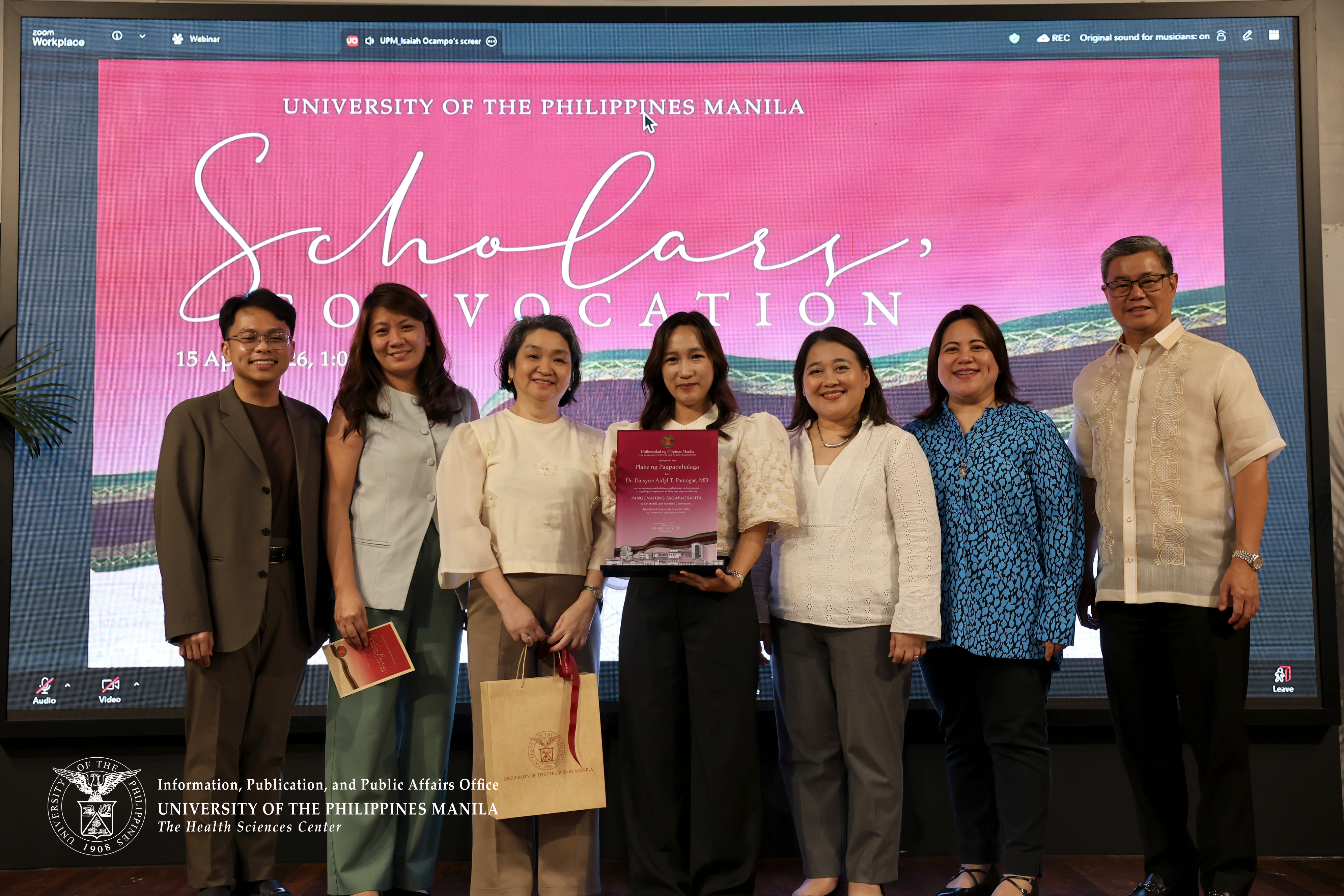
Vice Chancellor for Academic Affairs Bernadette Heizel Reyes emphasized that “the challenge for us is to be beyond what we achieve within the academic rites,” underscoring that recognition must extend beyond ceremonial milestones into lived commitment.
Echoing this view, Vice Chancellor for Research and Extension Leslie Dalmacio reminded scholars that achievement is not the destination but an invitation to serve. She emphasized that education is not solely for personal advancement but for others, noting that scholars belong to a community that expects both excellence and integrity. “The real measure of your achievement will not be how far you go, but how many others you bring along with you,” she said.
Vice Chancellor for Planning and Development Dr. Jose V. Tecson III situated academic excellence within UP Manila’s mandate as the National Health Sciences Center, emphasizing that scholars carry the responsibility to strengthen health systems and serve marginalized sectors.
“Nawa’y hindi ito maging wakas, kundi panibagong panimula. Ang mga hamon sa ating sistemang pangkalusugan ay masalimuot, ngunit gayundin ang inyong kakayahang magbigay ng mga kasagutang makabuluhan, inklusibo, at mapagpabago,” he said.
Vice Chancellor for Administration and Finance Johanna Patricia Cañal framed the awards not as endpoints but as catalysts, urging students to turn recognition into confidence that can inspire and influence others. She underscored that each honor reflects a collective effort and acknowledged the faculty and mentors whose work often goes unseen.
She noted the extensive planning behind the convocation, from coordinating multiple venues to ensuring that every scholar was recognized despite space limitations in UP Manila. Vice Chancellor Cañal also highlighted how faculty consistently advocate for their students’ needs, from basic materials to larger resources, reflecting their commitment to student growth.
“Because we want to breed students who will eventually be better than us,” she said, emphasizing the fulfillment mentors find in seeing students learn, achieve, and surpass expectations.
A shared vision of service
Across speeches and reflections, a consistent narrative emerged: being an Iskolar ng Bayan demands more than academic excellence. It requires awareness of societal gaps, commitment to service, and action beyond comfort zones.
The 2026 Scholars’ Convocation reframed recognition as responsibility. For UP Manila scholars, the challenge moving forward is not only to succeed but to ensure that success contributes to a more equitable and compassionate society.
READ MORE: