

Text by Charmaine A. Lingdas
Photo by January Kanindot
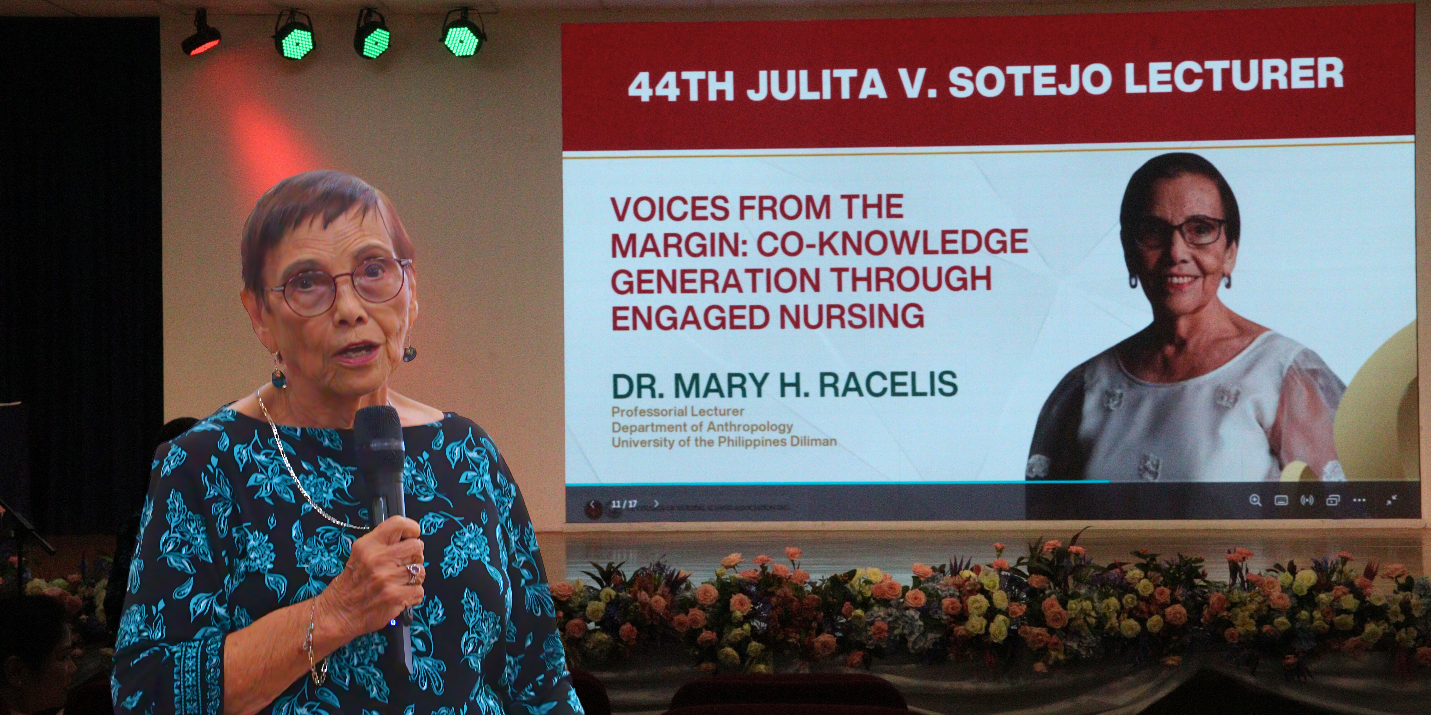
Dr. Mary H. Racelis, Professorial Lecturer at UP Diliman’s Department of Anthropology, shares her insights on nurses as agents of change during the UP College of Nursing’s 44th Julita V. Sotejo Lecture Series.
Dr. Mary H. Racelis, a Professorial Lecturer at the Department of Anthropology, University of the Philippines Diliman, provided valuable insights into the role of nurses as agents of change during the UP College of Nursing 44th Julita V. Sotejo Lecture Series, featuring a compelling session titled “Voices from the Margin: Co-Knowledge Generation through Engaged Nursing.” The event focused on the vital contributions of nursing professionals in addressing social issues and health disparities in the Philippines, emphasizing the importance of activism and advocacy within the profession.
The lecture series honors the legacy of Julita V. Sotejo, a visionary in nursing education and a key figure in establishing the UP College of Nursing. Known for her pioneering efforts in elevating the nursing profession, Sotejo’s influence continues to inspire nurses to engage in transformative leadership and community service.
What is Engaged Nursing?
Dr. Racelis emphasized the concept of “engaged nursing,” where nurses actively participate in social movements and health governance. She outlined the principles of engaged nursing, which involve partnerships with marginalized groups facing health and wellbeing issues. She highlighted the recognition that the people who experience the problems are often in the best position to define and act on them. Engaged nursing respects people’s knowledge, affirms their dignity and rights, and empowers them to make informed decisions about their health and wellbeing. Frequent interactions between nurses and communities help generate mutual trust, which is crucial for sustaining the knowledge generated through these partnerships.
Co-Knowledge Generation: Community-Nurse Partnerships for Health and Wellbeing
Dr. Racelis emphasized co-knowledge generation, where community and nurses work together to improve health outcomes. This involves co-creation, where communities identify the information, they need; co-implementation, where they act on this information together; co-ownership, where they share data and outcomes; and co-benefits, where both communities and nurses benefit from the new information and actions taken.
“Our responsibility as nurses extends beyond bedside care. We are challenged to be part of health leadership and governance, believing that better days await our healthcare system,” said Dr. Racelis. She highlighted the need for nurses to step beyond traditional roles, advocating for policies that promote equity and justice in healthcare.
Addressing Health Inequities
Dr. Racelis stressed the importance of nurses being well-educated, critically minded, and assertive in articulating development issues. “Nurses must be prepared to engage with the social determinants of health and advocate for the marginalized populations they serve,” she explained. By addressing the root causes of health disparities, nurses can contribute to systemic change and improve outcomes for vulnerable communities.
The lecture series underscored the integration of nursing activism as a means to address health inequities. Dr. Racelis encouraged nurses to collaborate with community leaders, policymakers, and other healthcare professionals to create a more inclusive and equitable healthcare system.
Engaging with Communities
Throughout her speech, Dr. Racelis emphasized the importance of nurses engaging with the communities they serve. She shared insights on how nurses can build trust and rapport with patients, fostering an environment of empathy and support. “Compassion and confidence are essential values for nurses as they interact with diverse communities,” Dr. Racelis noted.
She also highlighted examples of successful community-based initiatives led by nurses, showcasing the potential for nursing professionals to drive meaningful change at the grassroots level. “Nurses have the unique ability to connect with individuals and communities, understanding their needs and advocating for their rights,” she said.
A Call to Action
The UP College of Nursing remains committed to fostering a generation of nurses who are not only skilled healthcare providers but also active participants in the advancement of social justice and public health. This year’s lecture series serves as a testament to the college’s dedication to uplifting the profession and advocating for the marginalized in society.
In closing, Dr. Racelis issued a call to action for all nursing professionals to unite in their efforts to bring about meaningful change. “Let us work together to ensure that our voices are heard, that our actions make a difference, and that we continue to advocate for those who are often overlooked,” she urged.