
Text and Photo by Charmaine A. Lingdas
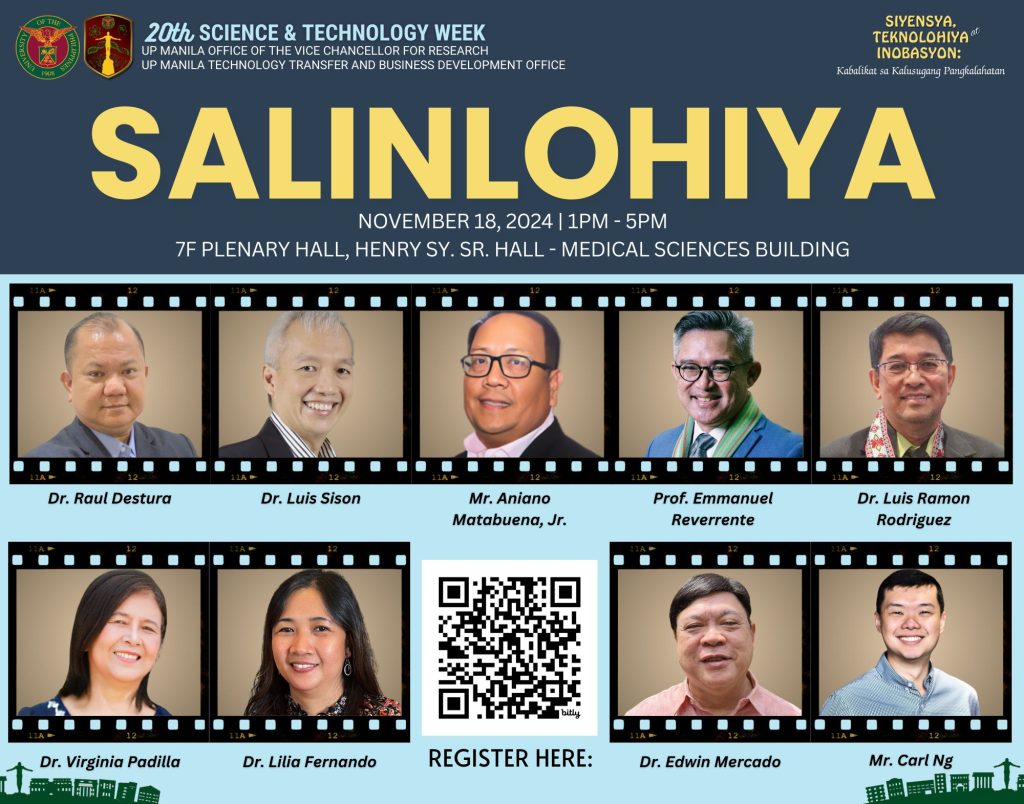
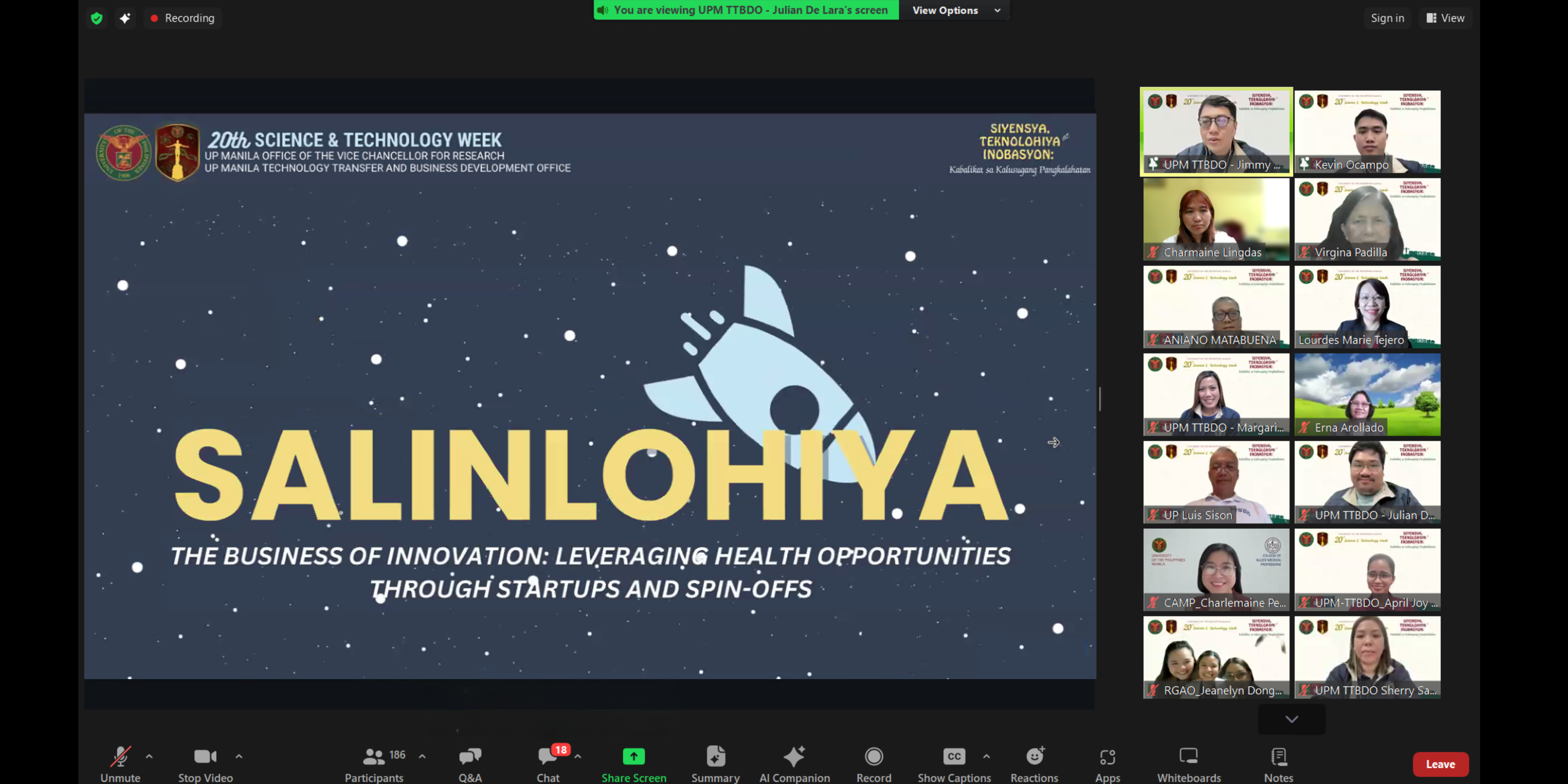
The University of the Philippines (UP) Manila hosted Salinlohiya 2024 as part of Day 1 of the 20th Science and Technology Week, held on November 18, 2024, at the Henry Sy Sr. Hall. Presented by the UP Manila Technology Transfer and Development Office (TTBDO), the event carried the theme “The Business of Innovation: Leveraging Health Opportunities through Startups and Spin-offs.” It showcased how academic research is transformed into real-world health solutions.
Featuring inspiring stories from researchers and entrepreneurs, Salinlohiya 2024 emphasized the power of innovation in addressing health challenges and driving progress through startups and spin-offs.
Prof. Lourdes Marie S. Tejero, director of the UP Manila TTBDO, explained that Salinlohiya is derived from pagsalin and teknolohiya, meaning technology transfer. She reflected on the event’s evolution, noting, “In previous years, we focused on showcasing UP Manila’s intellectual properties, with inventors presenting their technologies. This year, we’ve raised the bar by highlighting innovators who have successfully launched startups based on their research.”
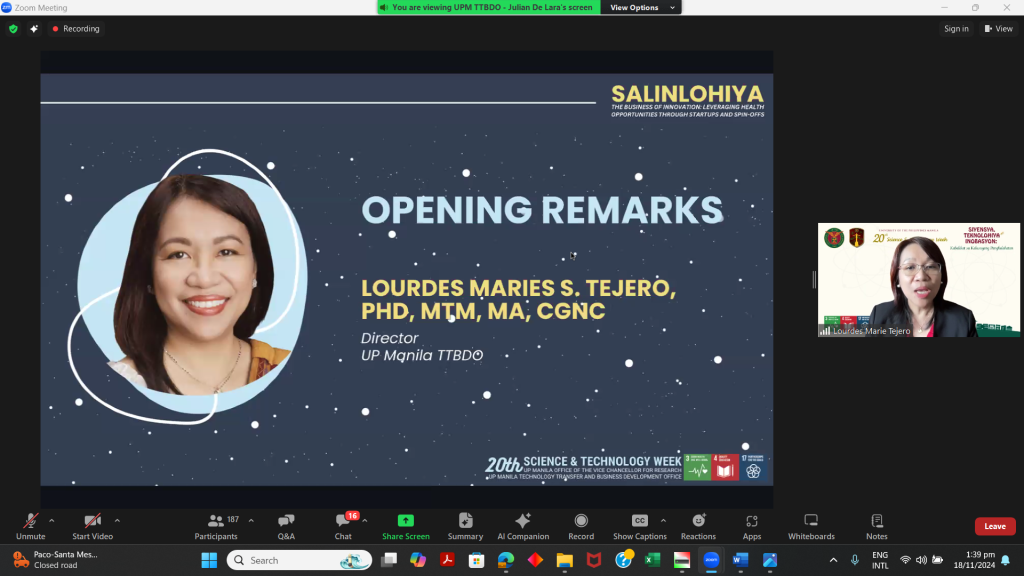
Tejero also highlighted key achievements of the office, including 118 intellectual property disclosures, 23 granted patents, and 13 commercialized technologies.
Current State of Medical Innovation in the Philippines
Mr. Aniano Matabuena Jr., executive vice president of P.IMES Corp., provided a snapshot of the medical innovation landscape in the Philippines, pointing to expected sector growth. “The medical device market is projected to grow from $283 million in 2023 to $455 million by 2028,” he noted, driven by lessons learned from the pandemic, particularly in respiratory devices and diagnostic equipment.
Matabuena also pointed out a significant challenge: 99.2% of medical devices are imported, with only 0.8% produced locally. He emphasized the importance of local manufacturing, advocating for incentives and policy changes to support domestic production.
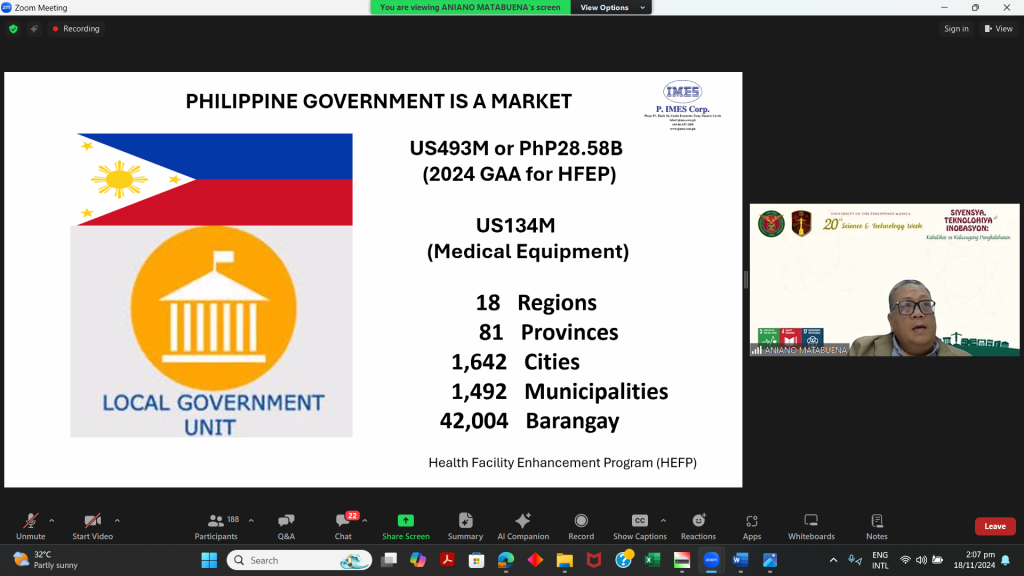
“Collaboration between universities, the private sector, and contract manufacturers is key,” he said. “When choosing a partner, prioritize those engaged in contract manufacturing.” He also highlighted the “7 Ps”—Product, People, Process, Place, Parts, Packaging, and Precision—as essential factors in ensuring reliable and efficient production.
“The Quintuple Helix of Innovation”
Dr. Raul Destura, CEO of Manila HealthTek Inc., shared his journey in biotechnology, focusing on the development of the Biotek-M™ Dengue Aqua Kit. He introduced the concept of the “Quintuple Helix of Innovation,” a framework that unites academia, industry, government, civil society, and the natural environment. Dr. Destura stressed that “An idea remains just an idea until executed,” emphasizing the importance of collaboration and sustainability in turning research into market-ready solutions.

“It’s crucial to think about how to move our ideas forward,” he said. “We wanted to take our ideas to the next level, but I can’t do it alone.” Dr. Destura encouraged academe-industry partnerships, particularly through tech transfer offices, to accelerate research and development (R&D).
Agricultural Innovations for Sustainability
Dr. Virginia Padilla, founder of Fullmight Agricultural Corp., a spin-off from the University of the Philippines Los Baños (UPLB), introduced Nutrio, a bio-fertilizer designed to enhance crop yield sustainably. She shared her company’s mission: “We aim to inspire the next generation to value natural resources while ensuring food security for the future.”

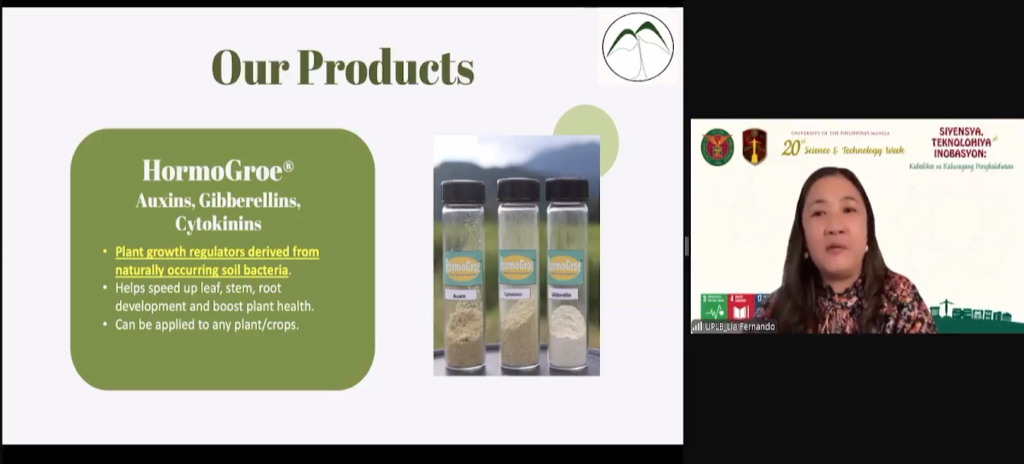
Similarly, Dr. Lilia Fernando, CEO of Makiling Tek, another UPLB spin-off, discussed innovations such as BioGroe and HormoGroe, emphasizing the importance of partnerships in overcoming agricultural challenges. “From root to tip, we deliver superior packaged solutions for sustainable agriculture,” she said.
Startups as Catalysts for Health Innovation
Dr. Edwin Mercado, CEO of Healthway, shared insights into the role of healthcare startups in transforming the healthcare ecosystem. He stressed the importance of innovation in improving healthcare delivery and accessibility. “The mission and vision of an organization are essential—they serve as its ‘north star,’” Dr. Mercado said. “Even if you don’t fully reach your north star, significant progress can still be made.”
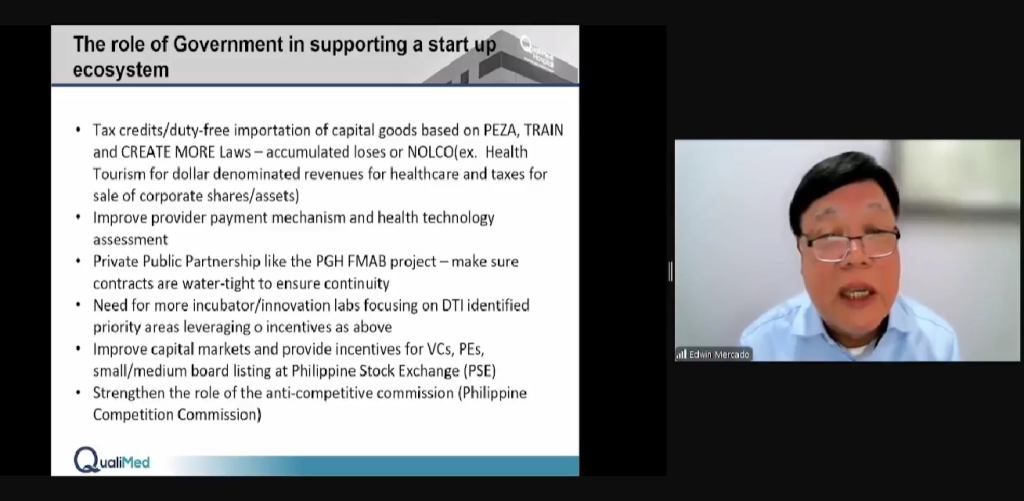
He also highlighted the value of strategic partnerships and governance, emphasizing that “strategic investors bring more than just capital—they bring expertise and insights that help scale up health startups.”
Innovation and Sustainability in Healthcare
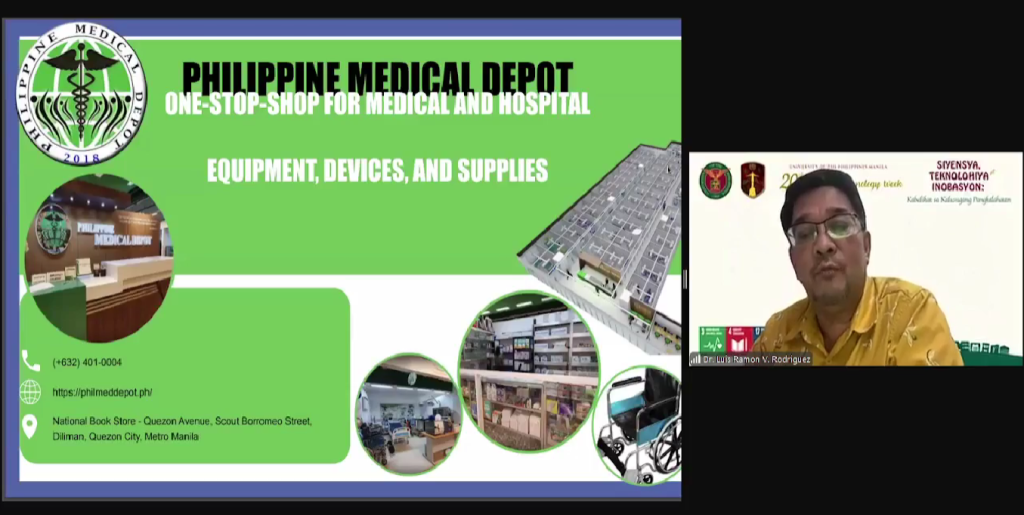
Dr. Luis Ramon Rodriguez, CEO of Karl Group Holdings, discussed how innovation in healthcare can make services more affordable and accessible. He shared a personal experience that shaped his approach: “I saw firsthand how a simple equipment malfunction could lead to a patient’s death. This experience exposed me to the critical role of proper equipment and technician training.” This realization led him to found the Biomedical Society of the Philippines and an accredited training academy for biomedical technicians.
The Role of Venture Capital in Health Tech
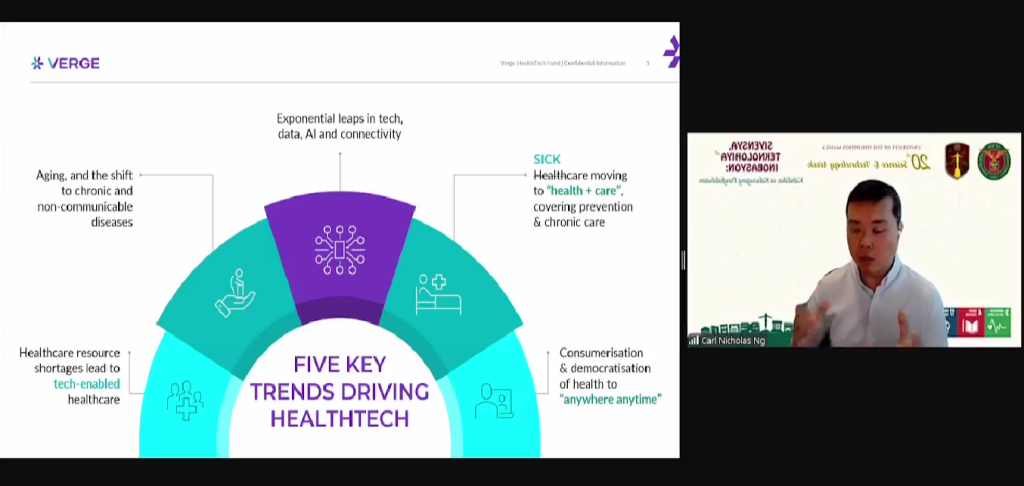
Mr. Carl Ng, managing partner of Verge HealthTech Fund, highlighted the importance of venture capital in scaling health technologies globally. He mentioned five key trends driving health tech innovation, emphasizing how aging populations and the rising prevalence of chronic and non-communicable diseases demand tech-enabled solutions. He noted that resource shortages in healthcare systems globally are accelerating the adoption of technology, while advancements in data, AI, and connectivity continue to expand possibilities. The shift from reactive “sick care” to proactive “health + care” focuses on prevention and chronic care management, complemented by the consumerization and democratization of health services, enabling access “anywhere, anytime.” These trends, driven by the increasing role of technology, are reshaping healthcare to improve efficiency, accessibility, and outcomes.
“It’s inspiring to see UP entrepreneurs successfully bringing their products to market,” Ng said. “At the end of the day, research is incredibly important, but if we’re truly focused on honor, service, and excellence, the ‘excellence’ and ‘service’ aspects need to be out there in the market, helping people.”
Fostering Future Innovators
The event concluded with a call to action for budding researchers, urging them to harness innovation to address pressing health needs. Vice Chancellor for Research Leslie Michelle M. Dalmacio summed up the day’s discussions, stating, “Today’s insights reinforce the importance of collective action to advance innovation in health, poverty reduction, and sustainability.”
She added, “This year’s conversations inspire us all to continue pushing forward—whether as researchers, entrepreneurs, policymakers, or partners. Each of us has a role in fostering an environment where ideas thrive, collaborations flourish, and innovations reach those who need them most.”