
Text by: Charmaine A. Lingdas
Photo by: Joseph A. Bautista

“Research serves as the backbone of progress and innovation within nursing practice,”
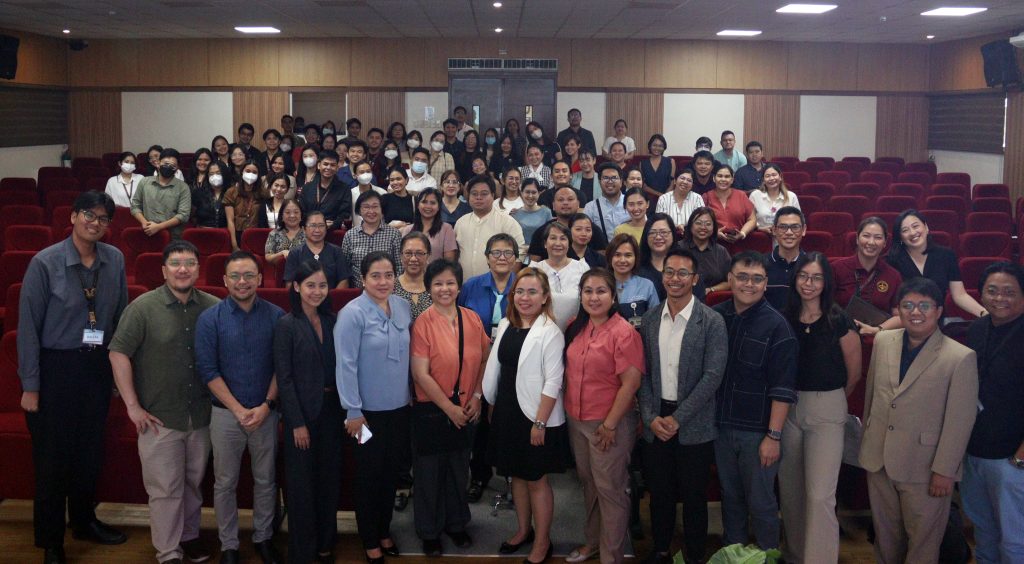
asserted Maria Cecilia E. Punzalan, Deputy Director for Nursing at the UP-Philippine General Hospital (UP-PGH), in her opening remarks during a research forum in celebration of the 76th anniversary of the University of the Philippines College of Nursing (UPCN) on April 11, 2024.
Titled ‘Empowering Nurses: Advancing Health for All,’ the forum showcased diverse research studies, emphasizing the pivotal role of nurses in shaping universal health coverage through innovation and collaboration.
Clinical Practice or Service Delivery in the Philippine General Hospital
Neil Roy B. Rosales, Nurse II, presented the study titled “Nurses’ Perception and Recommendations on the Safe Use of ‘Copy and Paste’ Function (CPF) in a National University Tertiary Hospital.” The research aimed to decipher nurses’ attitudes towards the Copy and Paste (CPF) feature within the electronic medical records system, known as the Computerized Registry of Admissions and Discharge (RADISH).
Key findings from the research revealed a prevailing inclination towards CPF usage, despite institutional efforts to curtail its application. Nurses acknowledged CPF’s efficiency in enhancing speed in documentation.
“Clear guidelines and implementation plans are imperative for safe CPF utilization within healthcare settings,” said Rosales regarding discrepancies in data consistency.
In addressing the lack of interoperability to the current RADISH system, Niño Valentino D. Delgado, Nurse III, introduced the “R-Mi Project: RADISH-MSTAR Integration Project.” The project aims to integrate MSTAR (Medications, Supplement, Treatment, Administration Records) to RADISH to enhance patient care processes.
“With the integration of RADISH and M-Star, nurses benefit from streamlined information flow, eliminating the need for manual transcription and reducing the risk of prescription errors.”
“Nurses are at the frontline of admission and discharge processes,”
said Ma. Stefanie P. Reyes, Nurse III, delving into
“Patient Admission and Discharge Practices in a Tertiary University Hospital.” The study underscored the prevailing variations in patient admission and discharge protocols across different clinical areas. She asserted that standardized processes in admission and discharge are necessary for an excellent patient experience and should involve all members of the healthcare team across all departments to improve patient care outcomes.
Meanwhile, the research titled “Hemodialysis Kit: A Quality Improvement Project for the ICU Patients who will undergo Hemodialysis” aimed to reduce inefficiencies in the dialysis process, improve patient care in the ICU, and enhance the satisfaction levels of nurses and relatives of patients, Marifel C. Salvino, Nurse III of UP-PGH said.
Interruption of dialysis procedures is often caused by the unavailability of medical supplies. The project aims to solve this through specialized dialysis kits, ensuring the ready availability of supplies and streamlining the process. Initial results from a survey among nurses and healthcare workers showed a significant increase in satisfaction, with 94.3% strongly agreeing that the project improved their experience.
Training Programs
In addressing the growing need for geriatric care in the Asia-Pacific region, the UPCN has developed a groundbreaking competency-based program, the “In-service Training on Interprofessional Collaboration in Caring for Older Adults.”
Asst. Prof. Kathryn Lizbeth L. Siongco of UPCN, said that using the program demonstrated improved attitudes, readiness, and engagement among participants, while qualitative data emphasized benefits like enhanced communication skills and increased awareness of older adults’ needs. “As we navigate the challenges posed by an aging population, initiatives like this training program are vital for building a skilled workforce capable of meeting the evolving needs of older adults,” said Siongco.
Asst. Prof. Laurence Lloyd B. Parial of UPCN, presented a comprehensive research study titled “Staffing and Workload in Primary Care Facilities in the Philippines” commissioned by the Department of Health (DOH) and the Philippine Council for Health Research and Development (PCHRD). Based on the study, it was found that primary care facilities generally exhibited good workforce balance, with some shortages in certain categories. However, hospitals showed an obvious shortage of healthcare workers, indicating issues within the healthcare provider network in underserved communities.
The study also revealed that primary care facilities had lower workload pressure among physicians, nurses, and midwives compared to hospitals. These findings highlight the need for better collaboration between national and local governments to rationalize workforce distribution and address staffing shortages in hospitals.
Meanwhile, Asst. Prof. John Joseph B. Posadas of UPCN, shared his insights regarding the impact of “Leadership Development Course for Public Health Nurses” initiated in 2019 by UPCN and the DOH. After participating in the leadership program, nurses reported enhanced confidence in carrying out their tasks and advocating for health programs. Additionally, supervisors observed improvements in leadership and supervision skills among nurses. ■