

Text by: Martin R. Racza
Photo by: Joseph A. Bautista
“This book captures the story of nursing in the Philippines…Nurses are the drivers of health services throughout the country. Without nurses, we cannot deliver the kind of quality service we want to give to the rest of the Filipino people.”
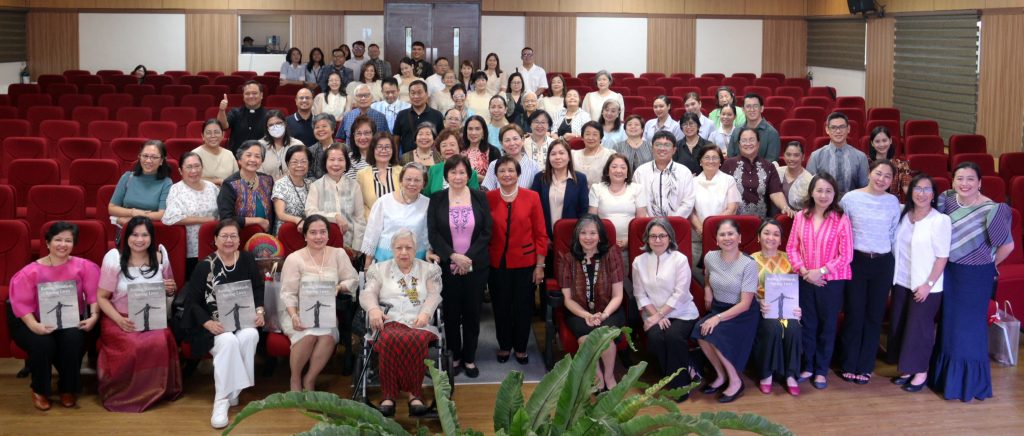
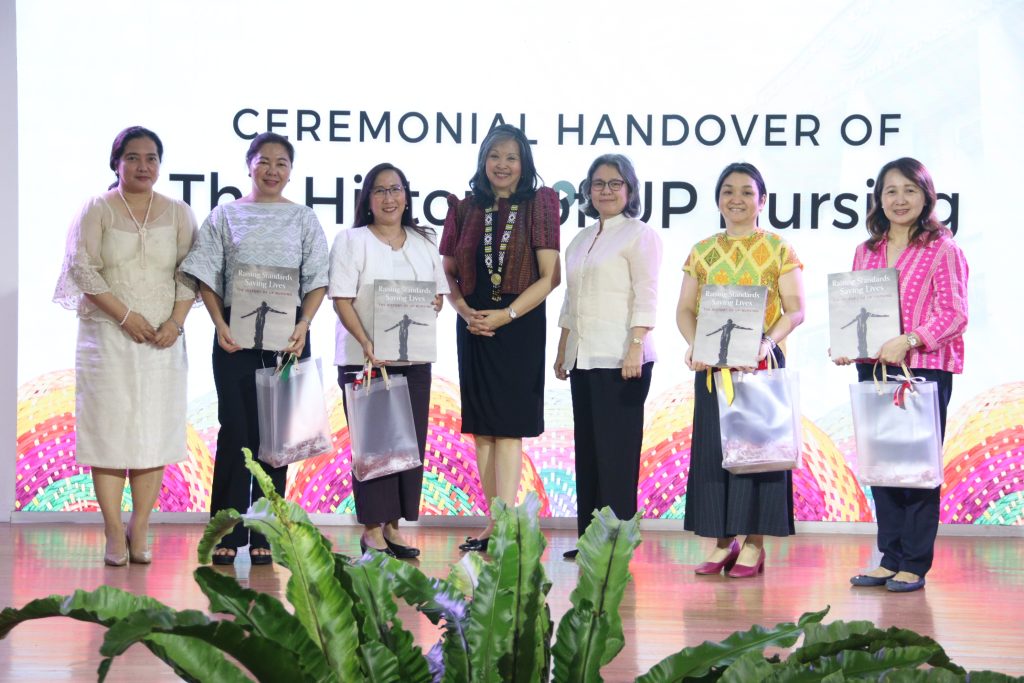
Thus said National Scientist and former UP Manila Chancellor Carmencita D. Padilla in her message to the assembly gathered in the UP College of Nursing (UPCN) auditorium to celebrate the launching of the UPCN History Book, titled “Raising Standards, Saving Lives: The History of UP Nursing,” on April 8, 2024. The UPCN book marks the inaugural volume of the much-anticipated UP Manila Heritage Project. This project aims to compile the university’s history into a series of volumes, with each college having its own dedicated book.
More than a couple of pictures
In her speech, Dr. Padilla revealed the initial struggle of looking for resources to include in the book. “When an institution is a hundred years old, there must be more than a couple of pictures, or a number of handed-down stories and anecdotes,” she said.
In compiling for resources for the book, backtracking was made on references available in the Philippines and abroad, particularly at the Rockefeller Foundation in the United States.
The need to value the history of the UP Manila colleges, which has contributed greatly to the nation, became the primary focus of the Heritage Project, with UPCN being the first college to complete their “story.” The uniqueness of the Project is emphasized by its standard on putting premium on primary sources. This means every information in the book, including anecdotes, have been properly validated.
Nurses Are The Drivers of the Health Services Throughout The Country
Waxing about the significance of the history of the College and how it contributed to the development of nursing education in the country, Dr. Padilla highlighted the role of the alumni of the UP College of Nursing in providing quality healthcare in local hospitals and abroad.
“What is clear in the book is that UP Nurses are strong, passionate…they are passionate leaders in the health professions. And, even if I am a doctor, I can tell you that nurses are the drivers of the health services throughout the country. Without the nurses, we will not be able to deliver the kind of quality service that we want to give to the Filipino people,” she pointed out.
Dr. Padilla, who meticulously guided the book’s journey from its inception to its publication, quoted a paragraph from its first chapter, which states, “The institutional history of UP nursing is, therefore, integral to understanding the broader history of professional nursing in the country – its development, present status, and future directions. Its history provides a lens through which one can view the transformation of nursing into a profession, particularly how teaching and learning extended beyond the domain of the hospital to incorporate the health needs of communities. This shift towards public health has mirrored the growth and challenges of the healthcare system in the country.”
“Honoring Our Past, As We Look Toward The Future”
In her opening remarks, UPCN Dean Sheila R. Bonito encapsulated the overall goal of the book: “honoring our past, as we look toward the future.”
She acknowledged the partners who helped the College achieve its goals such as the Philippine Nursing Association, and their partner hospitals. She also thanked the Department of Health and the World Health Organization (WHO) and announced the renewal of commitment of UPCN as a WHO Collaborating Center for Leadership in Nursing Development, a distinction which Dean Bonito says is not only for the country, but for the region as well. ■