
Text by Angelou Mendoza
Photo by Sarah Pulumbarit
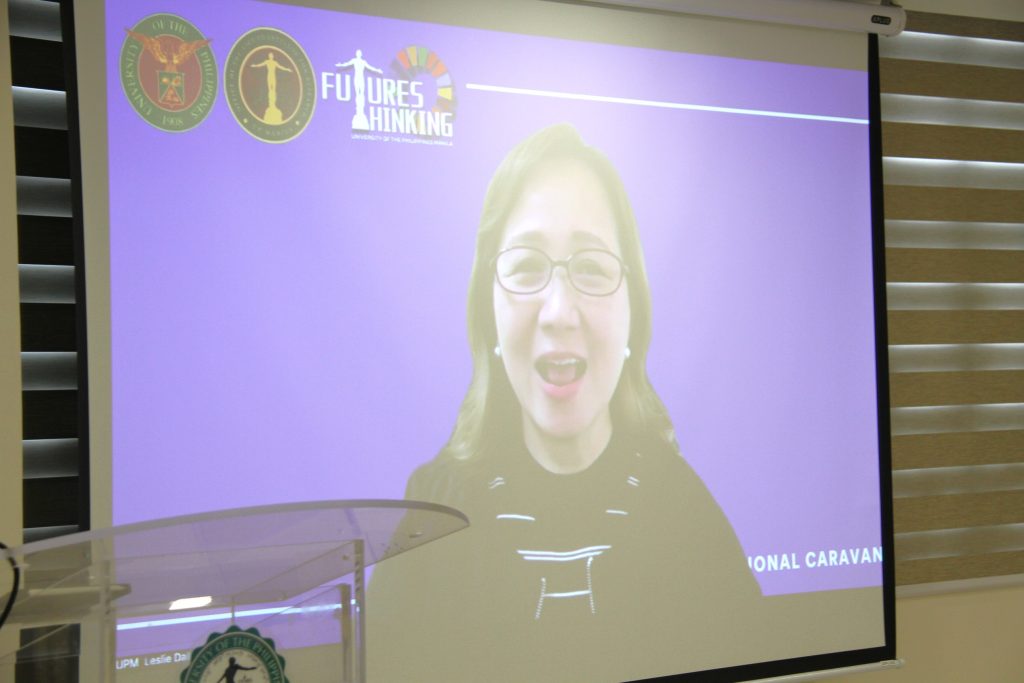
“This educational caravan aims to provide knowledge and initial skills to apply futures thinking as we work for the future of human beings. The impetus for futures thinking was realized by our country’s legislators during the COVID-19 pandemic,” Vice Chancellor for Research Leslie Dalmacio said at the Futures Thinking Educational Caravan on Feb. 20, 2025.
Acknowledging the National Scientist and Former Chancellor Carmencita Padilla, who officially launched the said initiative, VC Dalmacio also imparted that the fundamental focus in its launch was to address future challenges with future planning influencing policy making. This initiative was funded by Senator Pia Cayetano.
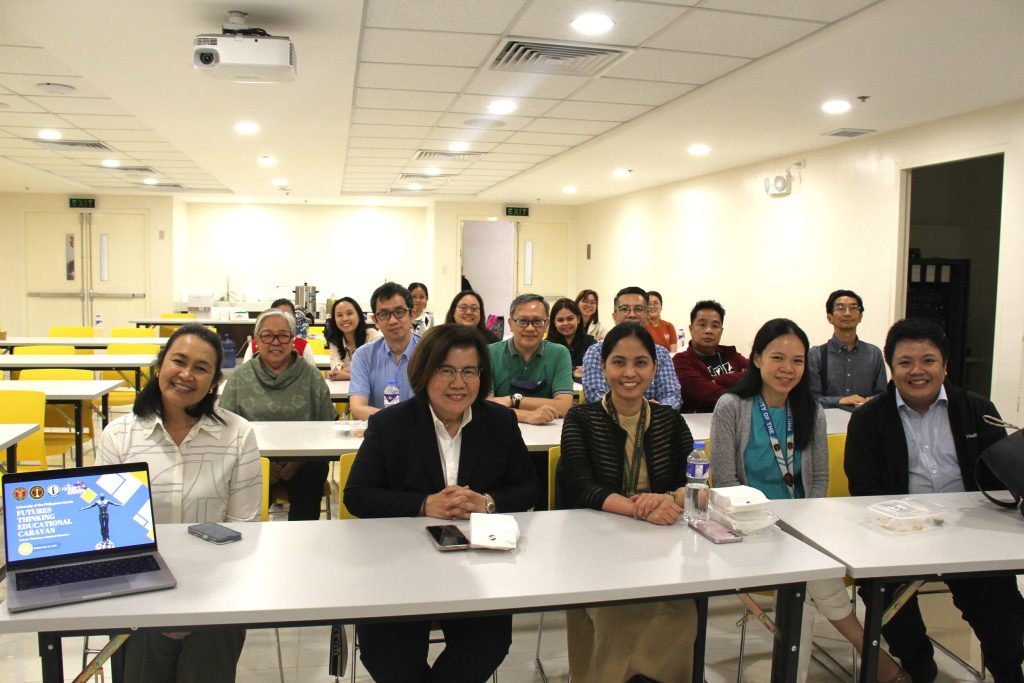
The Futures Thinking technical working group presented at the Futures Thinking Educational Caravan, with the theme “Futures Thinking on Medical Education,” the different views of the stakeholders involved—especially the different University of the Philippines (UP) Manila colleges, National Institutes of Health (NIH), and Philippine General Hospital (PGH).
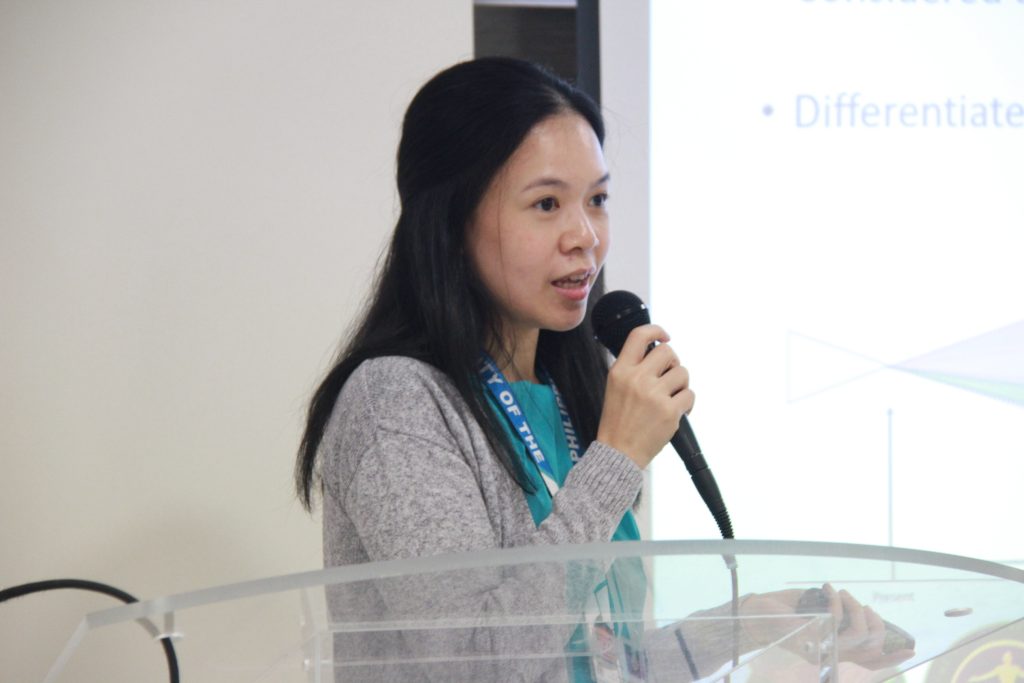
Why futures and not future? Dr. Leizel Lagrada underscored that despite the future being not predetermined and fully predicted, it will provide multiple, complex, multi-perspective potential futures–preposterous future, possible future, plausible future, projected future, probable future, and preferred future. She also discussed five reasons to say “Futures”: (1) the acceptance of the uncertainties, (2) avoiding limiting thinking, (3) encouraging collaboration and discussion, (4) supporting innovation, and (5) longer-term thinking.
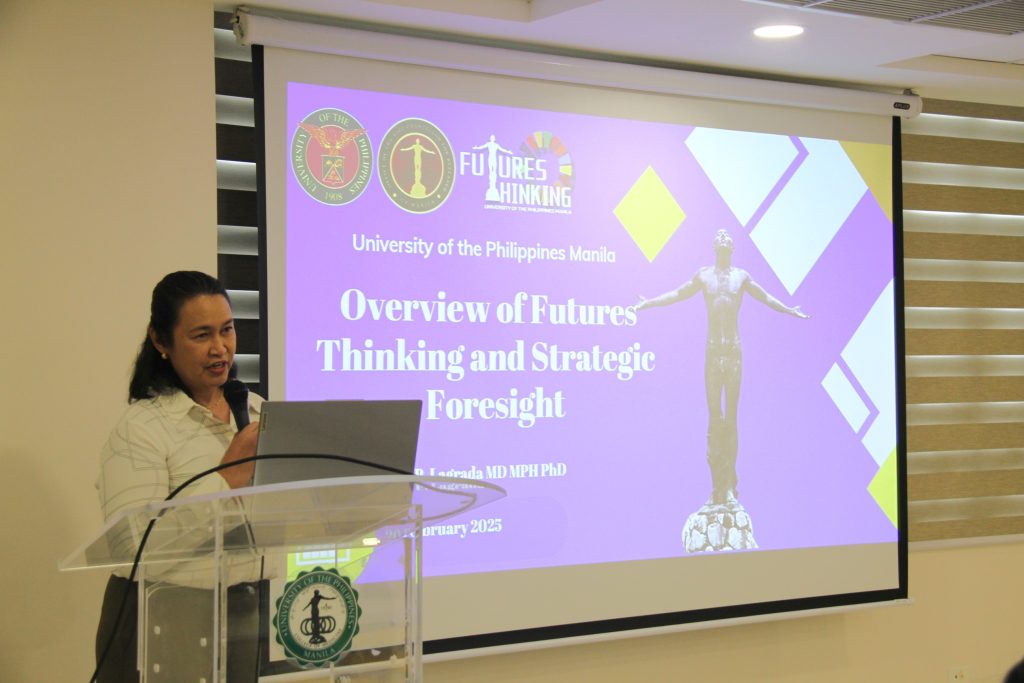
In session one with Dr. Lagrada, Associate Professor at the College of Public Health, she presented the “Overview of Futures Thinking and Strategic Foresight.” “We deliver an education towards adaptive, future-shaping professional and sectoral leaders. We cannot afford to just be future-ready. We must be able to create the future we envision,” Dr. Lagrada said, citing Chancellor Michael Tee’s lecture on IDEA (innovations for life-long learning dedicated to service; discovery and research; environment that nurtures our mind and body; and accessible UP leadership)–emphasizing the relevance of deep diving into the strategic, academic, and disciplined ways of envisioning various potential possibilities and outcomes. She further explained futures thinking as “a mindset that involves creative thinking about future possibilities in a structured and intentional way, which involves cognitive processes through future studies and strategic foresight.” This is an introduction to the first step of the Strategic Foresight Framework, “framing” or identifying the existing challenges, purpose of the proposed strategic solution, and the stakeholders–adapted from Hines and Bishop in 2022.
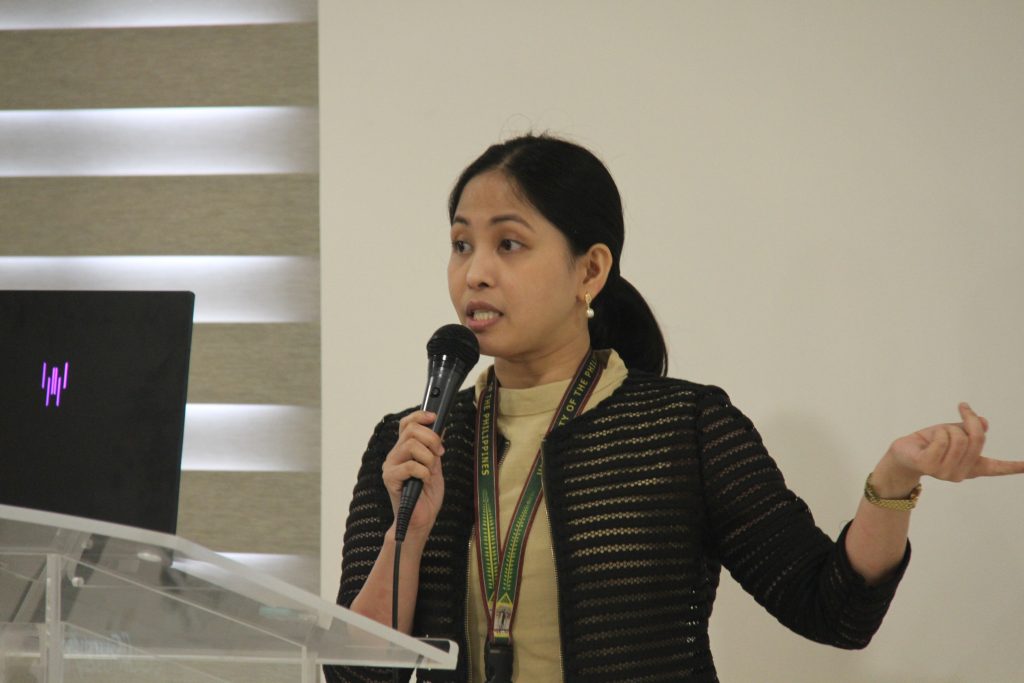
Dr. Carol Stephanie Tan-Lim, professor from the College of Medicine, on “The Role of Research in Identifying the Possible Futures of UP Manila,” began the discussion on the second step, the scanning, a systematic way of collecting information based on the pressing issue involving the gathering, analyzing using the social, technical, economic, ecological, and political (STEEP) factors, and interpreting data. This was followed by the futuring, or building scenarios exploring possibilities of the future, such as business-as-usual scenario, preferred scenario, integrated scenario, and disowned scenario based on the existing issue.
Visioning and backcasting as a methodology for future thinking was explained by Dr. Maria Llaine Callanta, associate professor at CM. Visioning is defined as the step on “developing and committing to a preferred future” for the benefit of society. In this methodology, the perspective of the stakeholders is from the present to the future. She further deepened the discussion by differentiating backcasting from visioning – backcasting, in contrast, is imagining the desired future being accomplished.
In application, the university also aims to achieve the common good of the society through developing health and education sectors. Starting on curriculum development for the benefit of the new generation of learners as future professionals of the country, while envisioning the futures based on the current trends, situation, and focal issues.
This educational caravan is organized by the Office of Vice Chancellor for Research, College of Medicine, and Futures Thinking UP Manila.#