
Text by: Jennifer Manongdo
Photos by: Mu Sigma Phi Sorority and Erlyn May Pareja
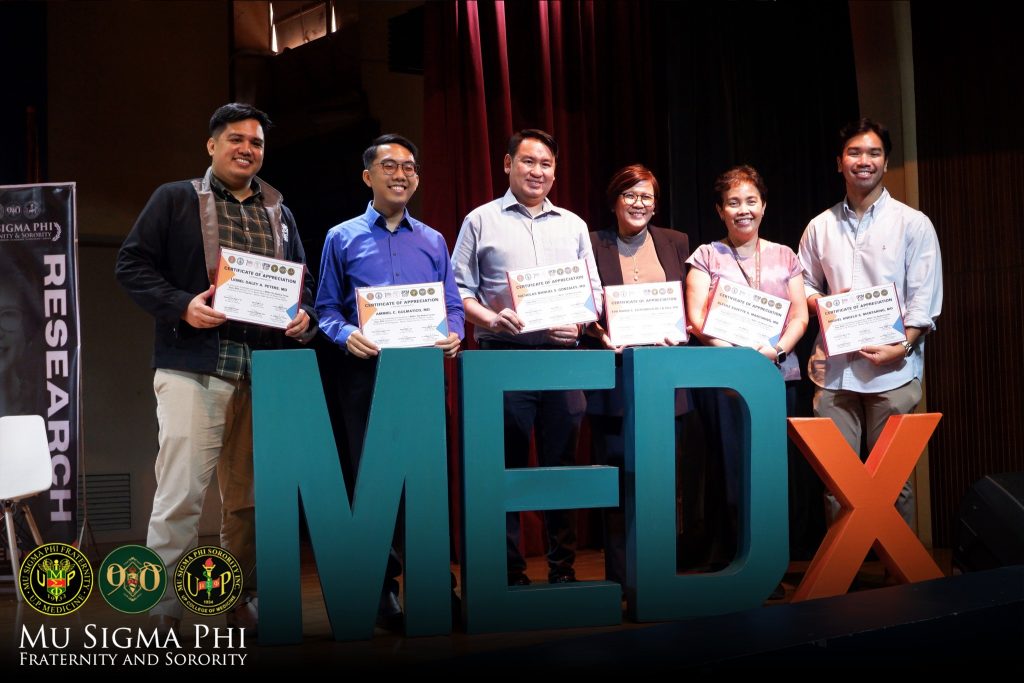
Not all doctors go into clinical practice. Some chose other career paths that are just as valuable as the work of physicians. In a recent medical career expo titled “Med X” organized by Mu Sigma Phi Fraternity, six alumni of the University of the Philippines College of Medicine (UPCM) shared insights and advice for those considering opportunities beyond traditional clinical practice.
RESEARCH
Dr. Eva Maria C. Cutiongco-De la Paz took the usual route of the medicine course before going into clinical practice. Her career trajectory shifted when she followed the counsel of one of her mentors.

“Former Chancellor Dr. Carmencita Padilla, who was then chair of the Department of Pediatrics when I was chief resident -and that was the time I got an outstanding scientist award, said ‘research is really a career path one can take even if you continue to practice medicine. So I became obedient. I went to Japan for a fellowship on molecular genetics,” the physician-scientist told a crowd of medicine students during the program at UP Manila on March 15, 2024.
In Japan, Cutiongco-De la Paz survived a massive earthquake near Kobe in 1995 which claimed the lives of over 6,000 individuals and displaced more than 45,000 others.
“I was survivor of that earthquake. So this is my first lesson: be an overcomer,” she said. Having triumphed over the aftermath of the earthquake, she returned to her homeland
briefly before embarking on a new journey to pursue a clinical genetics fellowship in Canada.
Upon returning to the Philippines, Cutiongco-De la Paz assumed roles as a research faculty member at the National Institutes of Health (NIH) and as researcher in clinical genetics at the Philippine General Hospital. But her life was not all about research. A beautiful story unfolded next.
“Akala n’yo nag-research lang ako. Nag-change din life plans ko. God has other plans. Kinasal ako at over 40. So you see, there is life after 40,” she told the audience who erupted in excitement, while photos of her and her husband flashed onstage.
Before the end of her talk, Cutiongco-De la Paz shared the important lessons that she learned over the years. “Becoming an ‘accidental researcher,’ I had to experience all these – to be obedient, overcomer, to be determined, flexible, and passionate,” she said.
Though modestly labeling herself as an “accidental researcher,” Cutiongco-De la Paz has made valuable contributions to the field of genetics. Some of the awards she received for her work include the Order of Lapu-Lapu rank of Magalong medallion for her contributions to Philippine genetics and COVID-19 mass testing and the Dr. Jose Rizal Memorial Award for Research, given by the Philippine Medical Association.
ACADEME
Though she was awarded the Dr. Augusto A. Camara Best Teacher in the Basic Sciences in 2018, Dr. Blesile Suzette S. Mantaring did not plan on being a teacher. “I never liked talking in public…when I entered medicine, my idea of a doctor was having a stethoscope around the neck and looking at your patients. So I consciously and unconsciously worked towards that,” she revealed at the beginning of her discussion.
In the second year of her private practice, fate presented her with a different path Dr. Blesile took the opportunity to join her husband, Dr. Jacinto Blas Mantaring III, in
the U.S. He had been offered the chance to pursue subspecialty studies in neonatology for three years, prompting their relocation.
After four years, Dr. Blesile’s family returned to the country. During her interview for a teaching position at the UP College of Medicine, Dr. Arlene Samaniego, former Chairperson of UPCM, presented her with a scenario that she never anticipated would profoundly shape her future path. “Doctor Samaniego told me: ‘Peaches, baka magustuhan mo magturo at hindi ka na bumalik as a clinician.”
“And she was right. After a year of teaching it was a 180-degree turn because first, I wanted to be a clinician. But after that after my exposure to teaching, I decided to become a full-time teacher and that was my career for 27 years,” Dr. Mantaring said. For individuals aspiring to pursue a career in academe, Dr. Mantaring offered valuable guidance:
“First, mastery of the subject matter…You can do some research or benchmarking as to how people are going to approach the subject matter,” she said.
“Second is the delivery of your subject matter. You need effective communication skills. I think that’s why students remember me because of my videos in embryology. Lastly, we have to be passionate in teaching. When you are passionate, you inspire your students,” Mantaring explained.
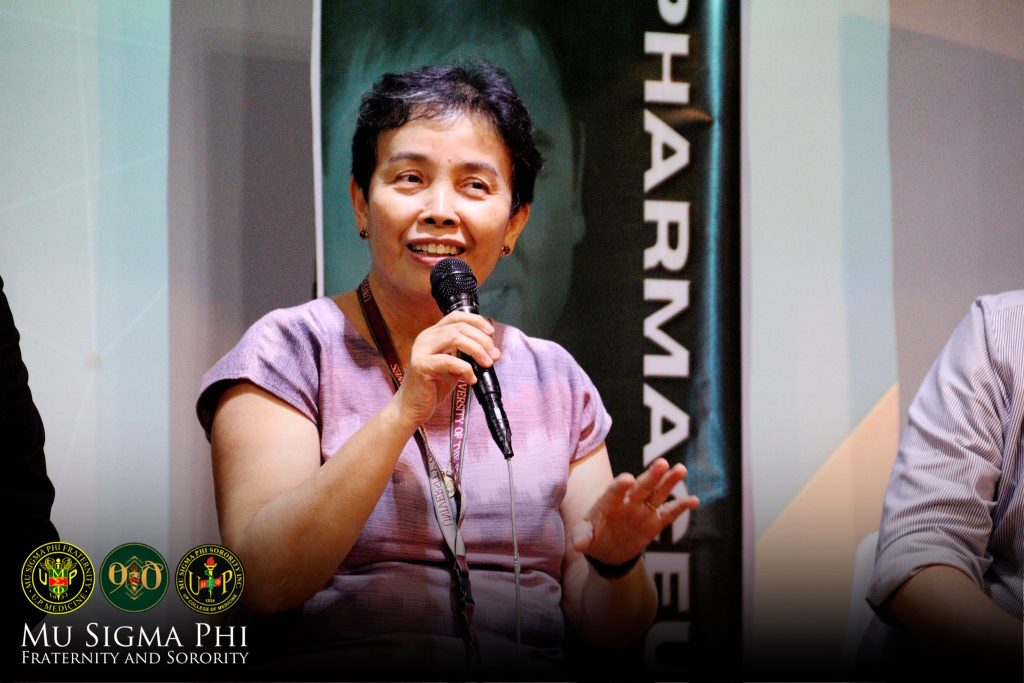
Mantaring graduated in 1984 and is a fellow of the Philippine Board of Obstetrics and Gynecology. In 2022, she received the One UP Professorial Chair Award for Teaching and Public Service.
PHARMACEUTICS
Working in the pharmaceutical industry is very rewarding but it took time before Dr. Nicholas Manuel Gonzales landed the career that gave him the utmost fulfillment.
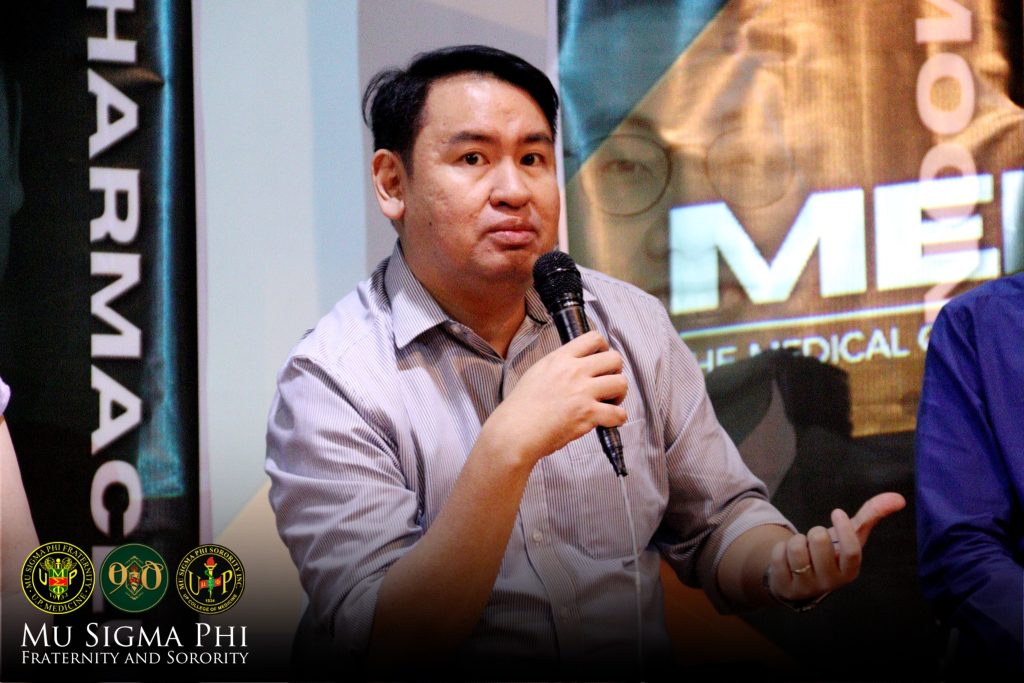
Gonzales was a surgery resident at PGH in 2004 as a nod to his parents’ wishes. “Unfortunately, my heart wasn’t in it so I didn’t last long,” he said during the event.
He began medical moonlighting in hospitals in the CALABARZON area and also started teaching human anatomy and physiology, microbiology and pharmacology to nursing and medical technology students. Describing the academe as a “very fulfilling” profession, Gonzales took up PhD units in Biology “because at that time, I was already looking at a life-long career in the academe,” he said.
And then life took a different turn. In 2010, he was employed by a drugmaker company Hospira as a drug safety physician. Hospira was acquired by Pfizer in 2016 and Gonzales was eventually promoted to medical director for drug safety.
The pharmaceutical field has various pathways, Gonzales explained. Doctors could either go to the medical affairs field or in medical marketing, and clinical drug development among others.
He experienced a sense of pride when Pfizer announced the completion of its clinical trials for the Covid-19 vaccines amidst the peak of the pandemic. “I had my picture taken in front of the TV during CNN News because you know it’s like giving hope. It’s like, ‘wow.’ Here’s the light at the end of our tunnel.”
Aside from free travel opportunities, working in the pharmaceutical industry comes with a lot of perks including financial gains. Nowadays, it has become competitive to enter the pharmaceutical industry. Dr. Gonzales said good communication skills and pursuing a diploma course in pharmaceutical medicine and management would greatly benefit students aspiring to follow a similar career path.
PRIMARY CARE
Dr. Lionel Daley A. Peters earned the moniker “Doktor de Motor” when he served at the fifth-class island municipality of Agutaya in Palawan.
Onboard a “motorcycle ambulance” provided by the Department of Health (DOH) in geographically isolated areas, Peters would visit his patients around Agutaya before returning to the health center to see more patients lined up for the day. Peters, who was part of batch 2015 of Doctors to the Barrios (DTTB) program, was the subject of a TV documentary made by ‘I-Witness’ in December 2018 that highlighted his efforts as sole physician in the coastal community at the time.
“When you talk about community health, bumababa ka talaga hindi ka nasa loob lang ng facility,” Peters said as he showed photos he took while serving in Agutaya. “Dyan kami nagco-consult, sa ilalim ng puno, literal,” he added.
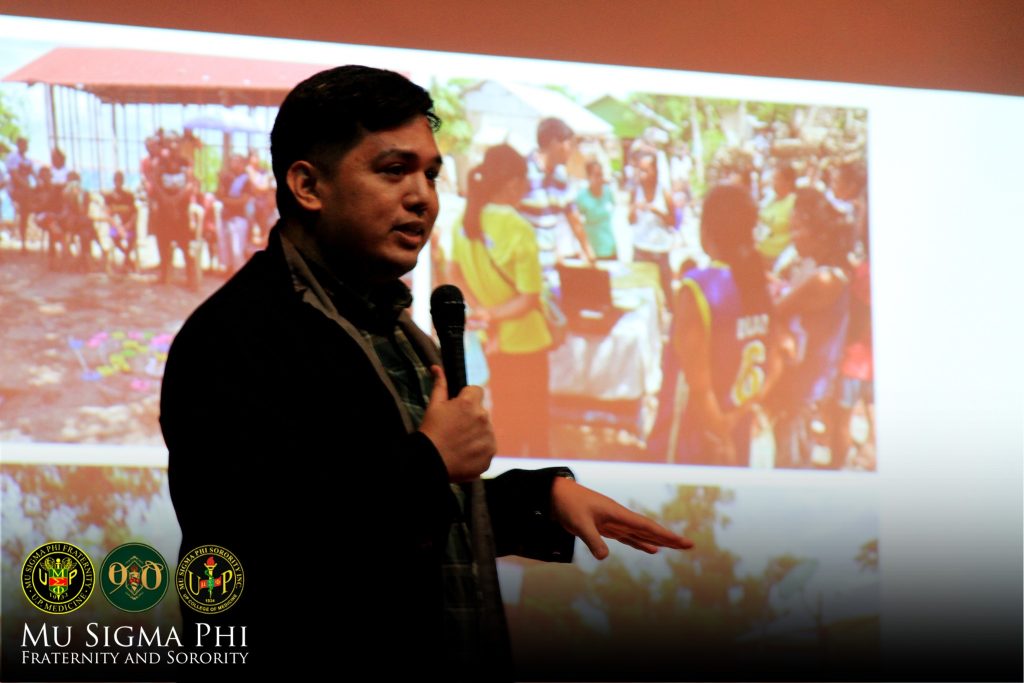
“This is what influenced me and opened my eyes to how things really are…when you’re exposed to this kind of reality, it opens something in you. Nakikita mo yung katotohanan ng mga pasyenteng nakikita
mo sa PGH (Philippine General Hospital),” he said.
Once, Peters and his team of healthcare workers were able to refer a Lupus patient to PGH. “Na-diagnose naming as good as we could, mahirap kasi island clinic…the next time we saw her, she was better,” Peters told the crowd.
He served as the municipal health officer of Agutaya for one year before leaving for Manila to work in a civil society organization. He went into public health research before joining the Universal Health Care Policy and Strategy cluster of the DOH in 2024. Peters told students that primary care physicians “have a unique perspective” because they develop an “eye” for the local health system.
“You can leverage that for a productive and meaningful career in public health,” he said.
MOONLIGHTING
Medical Moonlighting, as defined by the American Medical Association, is a practice where doctors work additional shifts or hours outside of their primary employment to earn an extra income. But in the Philippines, Dr. Ammiel C. Gulmatico said medical moonlighting may mean becoming an on-demand freelance doctor or any contractual duty taken by a medical professional.
Gulmatico began moonlighting right after he finished his medical degree in 2022.
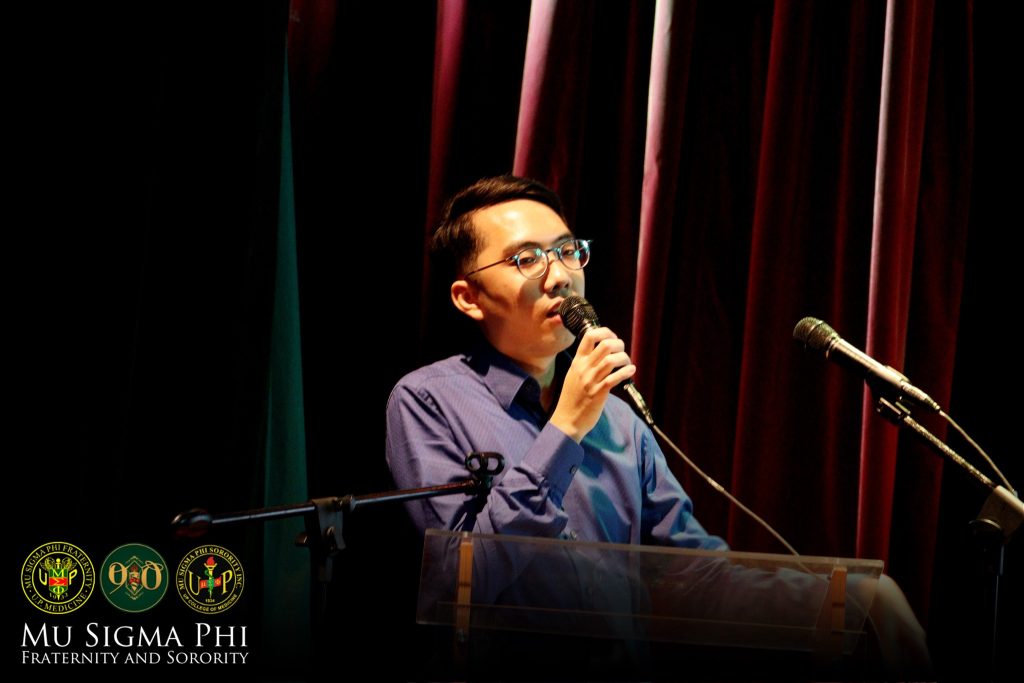
“’Di ako nagwork agad. I was thinking since mag work naman lahat bakit hindi mag break muna since forever naman tayo mag wo-work until we grow old,” he said. “So take your breaks as much as you can kasi ‘ pag nag work ka na, tuloy tuloy na yan.”
One year and two months into medical moonlighting, Gulmatico has joined several organizations that allowed him to experience different environments as a physician.
He worked briefly in a public hospital in Negros Occidental before becoming an “island doctor” in Boracay and in Siargao. “In these duties, we had opportunities to assess and manage patients with limited resources because the workplace that we had was a clinic. There are South Koreans, British, Americans Indians, and German. If there is a language barrier, you use Google Translate,” he shared.
After this, he went on to become a ship doctor at MV St. Michael Archangel where he attended to seasick passengers.
“Why medical moonlighting. So number one, there’s the obvious answer, there is a supplemental income especially when you are in a gap year. Hindi ka totally tambay or palamunin,” he said. Dr. Gulmatico shared some advice to aspiring moonlighters. “You must protect your license at all costs. The reality is you are putting your license out of there. As doctor, you are expected to manage patients. You are no longer
students. You must know the professional conduct and ethical actions and do your appropriate referrals,” he said.
PUBLIC HEALTH
Dr. Miguel Angelo S. Mantaring knew he wanted to become a doctor when he witnessed his parents – Dr. Blesile Suzette S. Mantaring and Dr. Jacinto Blas Mantaring III, managing a patient during a plane ride. “It’s like a scenario on TV. The pilot asked if there is any doctor on board because a passenger was having a seizure. So my parents were the ones who responded. We know na kapag seizure, wala ka naming magagawa, but they (parents) knew how to position the patient. They knew how to calm down
everyone on the plane. And for me, ‘I was like, wow. I want to be like that,’” Mantaring said.
Though he struggled in medical school, Mantaring passed the board exams on the first take. His three-year stint in Itbayat, Batanes in the DTTB program “changed his life” as it added a new perspective on his outlook as a physician.
“They (patients) were telling me, hindi nalang ako tatawid para magpatingin kasi wala daw titingin sa kalabaw nila kasi ang layo. Tatawid pa ng isla… it made me realize that there are problems in the healthcare system that cannot be addressed by a doctor. It cannot be addressed by putting up more hospitals and clinics and just offering your time to seeing your patients,” he stressed.
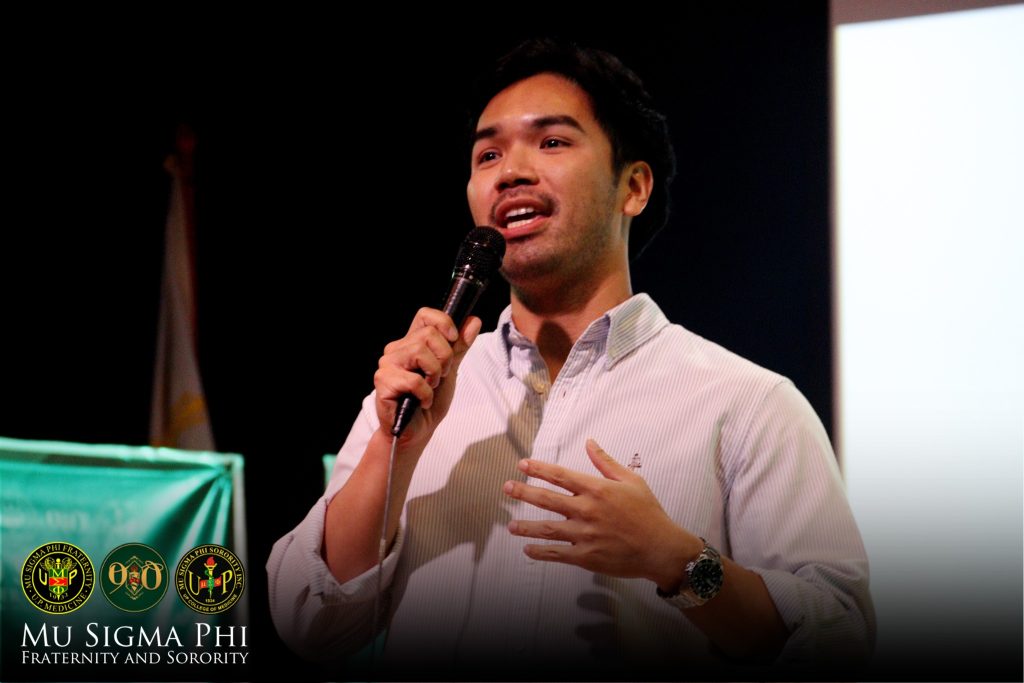
Currently a medical officer at the Health Promotions Bureau of the Department of Health, Mantaring believes he can give back to the country by complementing what the DOH and the PGH are doing in fulfilling Universal healthcare law. Through the health promotion framework strategy, the bureau is promoting strategies to improve the health of Filipinos including recommending policies necessary to improve healthcare delivery.
Mantaring advised future doctors to remain firm in their decisions if they want to pursue Public Health practice or other pathways in medicine.
“Regardless of where you choose to go whether in public health or any of these domains or residency, hold on to your truth because that’s your truth… if you choose public health, people will tell you ‘sayang naman inaral mo sa medicine’ Don’t listen to them because that’s your truth,” he pointed out. ■