
Text by Charmaine A. Lingdas
Photos by Luz D. Emano
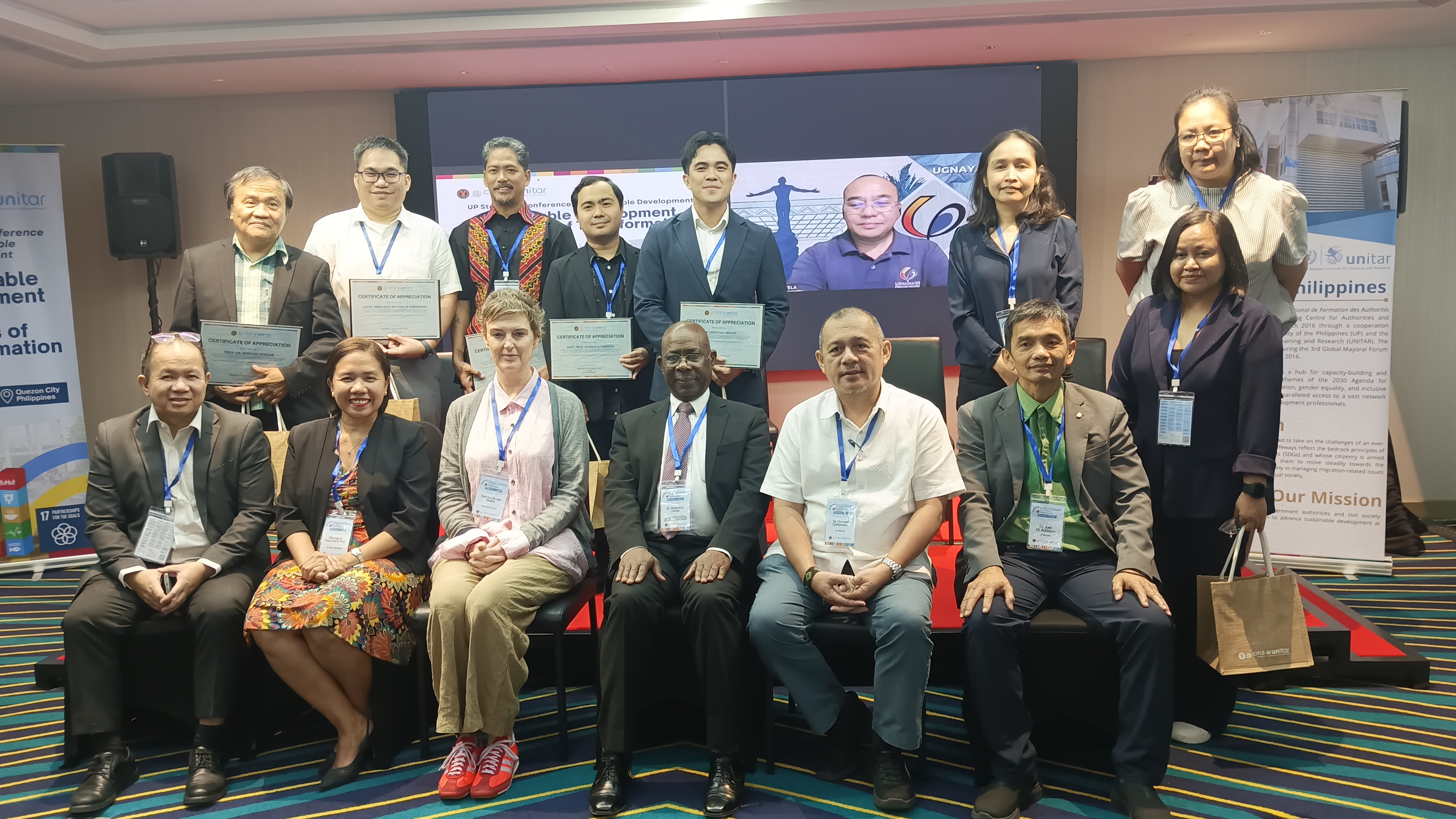
UP Manila participated in the UP Strategic Conference on Sustainable Development, organized by UP-CIFAL Philippines, along with other constituent universities of the UP System from Nov. 18–20, 2025, at the Ibis Styles Manila Araneta City. With the theme, “Sustainable Development as a Nexus of Transformation,” the three-day conference gathered faculty, researchers, and leaders from across the UP system to enhance collaboration and accelerate progress on the SDGs.
UP-CIFAL Philippines Director Michelle R. Palumbarit emphasized that UP-CIFAL Philippines’ role is to serve as a hub for capacity building and research on the 2030 SDG Agenda as she outlined the rationale and direction of the event.
Matija Kovač, Head of the Office of the United Nations Resident Coordinator in the Philippines, explained that the SDGs are not political ideologies but a “sense of direction to secure our survival.” He emphasized that these global benchmarks guide countries towards sustainable, equitable, and science-based development. Kovač highlighted the important role of higher education institutions (HEIs) in advancing the SDGs, particularly the University of the Philippines, through teaching, research, and public service, commending UP for integrating sustainability into its core mandate and transforming itself into a “living laboratory” for evidence-based policy and innovation.
Prof. Shepherd Urenje, programme specialist in Education for Sustainable Development at the Swedish International Centre of Education for Sustainable Development (SWEDESD), in his keynote address, challenged UP to move from a “business as usual” approach to a transformative education that addresses both local and global issues. He emphasized that authentic transformation requires reimagining systems, curricula, and mindsets, with teaching, research, innovation, and creative work reinforcing each other. Dr. Urenje emphasized that the SDGs must be adapted to local contexts while also advancing a transformative learning agenda that links individual growth to systemic change, thereby enabling UP to be globally engaged while remaining nationally relevant.
“Domesticating sustainability ensures that we respond to the needs and context of our people. This is probably where we want to go, although we may still be figuring it out. Achieving this will help us become a truly Filipino transformative university,” he said.
UP Manila Strengthens Capacity for a Healthy University
Dr. Paul Michael R. Hernandez, director of UP Manila Healthy University Office, presented “Championing Health and Wellness in UP Manila: Building Capacity Towards a Healthy University.” His discussion highlighted efforts toward creating a healthy, supportive, and environmentally responsible campus aligned with UP Manila’s health sciences mission.
“We are primarily responsible for coordinating all efforts and initiatives that promote and maintain the health and safety of UP Manila constituents, the workplace, and the environment,” Dr. Hernandez explained. Both international and local frameworks guide the office in its functions of education, research, and public service. Some of the office’s main initiatives include the Healthy U Campaign, Wellness Wednesdays, the Introductory Training Program for Occupational Health and Safety (OHS), and Mandatory OHS Training. The Healthy U Campaign also includes audiovisual presentations about mental health, road safety, and workplace stability.
“When the Health University Office was established in 2023, we envisioned that UP Manila constituents would want to be healthier and safer… and that what they learn would be shared in their respective communities,” Hernandez concluded.
Empowering Communities Through Social Innovation in Health
Dr. Meredith D. Labarda of the UP Manila–School of Health Sciences presented a qualitative study on “Water, sanitation, and social innovations in health,” which focused on gender and social stratifiers in rural health and water systems.
The Social Innovation and Health Initiative (SIHI) at UP Manila demonstrates how community-driven solutions are key to addressing critical health challenges while promoting sustainability and gender equity. This initiative defines social innovations as projects or processes that “challenge the status quo and meet the needs of end users” with active involvement from community members in design and implementation.
She presented the project: Holistic Water Systems for Pumping Water Uphill by the Alternative Indigenous Development Foundation Inc. (ADEFI) in Negros Occidental. Using a hydraulic ramp pump requiring no electricity, the project brings clean water to remote upland communities. According to Dr. Labarda, ADEFI “became a social innovation winner not just because of the ramp pump but because of the social development component… the community was already leading this innovation.” The initiative also takes into account gender dynamics: women, traditionally responsible for fetching water, now have time for other pursuits, including livelihoods like lemongrass farming.
“This democratizes the research processes themselves, and it democratizes the ownership of research results… the results of our research here are a prerogative of the whole community,” she emphasized, highlighting the integration of research, community engagement, and sustainable development.
Through its active participation in the Sustainability Conference, UP Manila has demonstrated its primary role in fostering a healthier, more sustainable future for Filipino communities. The University continues to advance SDG-aligned initiatives through evidence-based health programs, interdisciplinary research, and strong collaboration with government, academe, and international partners.
University of the Philippines President Atty. Angelo Jimenez underscored UP’s mandate to contribute to building “a just, equitable, and sustainable society that leaves no Filipino behind.” He said that the conference is aligned with the UP Strategic Plan 2023–2029. From environmental degradation to social inequality, he pointed out various challenges and called on the UP community to be hopeful, innovative, and compassionate in developing solutions that are practical, creative, and just.
Read More: