
Text and Photo by the College of Arts and Sciences
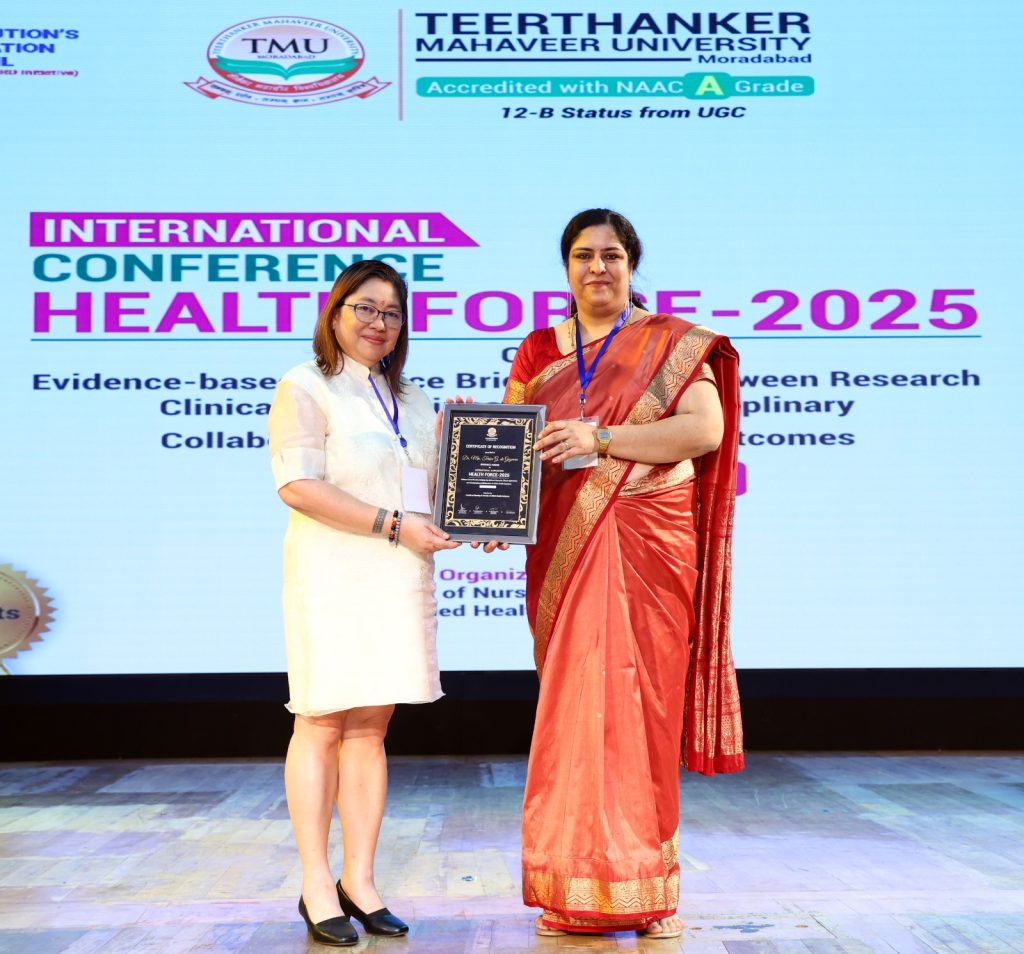
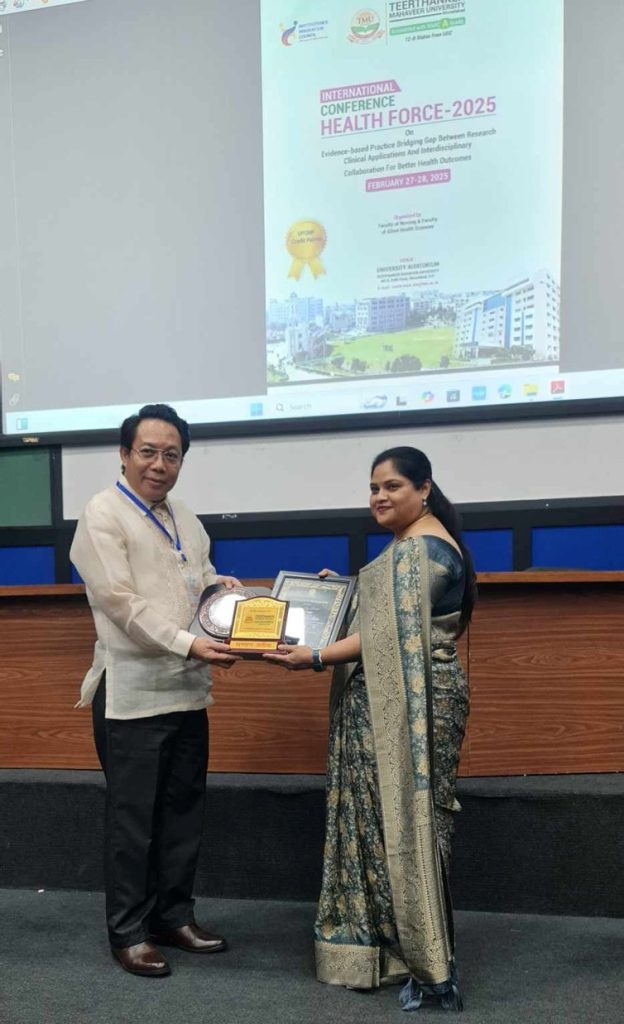
College of Arts and Sciences (CAS) Dean Ma. Teresa De Guzman and Associate Dean Jay Dalet served as speakers and resource persons at the “Healthforce 2025” international conference held from Feb. 27-28, 2025, at the Teerthanker Mahaveer University (TMU), Moradabad, India.
The Philippines’ Disaster Management Model
In her talk, “Bridging Disciplines: A Framework for Culturally Contextual Disaster Victim Investigation,” Dr. De Guzman highlighted that the Philippine disaster management system is exemplary, as it effectively integrates Indigenous Knowledge Systems (IKS) into its strategies.
She elaborated on how IKS contributes to water purification, spiritual healing, medicinal plants, early warning signals, and cultural competencies. Dr. Teresa emphasized that combining traditional knowledge with modern science can enhance healthcare services and disaster management.
She also discussed education, public health challenges, forensic science, and disaster management, advocating for their integration. She demonstrated how Filipinos use bird calls as early warning signs for natural disasters, stating that early warning signals are always present around us; we just need to learn how to recognize them.
Role of Forensic Science in Healthcare and Medical Research
Dr. Jay Dalet focused his discussion on Bridging Forensic Biology and Nursing: Integrating RNA Fluorescence in Situ Hybridization with Anthropocentric and Ecocentric Evidence in Clinical and Forensic Casework.
In both forensic biology and nursing, adopting anthropocentric and ecocentric perspectives enhances the interpretation of biological and environmental evidence in clinical and forensic settings. Advanced RNA-based techniques, such as RNA Fluorescence in Situ Hybridization (RNA-FISH), offer a transformative approach by enabling precise localization of multiple cell types within body fluids and tissues—including epithelial cells marked by Keratin 10 (KRT10).
This capability is particularly valuable in compromised samples, aiding in both forensic investigations and clinical diagnostics. Integrating human-centered evidence with environmental factors—such as toxins, pathogens, and bioterrorism agents—strengthens forensic casework while also informing nursing practices related to patient care, disease tracking, and public health responses. By merging forensic biology with nursing expertise, this interdisciplinary approach advances both justice and healthcare, reinforcing the vital role of biological science in high-stakes investigations and clinical decision-making.#