

Text by Charmaine A. Lingdas
Photos by Sarah Hazel Moces S. Pulumbarit
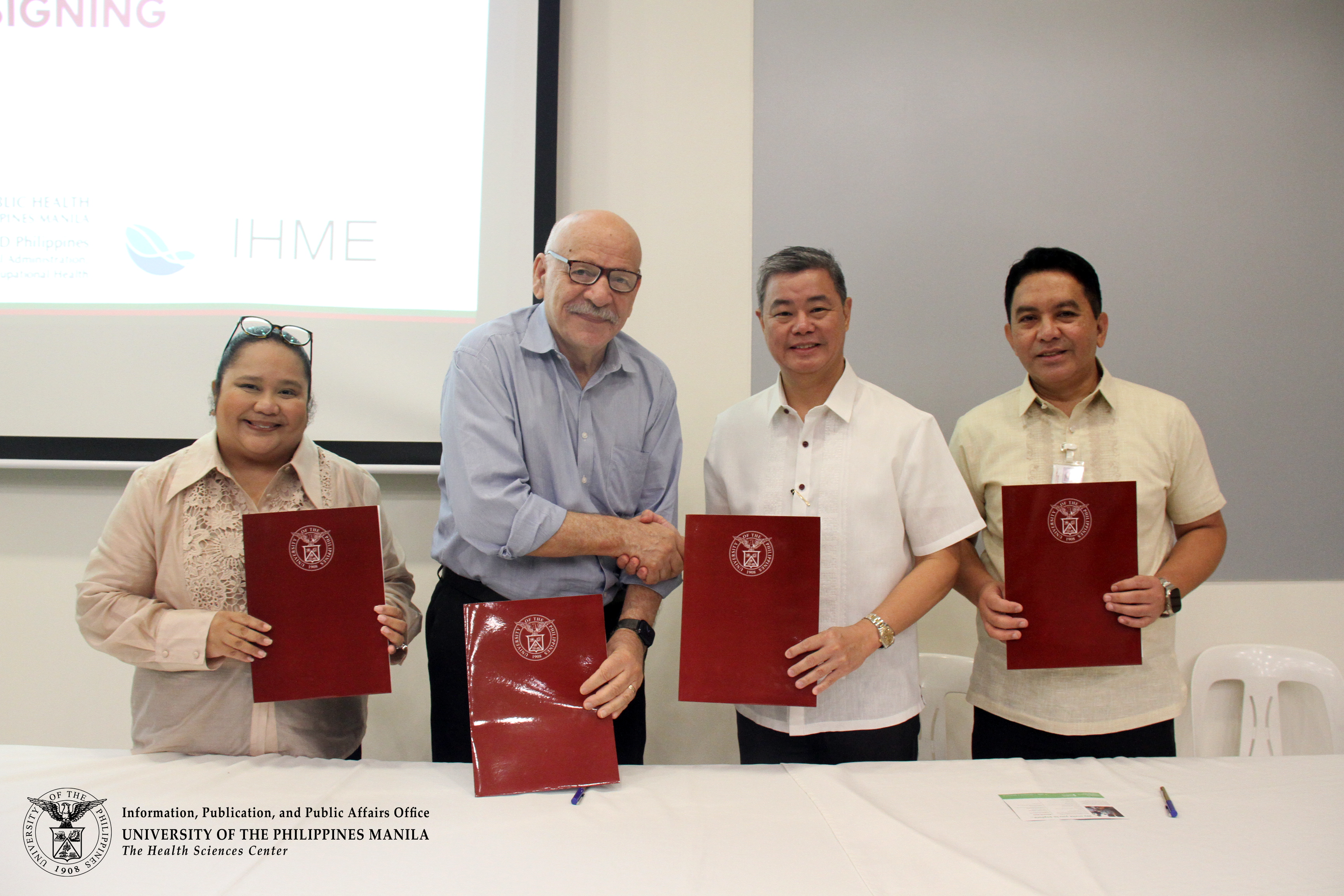
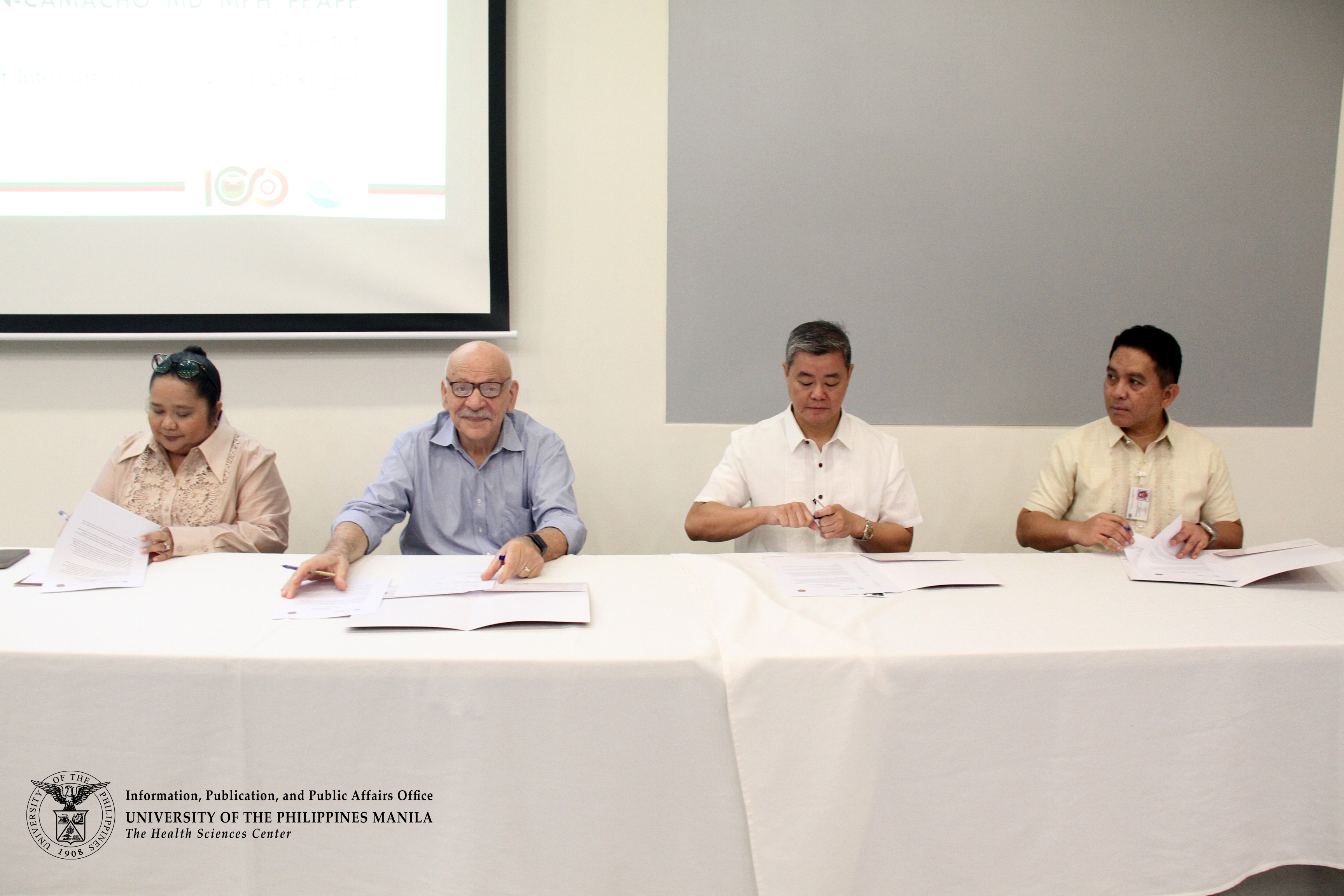
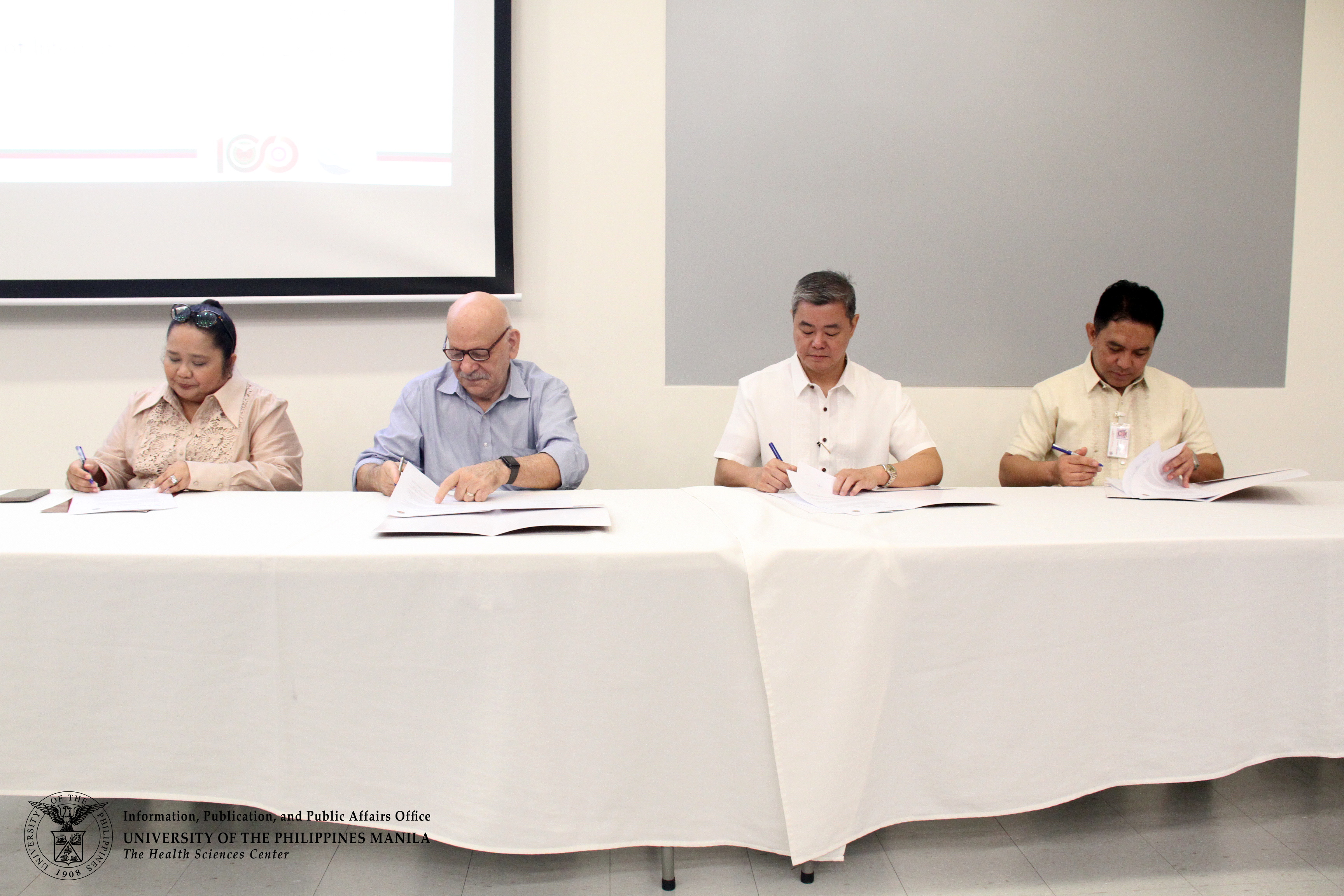
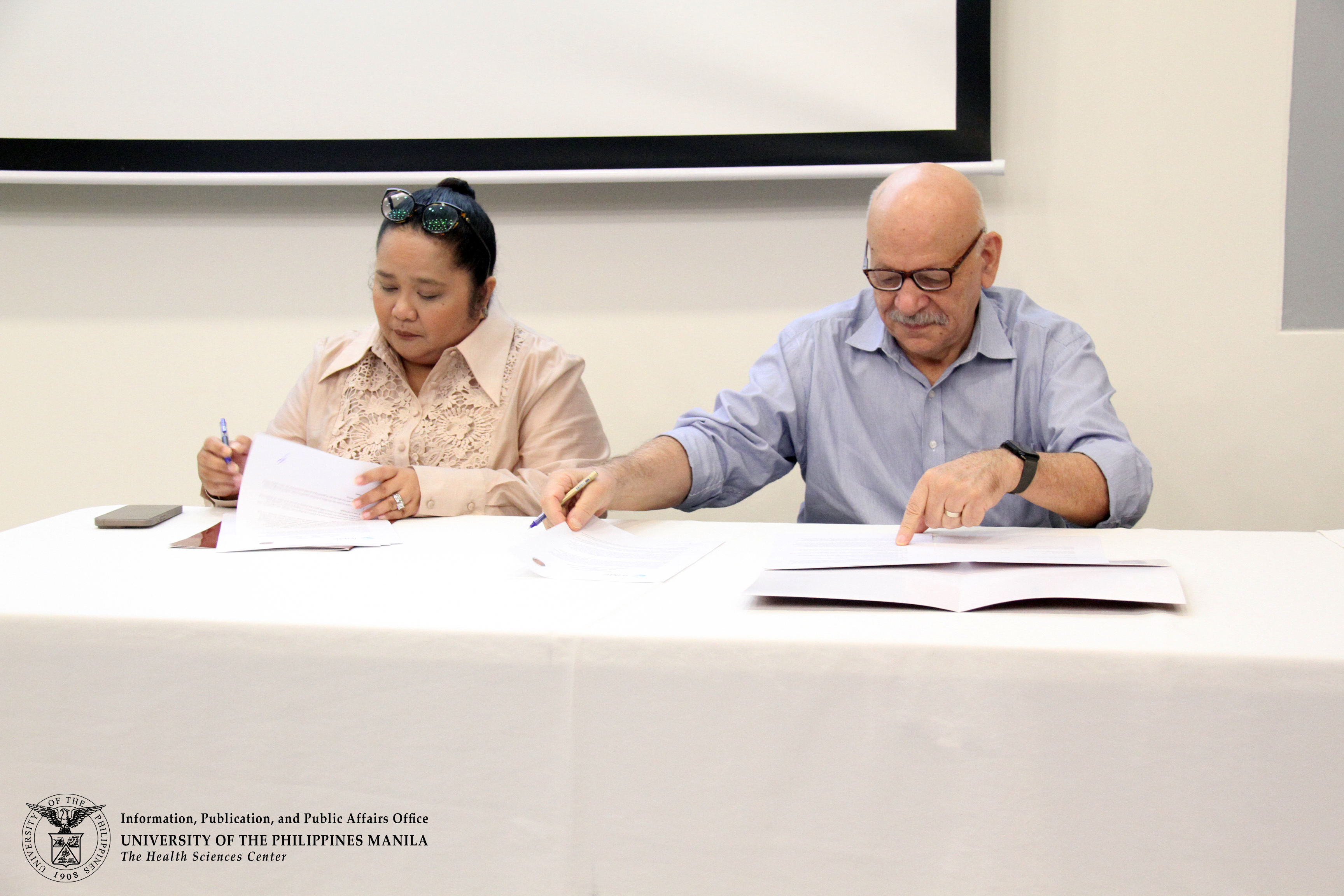
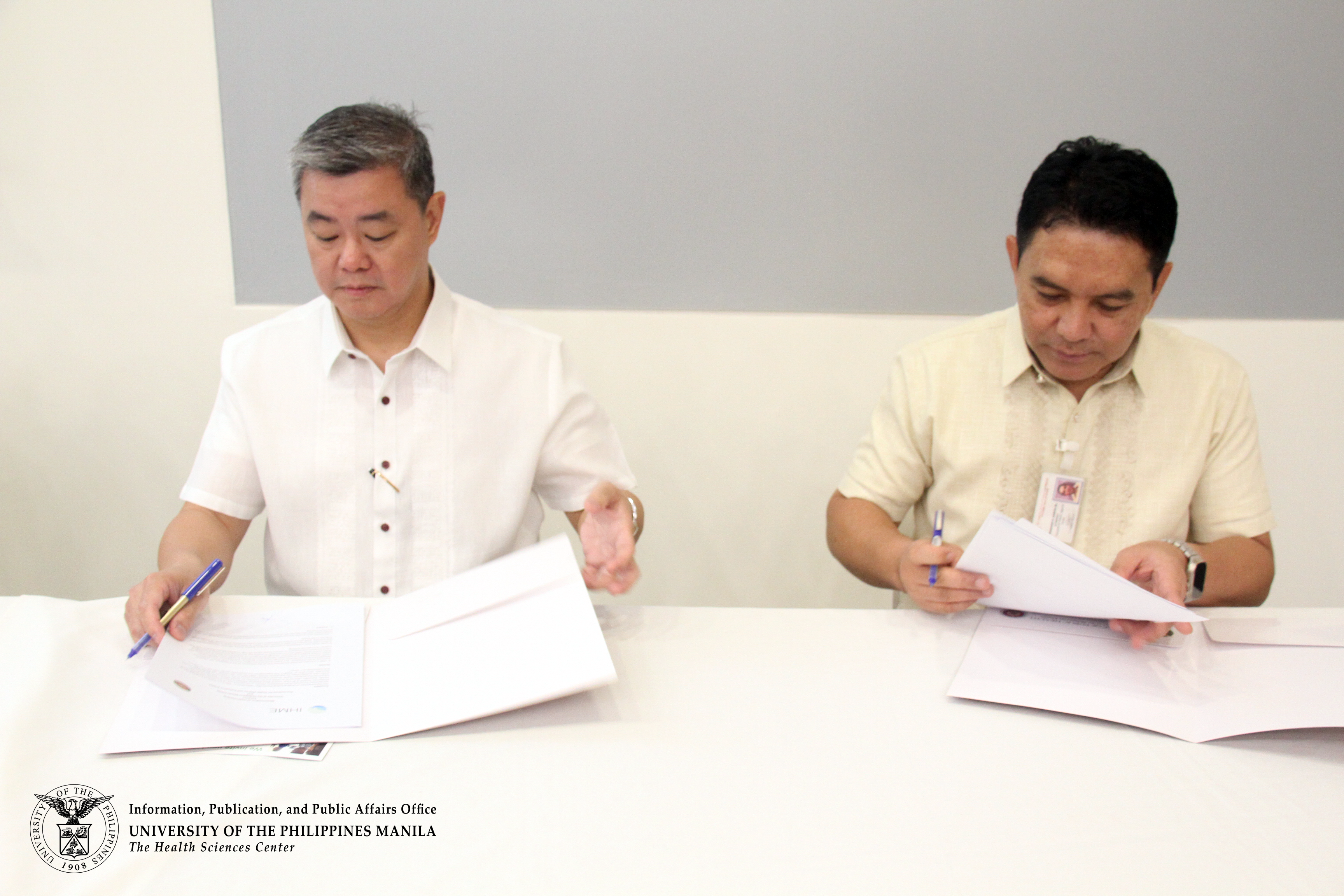
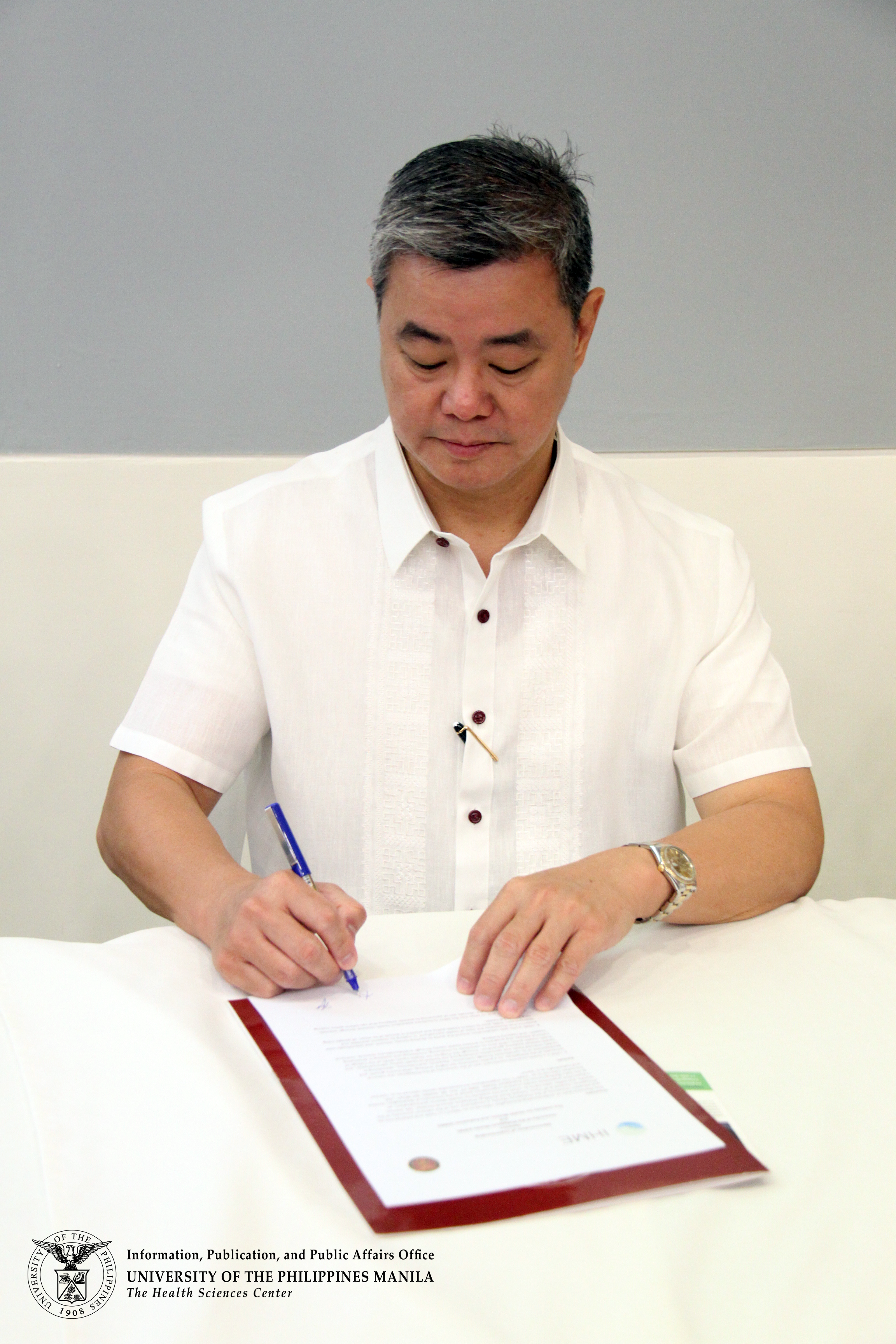
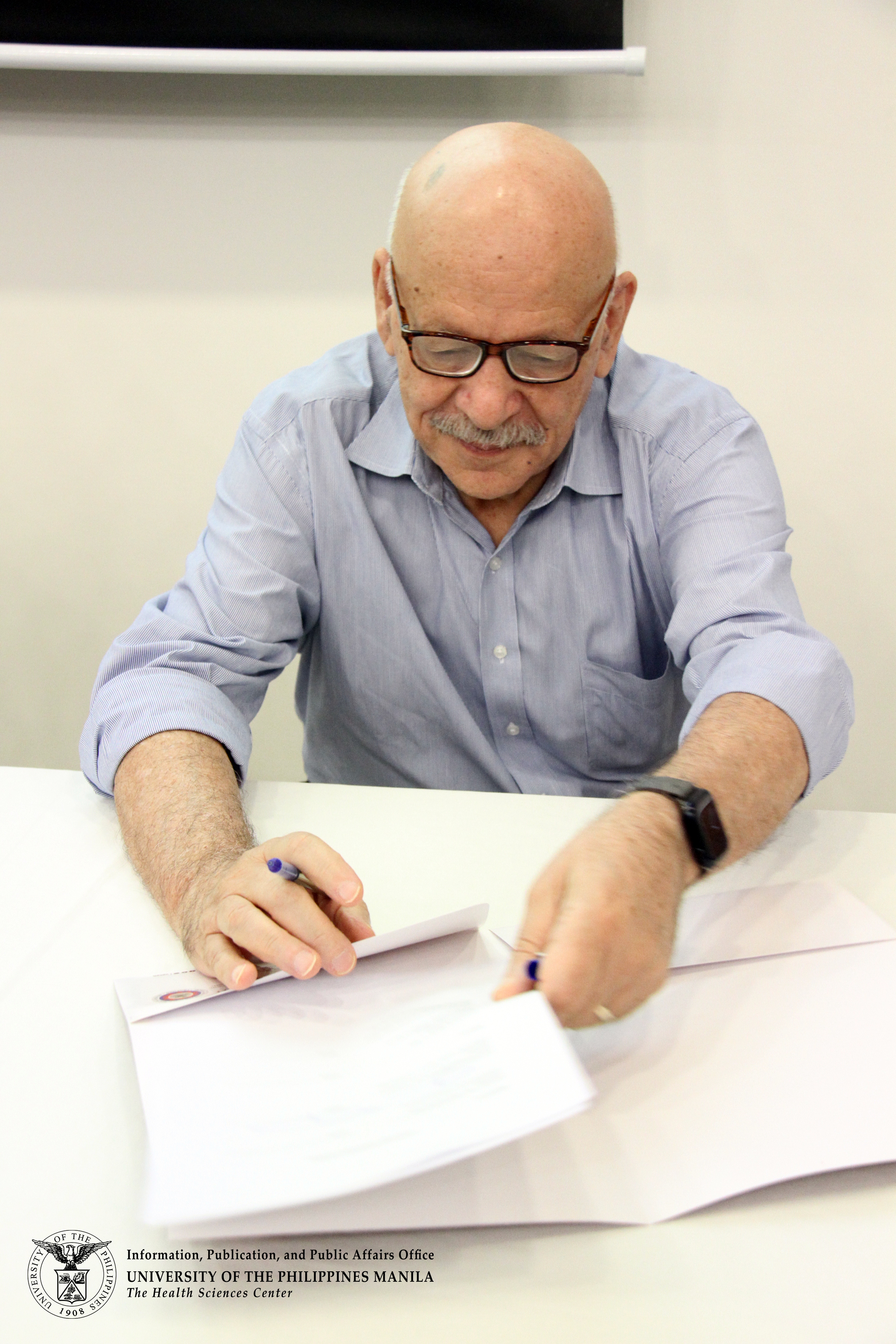
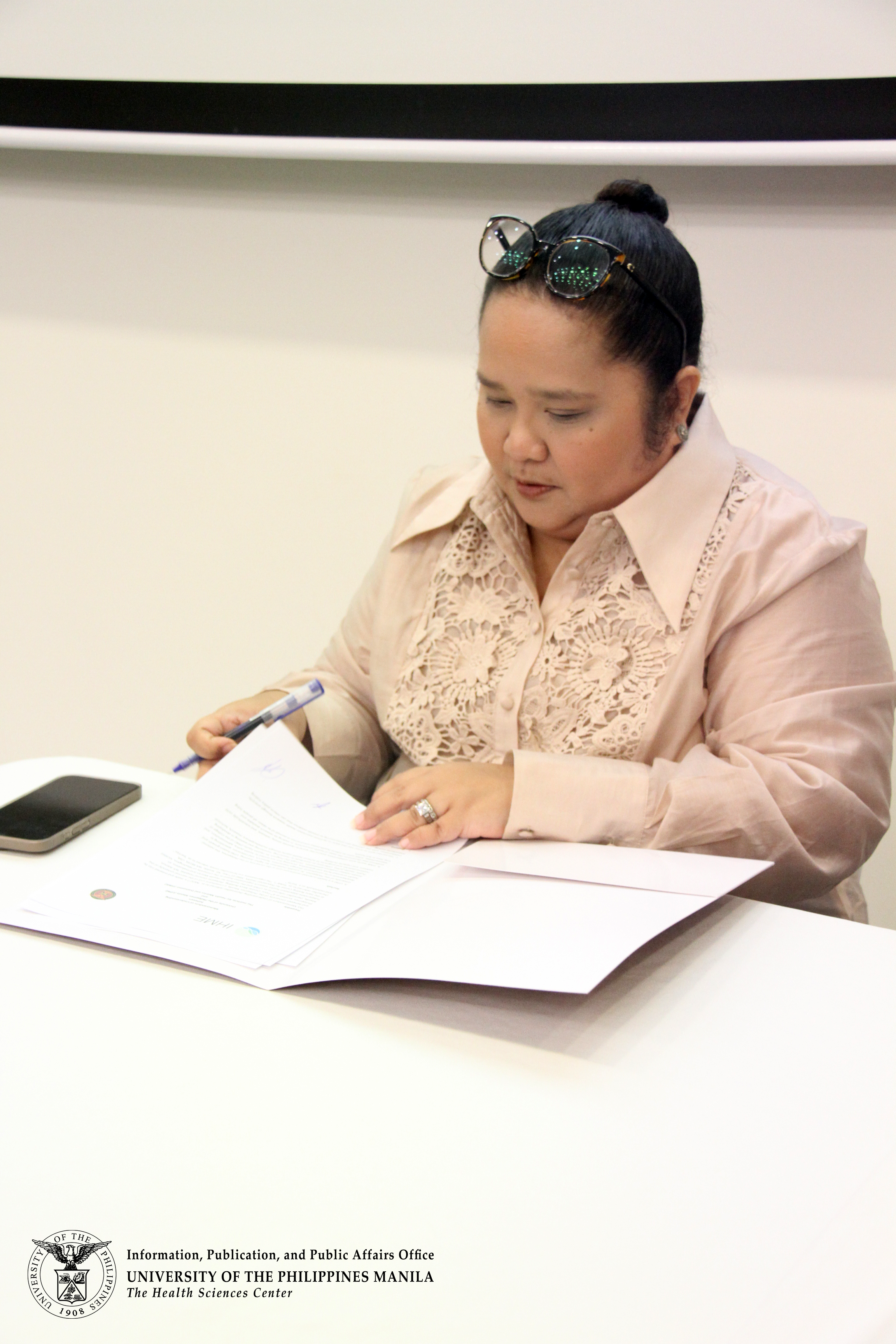
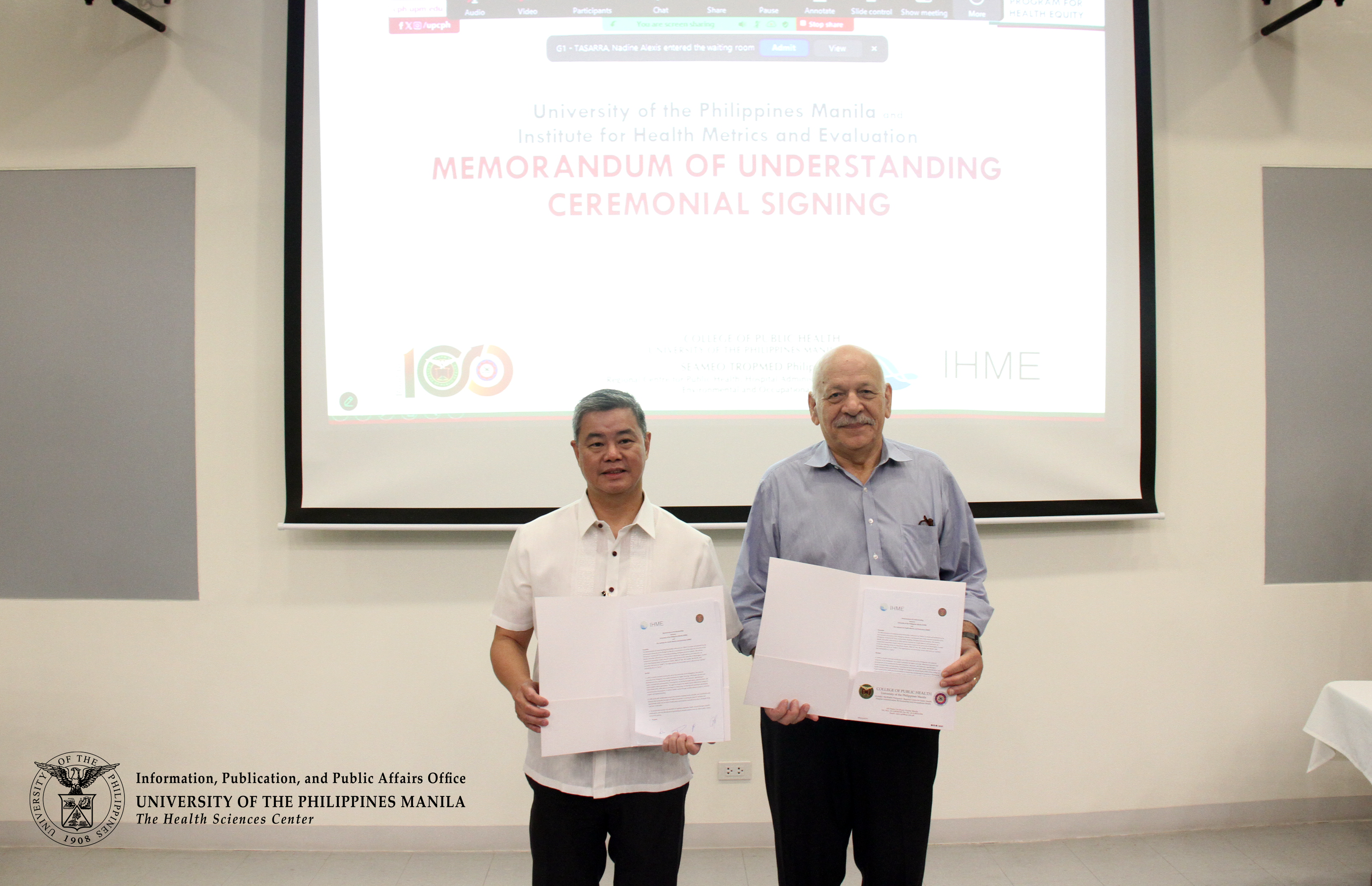
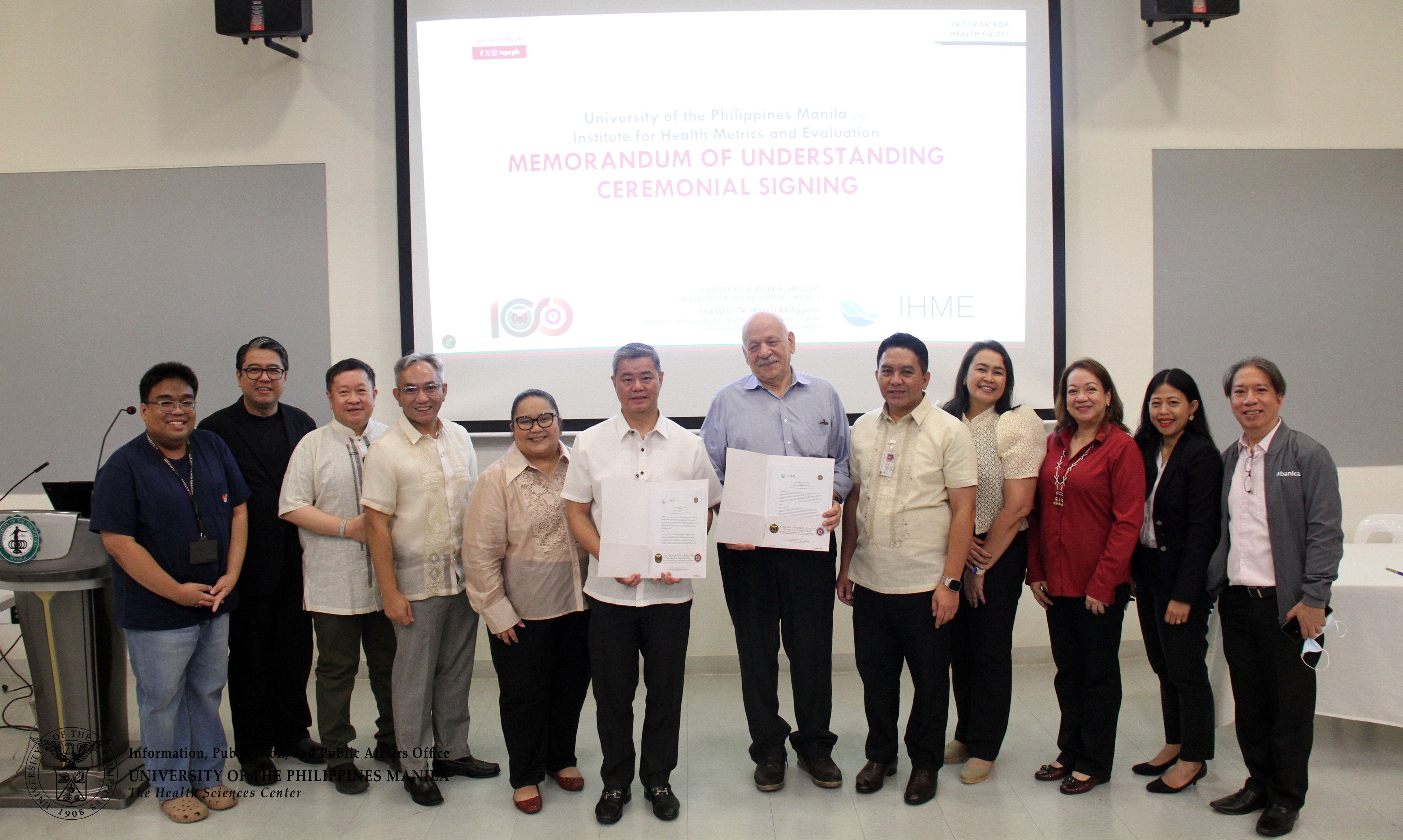
The University of the Philippines Manila (UP Manila) and the Institute for Health Metrics and Evaluation (IHME) of the University of Washington signed a Memorandum of Understanding (MOU) on July 28, 2025, marking the start of a long-term collaboration to advance the use of health evidence for research and policy.
The MOU establishes a framework for cooperation in areas such as burden of disease estimation, forecasting, health resource analysis, and capacity-building. Through the Program for Health Equity of the UP College of Public Health, UP Manila will work with IHME to co-produce scientific outputs, including a Philippine Capstone Report based on the Global Burden of Disease (GBD) 2023 data.
The partnership also includes joint research projects, co-authorship of publications, training programs, and knowledge exchange supporting the shared goal of strengthening evidence-based policymaking in the Philippines. The MOU underscores principles of mutual benefit, scientific excellence, and data transparency.
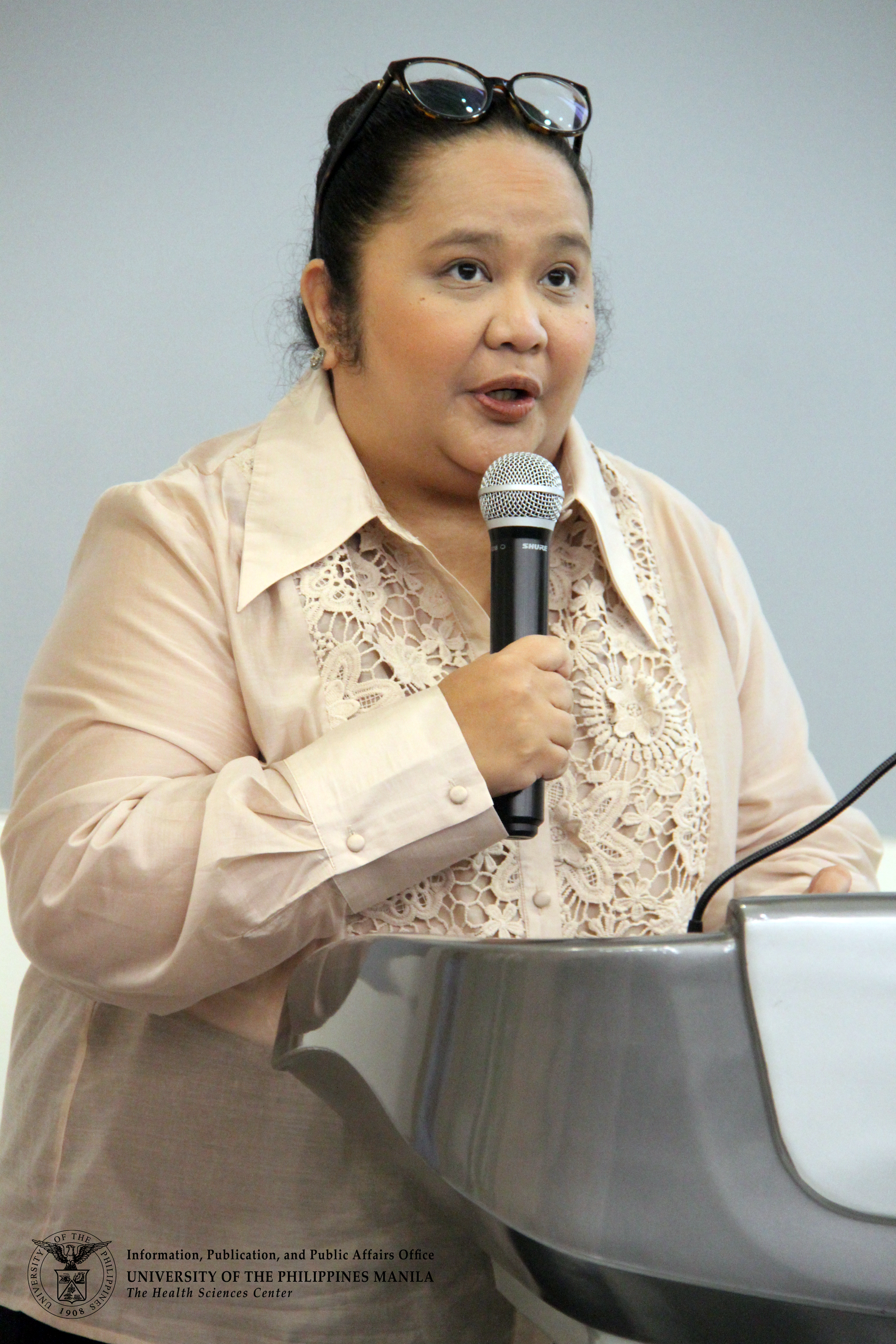
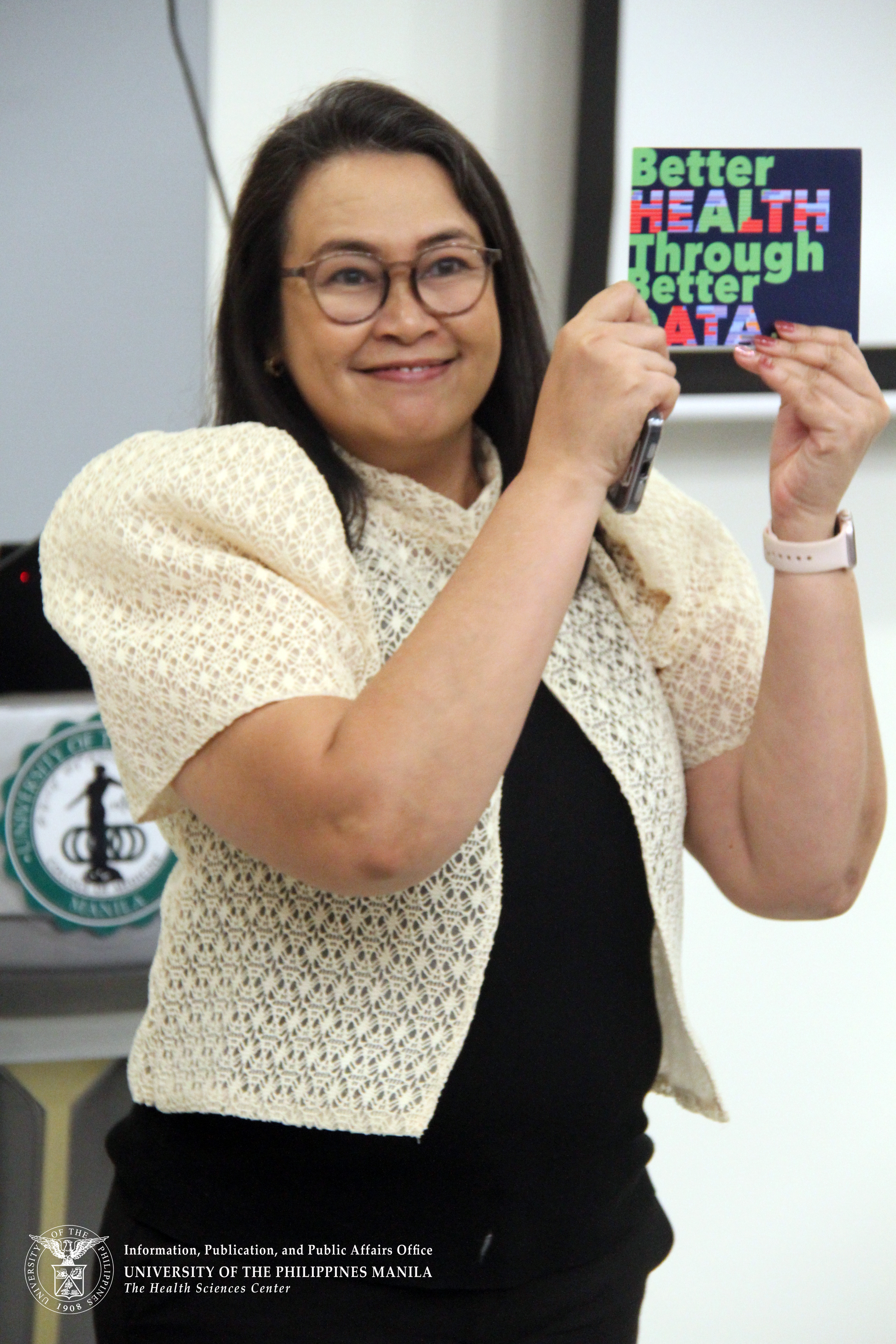
Dr. Vivien Fe Fadrilan-Camacho, director of the Office of International and Local Linkages (OIL), emphasized that the collaboration between the University of the Philippines and its international partners is a testament to UP’s vision as a national university with a global outlook and distinction. She noted that it reflects the university’s commitment to fostering transnational academic and research cooperation that results in meaningful and beneficial engagements. This partnership, she added, fulfills UP’s internationalization mandate and reinforces its role in contributing to national, regional, and global development.
“The UP Manila Office of International and Local Linkages takes great pride in supporting initiatives that bridge geographical, institutional, and disciplinary boundaries. The work we do here today and in the days to come is a testament to the power of partnerships,” said Dr. Camacho.
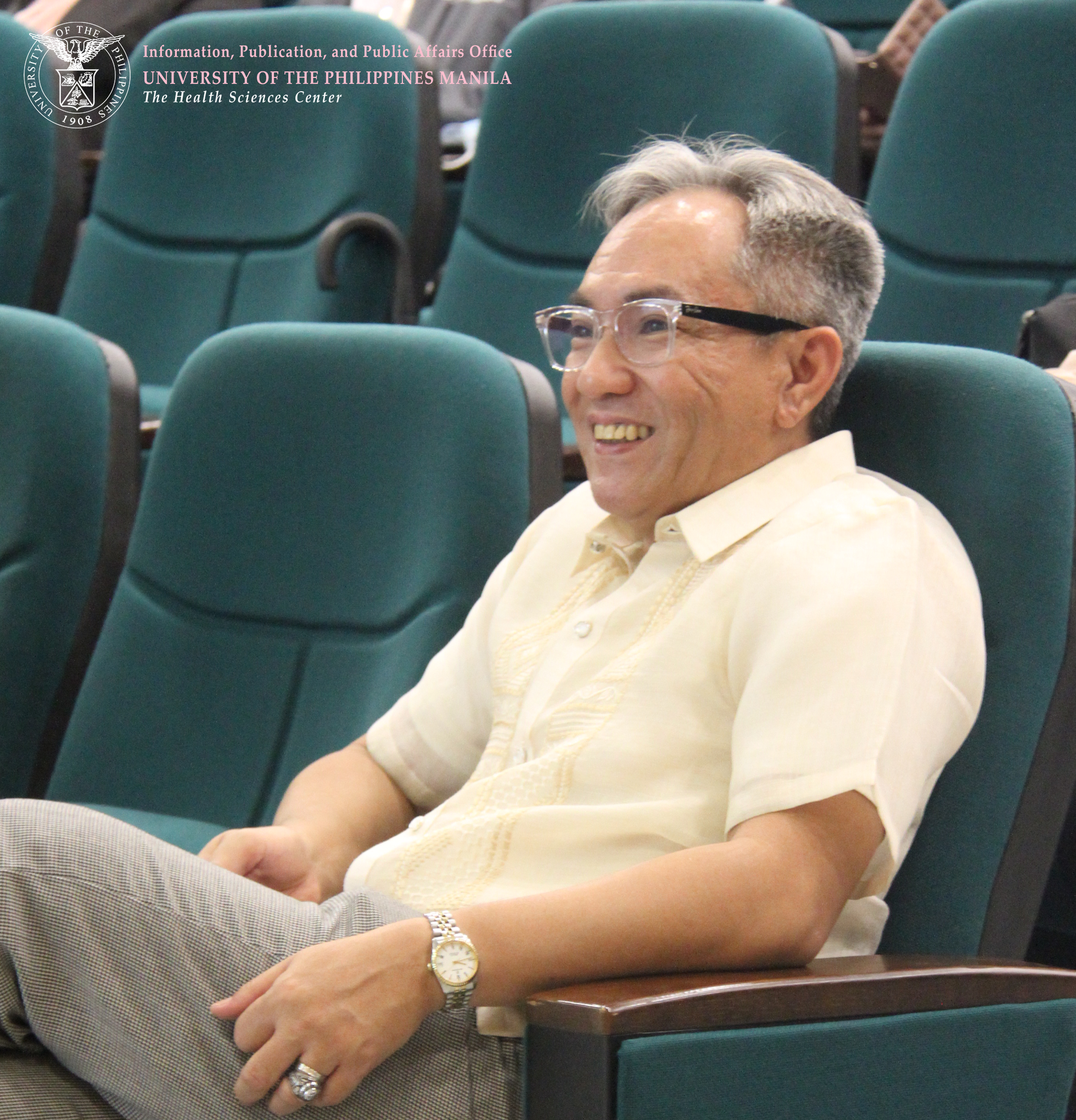
Chancellor Michael Tee emphasized that the partnership with IHME is vital, as meaningful improvement in health outcomes begins with accurate measurement. Without clear metrics, he noted, progress cannot be effectively achieved.
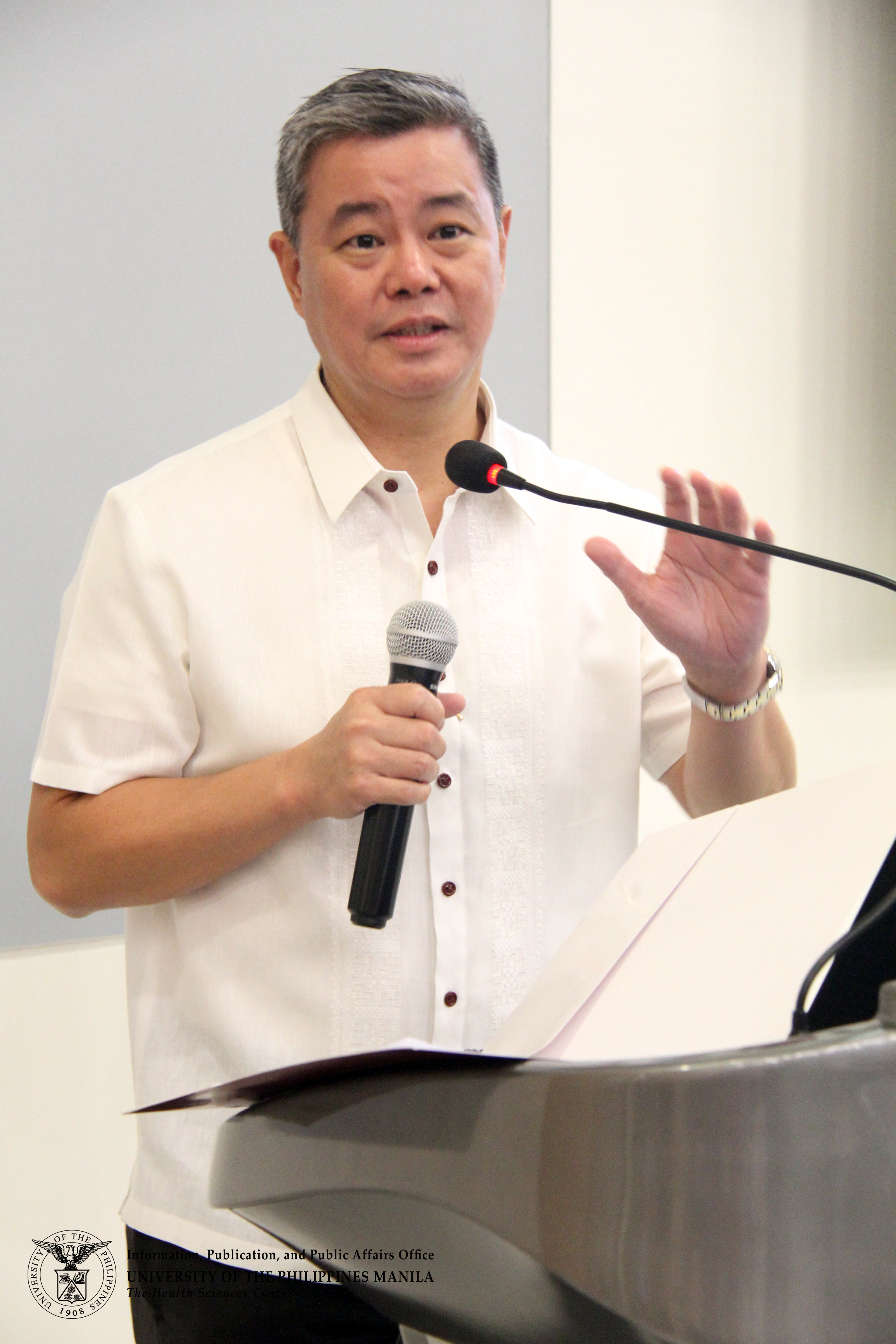
“Beyond the academic recognition and impressive publications, what truly matters is the impact. How our collaboration canimprove public health outcomes,” said Chancellor Michael Tee.
He stressed that the responsibility extends beyond doing what is right for each patient to also ensuring that the entire health system functions effectively. A well-designed health system, he said, must be efficient, data-driven, and tailored to meet the unique needs of our diverse communities. That’s where subnational data comes in. It allows us to custom-fit interventions to what is relevant and necessary for different parts of the country.
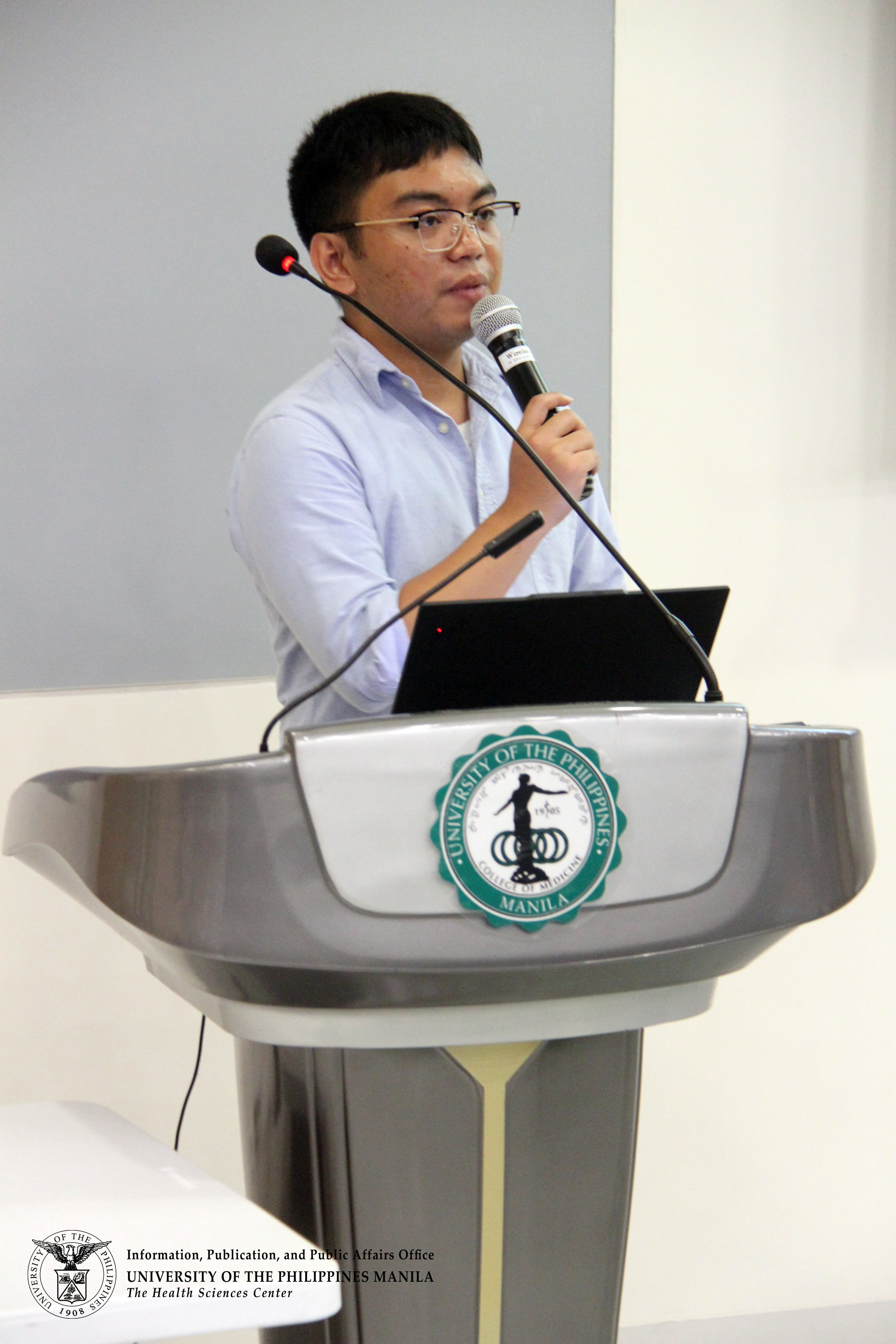
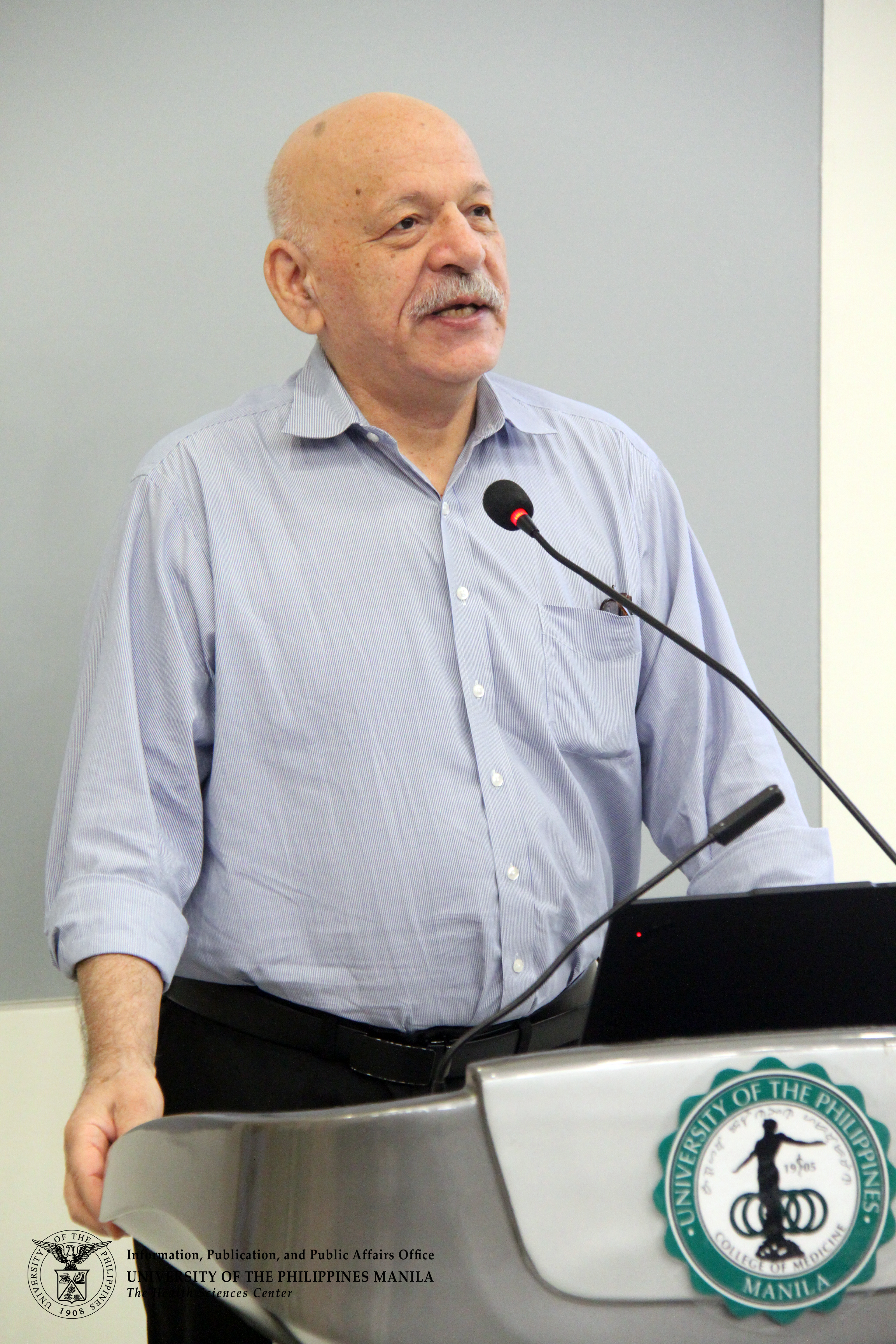
Meanwhile, Dr. Mohsen Naghavi, Professor of Health Metrics Sciences and Director of Subnational Burden of Disease Estimation at the Institute for Health Metrics and Evaluation, University of Washington said that “the best country in the region with the data is the Philippines” due to the quality and availability of its health data, particularly for subnational analysis.
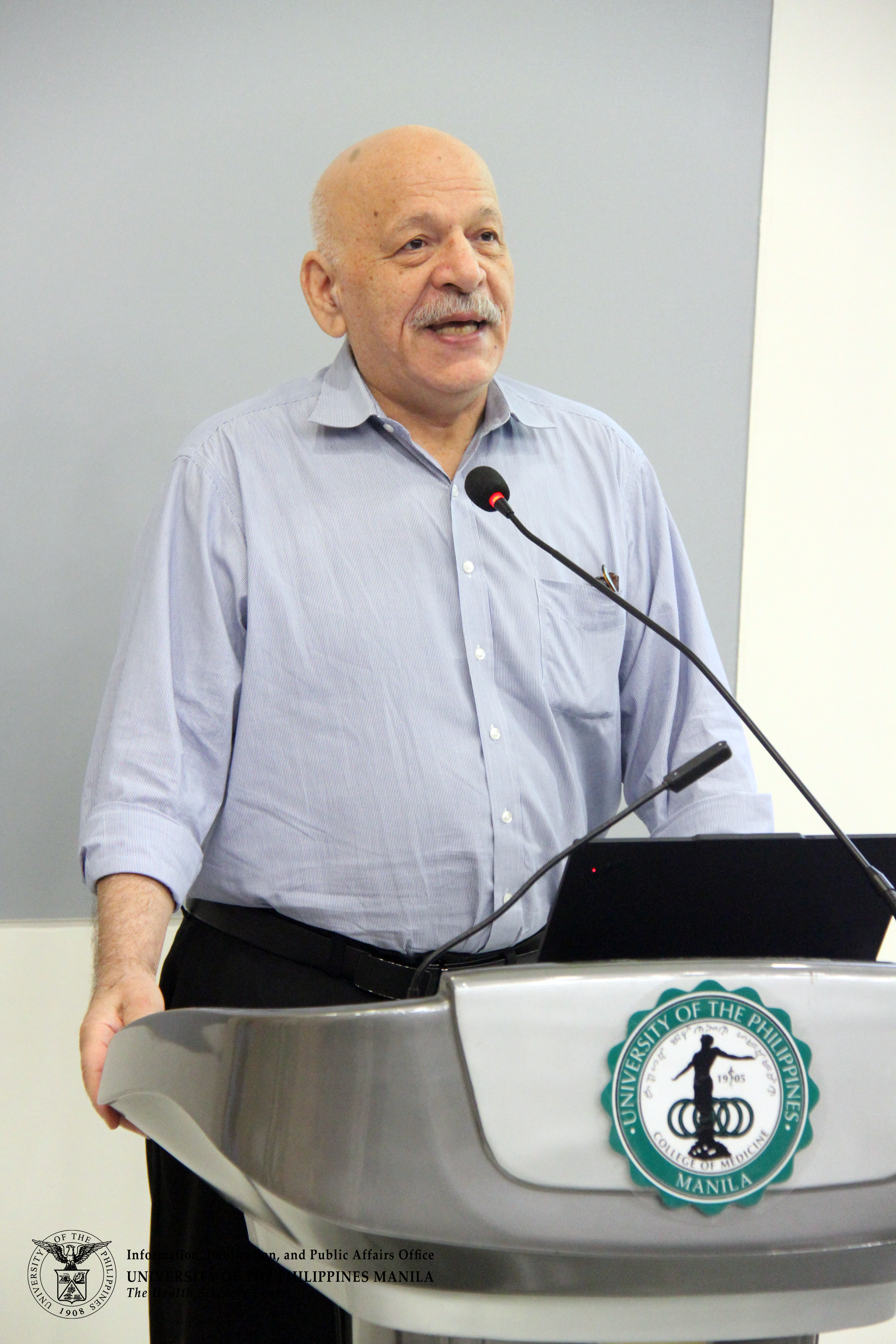
He said that unlike in most cases where funding is necessary to carry out extensive subnational analyses, the work in the Philippines was completed without a formal request for support. The results will be publicly available after the submission of the Philippine Capstone Paper by the UP Manila UP College of Public Health. These findings will offer valuable insights into local health conditions and can be further refined through ongoing collaboration.
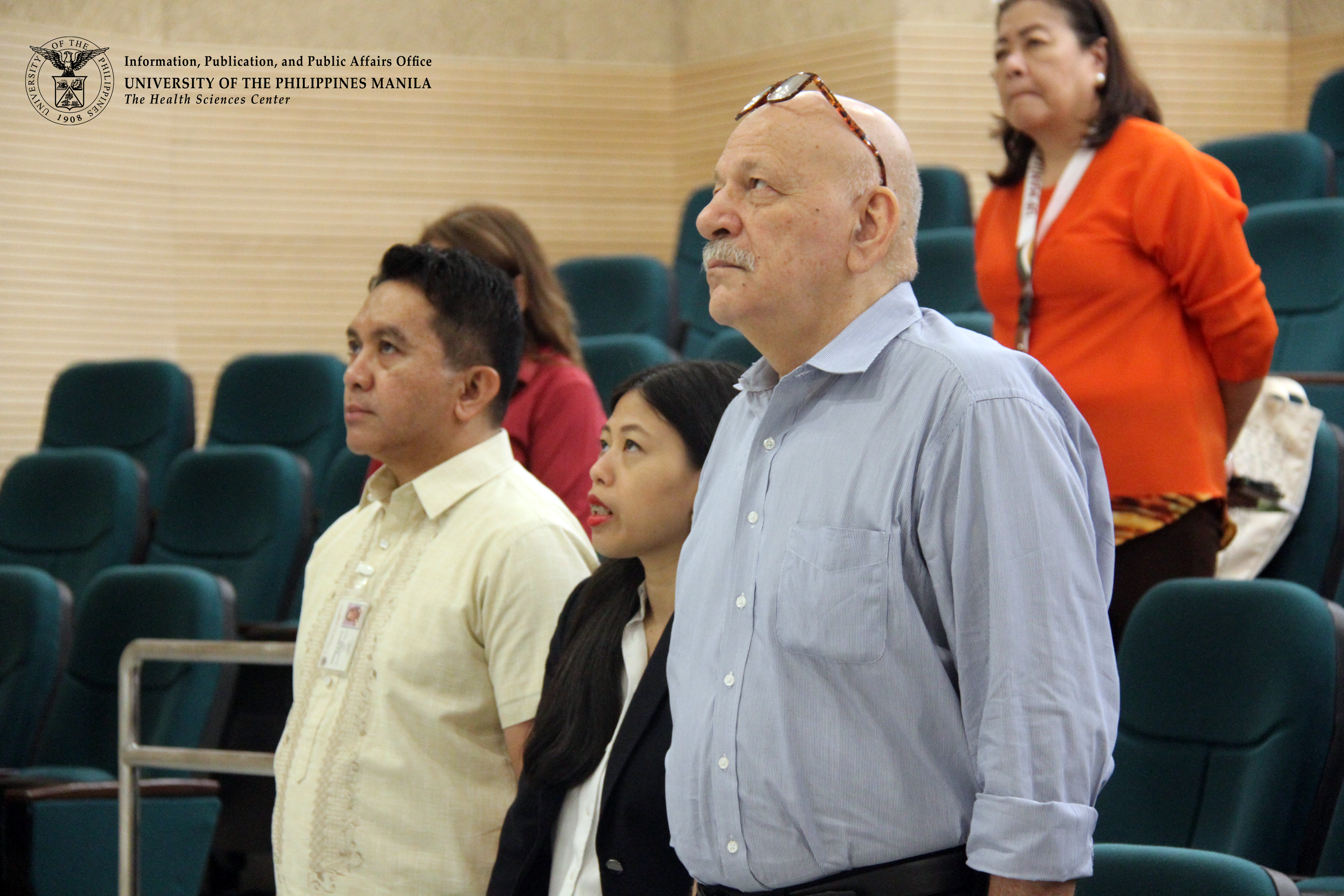
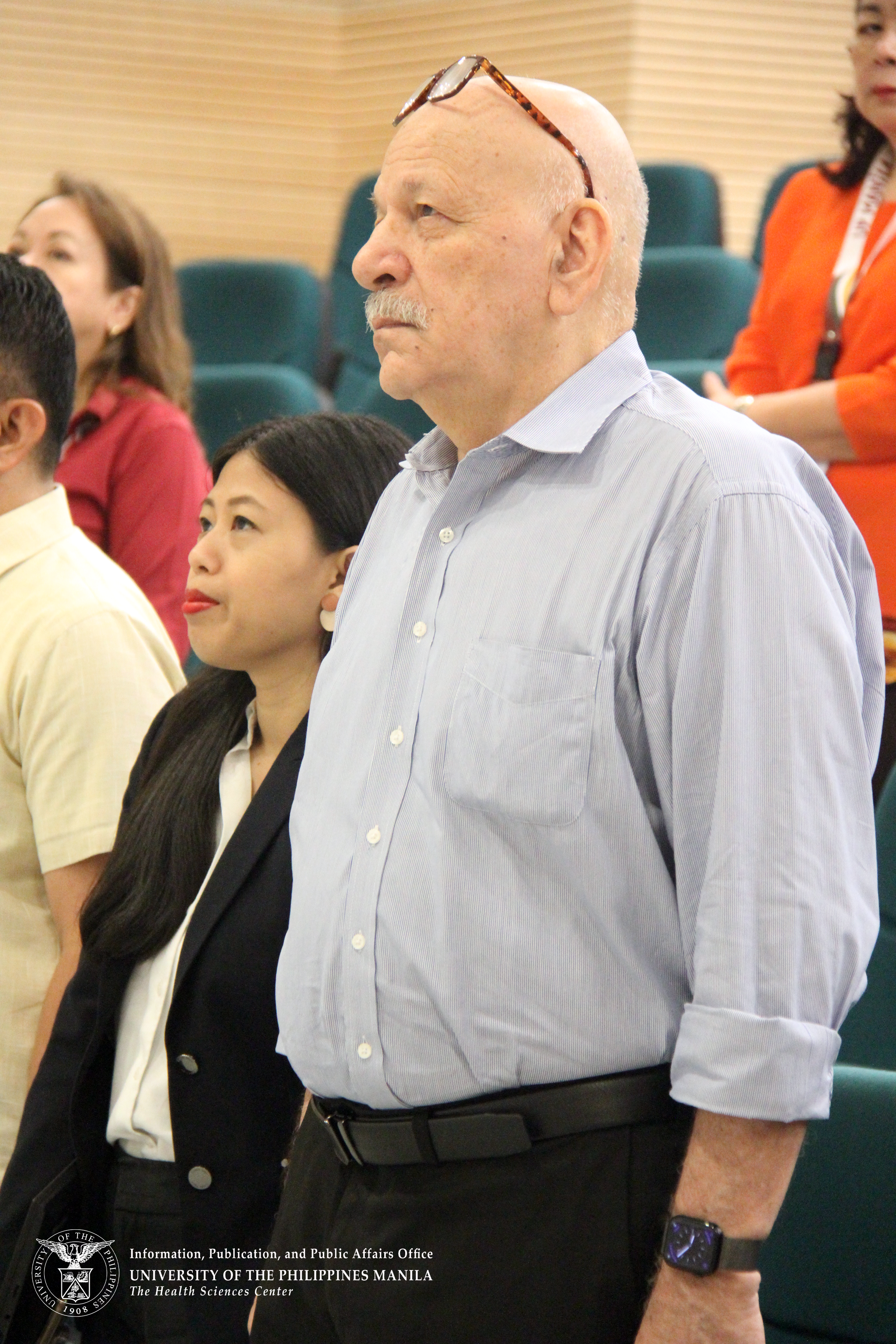
The ceremonial signing took place during a two-day workshop and stakeholder consultation hosted by the Program for Health Equity of the UP College of Public Health on July 28-29, 2025, with the participation of IHME representatives Prof. Naghavi and Ms. Ruri Syailendrawati, Senior Engagement Officer at the Institute for Health Metrics and Evaluation, alongside key Philippine health stakeholders.
The workshop aims to engage participants in technical and strategic discussions focusing on the examination of national and subnational health data. The goal is to identify research priorities and consult with stakeholders to ensure that the collective work remains relevant and actionable.
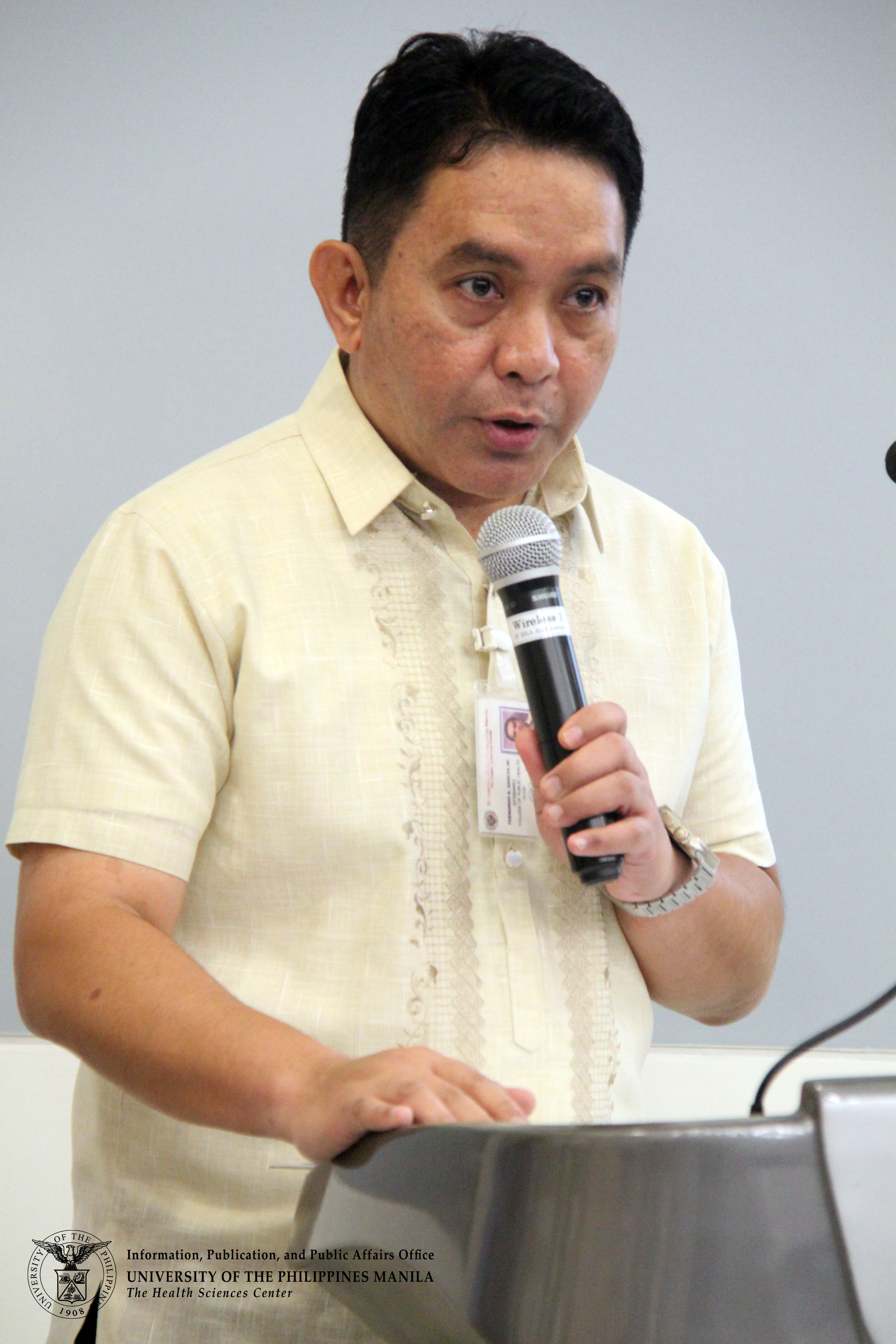
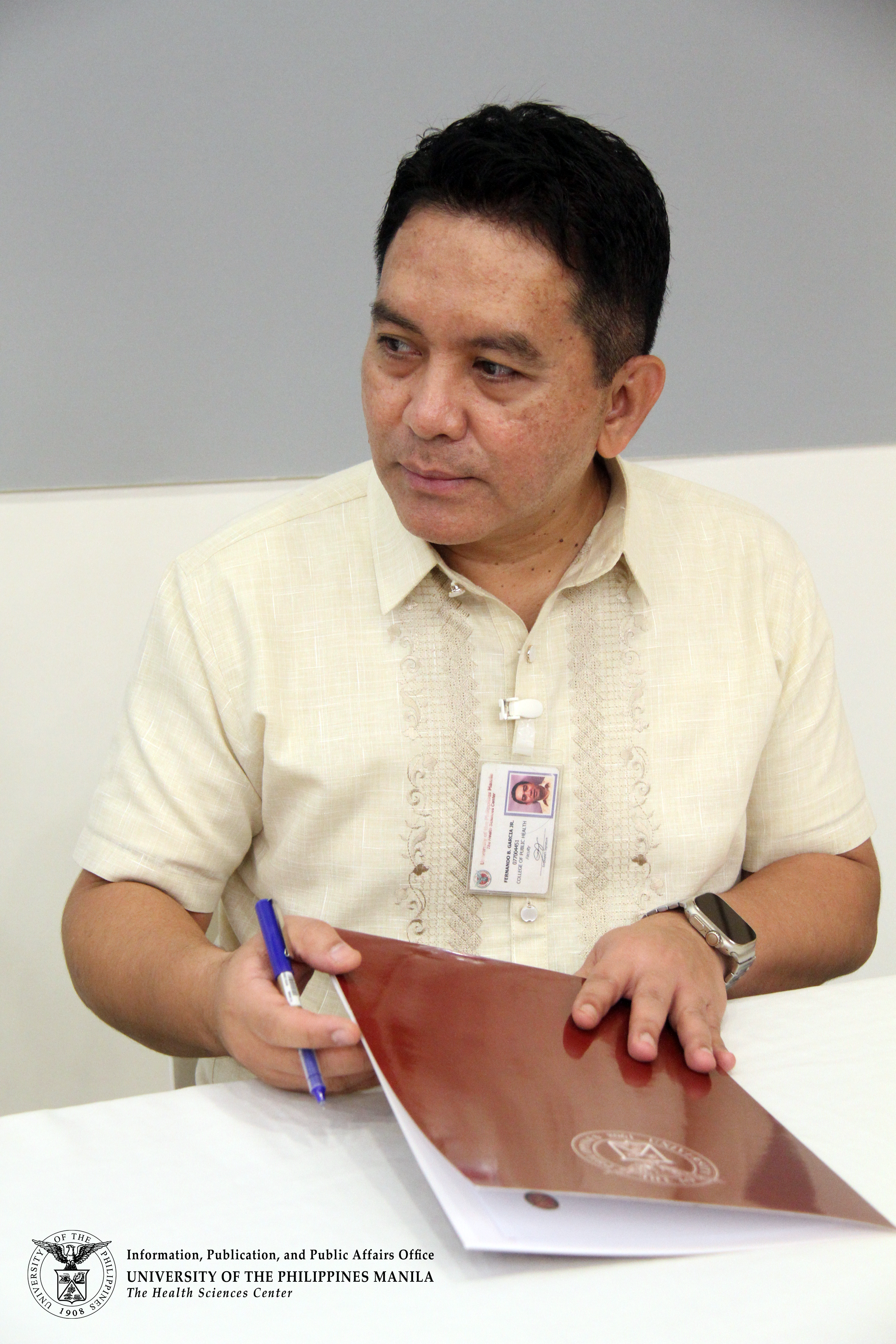
“This workshop is actually more than a two-day event—it is a continuation of the shared vision between UP Manila and IHME to promote evidence-based policymaking through the extensive analysis of health data,” said CPH Dean Fernando Garcia Jr.
Dean Garcia also emphasized the importance of enhancing the capacity of the participants to analyze and communicate Global Burden of Disease results and, more importantly, using this evidence to inform decisions that improve the health and well-being of every Filipino.