

Text by: Jennifer Manongdo
Photos by: Ehcel Hurna
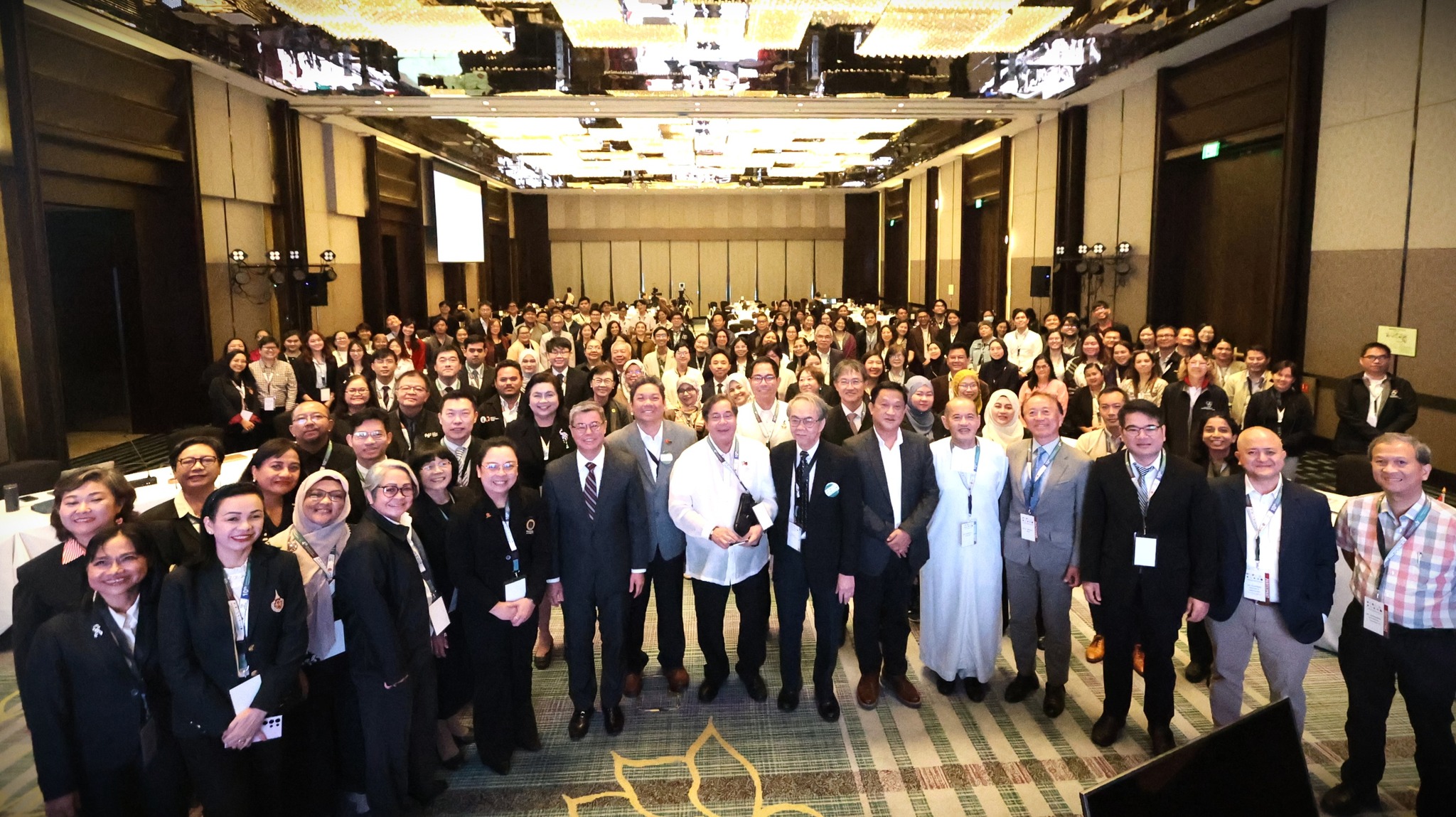
The 4th International Health Promotion Conference and the 10th ASEAN Universities Network (AUN) International Advisory Committee Meeting on Nov. 27-28, 2025, at Hilton Hotel in Pasay City showcased presentations focused on the theme, “Advancing Health Promotion in the ASEAN Region, Championing University Innovations for Equity and Resilience.”
The two-day event, attended by at least 200 members of AUN, tackled timely topics confronting universities in the ASEAN Region, such as AI, Climate Change, and Mental Health. It also served as a venue for advancing best practices among the AUN-HPN members and for sharp discussions on new research useful for promoting better health in campuses and communities.
Three universities were awarded the 2024 5-star plus Health University Rating System (HURS). These are: Universiti Kebangsaan Malaysia, Universitas Gadjah Mada, Universitas Indonesia.
For the 2024 5-Star Universities, the following universities received the award: Universitas Airlangga, Indonesia; Mahidol University (Thailand), King Mongkut’s University of Technology Thonburi (Thailand), Naresuan University (Thailand), Walailak University (Thailand), and De La Salle University.
Similarly, the following universities received the 4-star university award: Prince of Songkla University (Thailand), Khon Kaen University (Thailand), Chiang Mai University (Thailand), and Burapha University (Thailand).
HURS is an online self-assessment tool created by AUN-HPN to allow member universities to evaluate their progress and success in health promotion on their campuses. HURS entails 46 self-assessment questions based on 22 areas listed in the Healthy University Framework, such as systems and infrastructure, health literacy, and mental well-being of students and staff members.
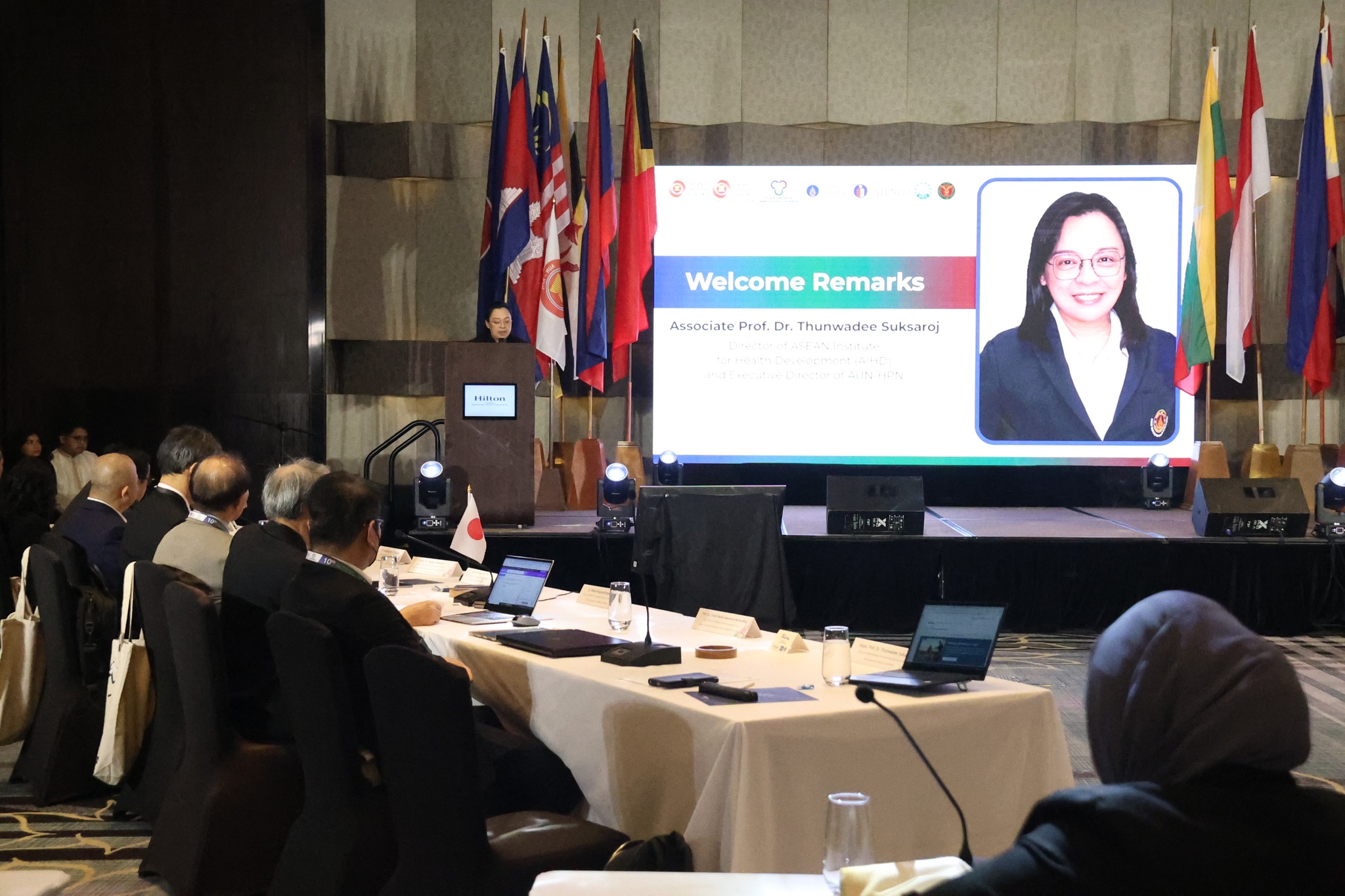
Dr. Thunwadee Suksaroj, director of ASEAN Institute for Health Development and Executive Director of the AUN – Health Promotion Network (AUN-HPN) enjoined participants to address emerging health challenges through innovation.
The ASEAN University Network was formed in 1995 to foster regional solidarity among the region’s leading higher education institutions.

“Through our teaching, learning, formation, research and engagement, we strive to seek innovative and sustainable solutions to the most urgent challenges facing society today. Collaborative partnerships and meaningful engagement like these allow us to hope for a future that is more just and sustainable,” Fr. Roberto C. Yap, S.J., president of the Ateneo de Manila said.
AI in Health
Pres. Jimenez discussed how artificial intelligence (AI) is reshaping health systems while also posing challenges we must urgently address. He reminded the audience that health data is “intimate,” “sensitive,” and “deeply personal.”
“If AI systems are trained on incomplete, unrepresentative, or skewed data, they may produce flawed recommendations that disproportionately harm those already marginalized…I believe that universities must provide the intellectual and moral leadership necessary to guide AI toward public good,” he said.
Climate Change
On the issue of climate change, Geminn Louis Apostol, program head of Environmental Health, Ateneo Center for Research and Innovation, pointed out how several human activities deplete the global carbon reserves. He said burning fuels, deforestation, land-use changes, and greenhouse gas emissions from agriculture induce climate change.
He also warned about the numerous “false solutions” or the “market-based approaches” to the global issue of climate change.
Mental Health Support
Meanwhile, De La Salle University’s Maryrose Macaraan, director of Counseling and Psychological Services, discussed the benefits of having a multi-tier support system for the mental health of their students.
The event was organized through the collaborative efforts of UP Manila, Ateneo de Manila University, and De La Salle University.

Chancellor Michael Tee praised the shared commitment between the three universities, which he said will “elevate student health as a core priority.”
“Together, our institutions have historically defined the standards of higher learning in the Philippines. Today, we stand together to redefine them. This is a united color of health—a collective commitment from the Maroon, the Blue, and the Green. We recognize that our greatest strength lies in our unity, proving that when we move together, we can reshape the educational landscape to prioritize the single most important cause: the health of our students,” he added.
#Environmenthatnurturesbodyandmind
Read More: