
Text by Charmaine Lingdas
Photos by January Kanindot

The University of the Philippines (UP) Manila welcomed officials from Taipei Medical University (TMU) on September 17, 2025, for a courtesy visit and research exchange that opened new opportunities for collaboration in education, research, and innovation.
The TMU delegation, led by President Prof. Mai-Szu Wu, met with UP Manila Chancellor Dr. Michael L. Tee, UP College of Medicine Dean Dr. Charlotte M. Chiong, and faculty members from the Colleges of Medicine and Public Health. The visit included discussions on student and faculty mobility, joint research initiatives, and a presentation on digital health innovations.
In her welcome remarks, Dean Chiong emphasized UP Manila’s long-standing history in Philippine medical education and its commitment to advancing research and innovation. She also acknowledged the achievements of Taiwan in the field. “We have been truly impressed by the advancement of science and medical sciences in Taiwan. We would like to learn from you with regard to the model of an academic center,” she said.
Prof. Wu underscored TMU’s desire to deepen cooperation with UP Manila, noting the institutions’ proximity as an advantage. “Through this, we will find ways to work together, while also developing our own individual and independent research. At the same time, we can support one another by linking our data and conducting joint studies, so that our research becomes more meaningful and collaborative,” he said.
Chancellor Tee also expressed his support for strengthening the partnership. “The Philippines and Taiwan are geographically close. This closeness is a strong foundation for building academic ties,” he said. He further encouraged greater collaboration through student exchanges and joint projects. “I encourage our students to continue engaging in joint projects with your students. We are happy to host them here in UP Manila, and we also hope our students will have the opportunity to study and conduct research with you in Taiwan.”
As part of the program, Dr. Ricardo Jose D. T. Quintos II, Chair of the Department of Physiology, presented UP Manila’s research landscape. He highlighted its harmonized agenda, which covers wellness and preventive care, emerging diseases, clean energy in health systems, and applications of artificial intelligence in medicine. He also traced the department’s pioneering work in biomedical modeling, simulation, and digital innovations that continue to shape research and medical education.
“These are the major gaps we hope we can partner with you on: the integration of these software systems to create datasets for machine learning; and interoperability, because our monitors come from different brands and collect data differently. How do we put them all together so that it’s one patient, one dataset, and one analysis by machine learning?” Dr. Quintos explained.
He added, “Those are the two major steps we hope to conquer in the next one to two years. If we succeed, then all medical students will have their own virtual patients on their cellphones. They’ll be able to apply treatments on virtual patients before applying them to real patients.”
Prof. Wu, meanwhile, delivered a keynote presentation titled “Digital Reformation: A Journey to TAIP-X.” He introduced TMU’s homegrown TAIP-X system, short for Taipei Medical University (TMU) AI-Integrated Platform X. The system is an integrated digital health platform designed to streamline workflows, support precision care, and embed artificial intelligence into daily hospital operations. According to him, TAIP-X has already improved efficiency, reduced errors, and helped address manpower shortages across TMU’s network of six hospitals.
He noted that the platform is also being used for telehealth and hospital-at-home services. “Looking ahead, one of our obligations is to prepare for the future of medicine. With everything stored in one integrated database, we can find cases, conditions, and datasets more quickly. This makes it easier to conduct research and immediately generate insights.”
The TMU delegation was also joined by Prof. Jane C.-J. Chao, Dean of the Office of Global Engagement; Dr. Hung-Yi Chiou, Distinguished Investigator and Director at Taiwan’s National Health Research Institutes; and Ms. Sharon Yi, Deputy CEO of the TMU Biomed Accelerator. Also part of the group were Dr. Shu-Tai Shen Hsiao, Special Assistant at the TMU Hospital; Dr. Ruey-Shyang Soong, Director of Surgery at Shung Ho Hospital; and representatives from the Taipei Municipal Wanfang Hospital, including Dr. Tsan-Hon Liou, Superintendent; Dr. Chen-Yuan Chiang, Deputy Superintendent; and Dr. Jowy Tani, Director of the Center of Biomed Innovation.
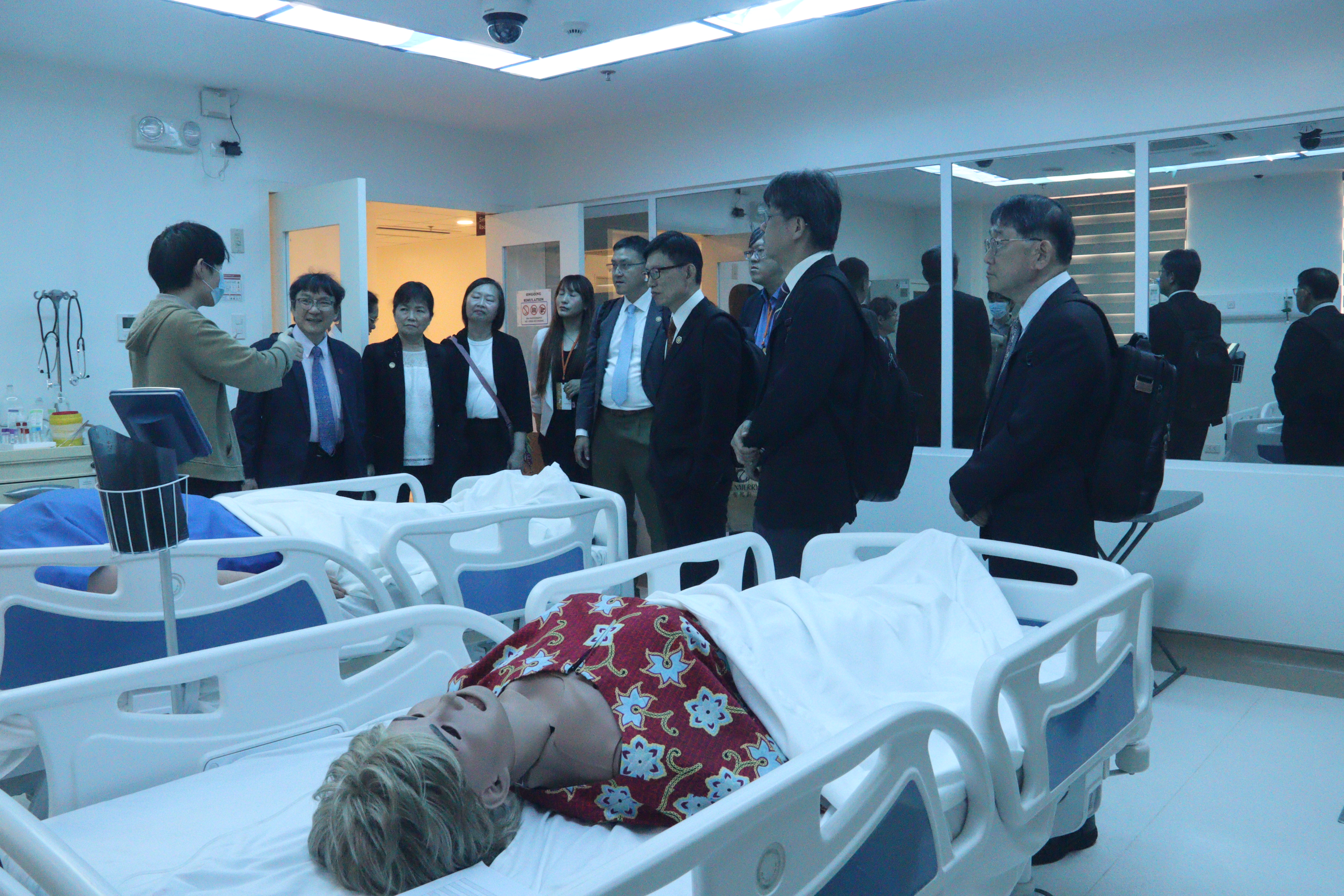
Looking ahead, both universities committed to exploring areas of collaboration in digital health, medical research, and capacity-building. The visit concluded with a tour of UP Manila’s facilities and a fellowship dinner, where officials expressed optimism that the partnership will continue to grow.
#FP1 #FP6 #innovationsforlifelonglearningdedicatedtoservice #discoveryandresearch
Related News: