

Text by Ehcel S. Hurna
Photos by Joseph A. Bautista
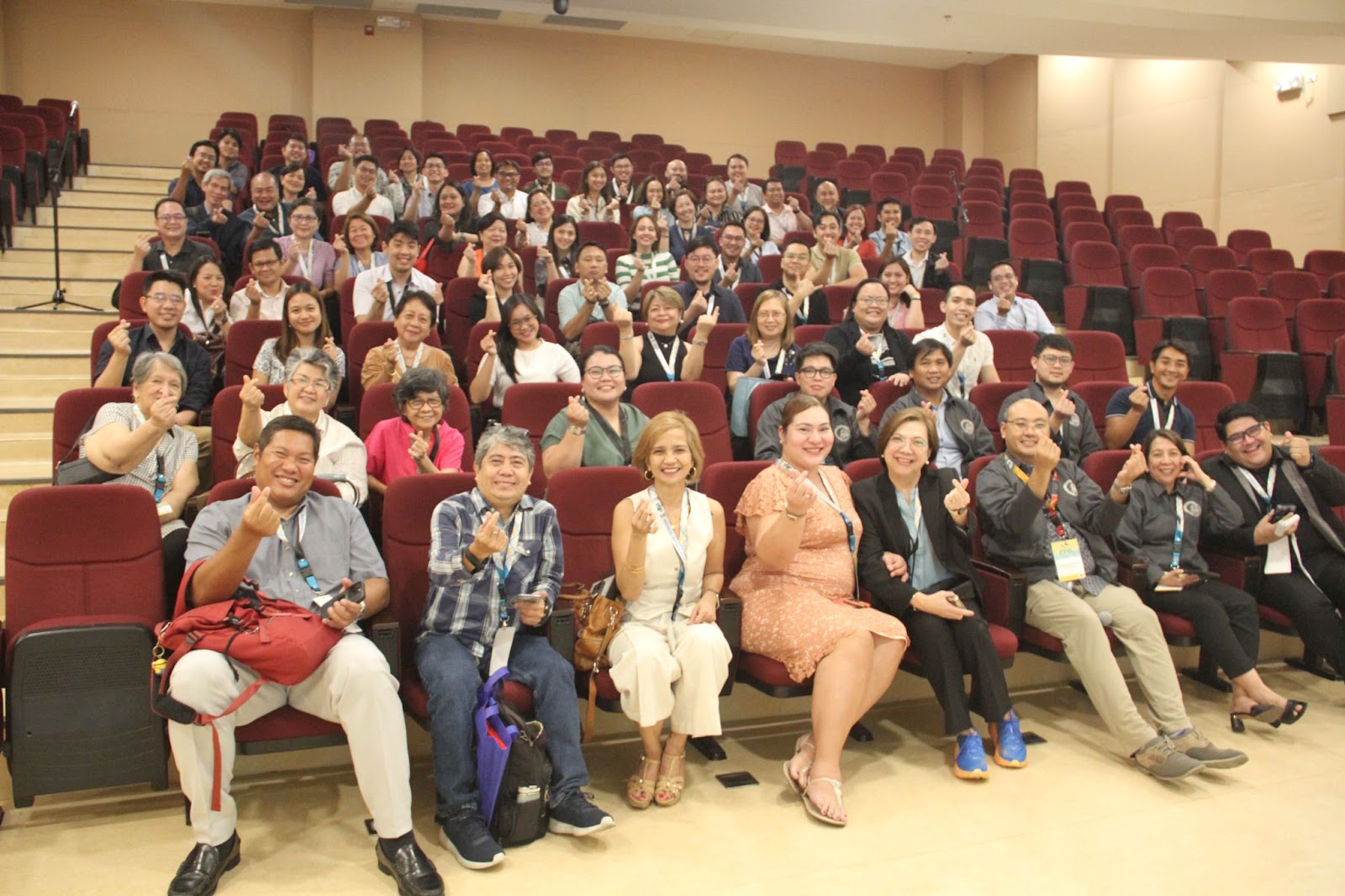
Participants of the 43rd Annual Convention of Philippine Society of Physiologists smile for the camera after the success of the first day of the event.
“The Philippine Society of Physiologists and the Department of Physiology of the University of the Philippines College of Medicine (UPCM) have one thing in common, and that is to give service. We serve by laying the foundations of health and disease among our medical students. And not only that, we also teach dentistry, allied medical professions, and even physics,” Vice Chair of UPCM Department of Physiology Manuel Peter Paul Jorge II said as he welcomed the delegates to the 43rd Annual Convention of Philippine Society of Physiologists (PSP) on June 28 and 29, 2024 at the Henry Sy Sr. Medical Sciences Building. Themed, “EPIC: Endocrine Made Interesting & Captivating,” the event was attended by physiology faculties from various universities nationwide.
On the first day of the convention, participants of the event were treated to exemplary lectures from experts in the field of physiology. The first speaker, Professor Emeritus Augusto Litonjua of UPCM, delved into the circadian rhythm of the human body through his discussion titled, “Chronicles of the Clock.” Circadian clocks are self-sustained biological oscillators found in all photosensitive species and drive transcriptional and metabolic processes in anticipation of the rising and setting of the sun each day.
“When we expose ourselves to light at night and we sleep during the daytime and when we eat at night, that’s how we misalign our circadian rhythm,” Professor Emeritus Litonjua reminded the audience.
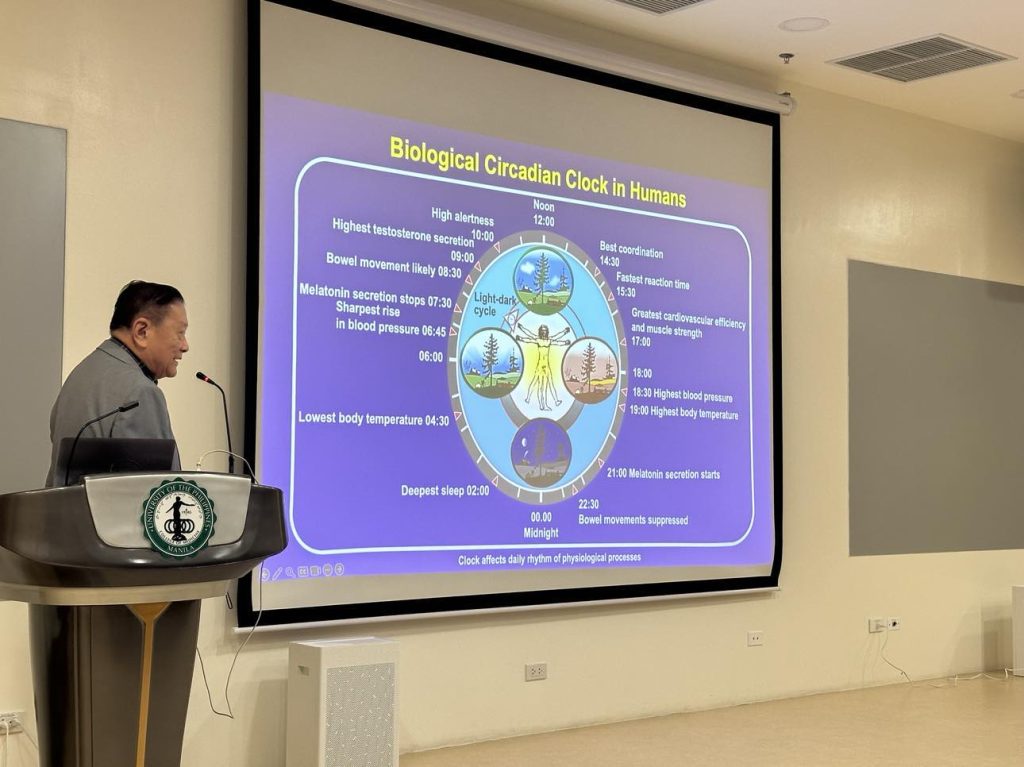
Professor Emeritus Augusto Litonjua discussing the effect of an individual’s circadian clock on their physiological processes.
Dr. Pia Bamasbad of the National Institute for Molecular Biology and Biotechnology of UP Diliman discussed Molecular Endocrinology through her case study titled, “Molecular Marvels.”
“KLF9 exhibits circadian expression in hippocampus, epidermis, and liver. The KLF9 gene is coordinated and regulated by CORT (1) and circadian signaling (2). Its oscillation in normal breast epithelia is abolished in breast cancer. KLF9 feeds back to the breast circadian oscillator by enhancing CORT response (3) and antagonizing the E2 regulation of clock genes (4). It functions as tumor suppressor in BCa (5) where it enhanced the anti-tumorigenic effect of CORT in receptor-positive BCa and restricted the tumorigenic effect of CORT in TNBC.
“As the breast epithelium becomes cancerous, what happens is that its function as a tumor suppressor weakens. And when the cancer becomes highly aggressive in the most aggressive form of triple negative breast cancer, this protein actually switches its function from being a tumor suppressor to one that actually drives metastasis,” Dr. Bagamasbad clarified.
Dr. Sylvia Estrada of the National Institutes of Health (NIH) Institute of Human Genetics presented the endocrine aspects of newborn screening in the Philippines titled, “Tests for Tiny Tots.” Newborn screening detects babies at risk for disorders which, if undetected, can cause mental retardation, disability, poor quality of life or death. Physiologic principles are the basis for CH and CAH newborn screening. Monitoring of treatment in CH and CAH is needed to ensure optimal health. Feedback axis of the H-P-Thyroid in CH and H-P-Adrenal in CAH ensure accurate titration of medications. “A few drops of blood can save lives,” she noted.
Other topics included those from Dr. Rose Ann Banal from the Pamantasan ng Lungsod ng Maynila – College of Medicine who informed the delegates on the updates on islet cell physiology through her lecture titled, “Pancreatic Prowess”; a deeper and thorough understanding on the incretin physiology discussed by Dr. Roberto Razo of De La Salle Medical and Health Sciences Institutes through his talk, “Incretins Illuminated”; and a discussion from Dr. Myrna Buenaluz Sedurante of UPCM, who shared her original research on testosterone levels among adult Filipinos titled, “Testosterone Tales.”
Day Two of the convention featured three speakers from two prestigious universities to share their research findings on their case studies. Dr. Elaine Cunanan, from the Faculty of Medicine and Surgery (FMS) at University of Santo Tomas (UST), shared the evidence-based answers to common questions about the thyroid through her lecture titled, “Thyroid Talks.” Another presentation from FMS-UST, “Transcending Transitions: Hormones for transgender individuals,” was discussed by Dr. Lizette Lopez. Lastly, Dr. Mark Anthony Sandoval from UPCM tackled clinico-physiologic cases in his presentation titled, “Hormones Haywire.” #
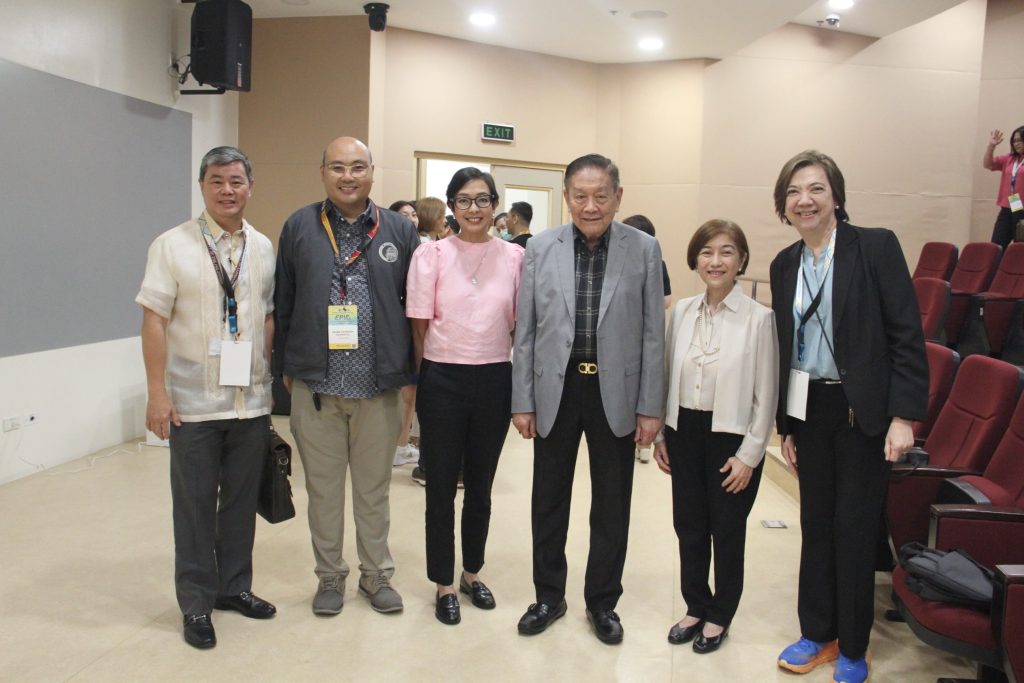
Speakers of the morning session posed for the camera with the organizers of the convention alongside UP Manila Chancellor Michael Tee. From left: UP Manila Chancellor Michael L. Tee, Dr. Manuel Peter Paul Jorge II, Dr. Pia Bagamasbad, Professor Emeritus Augusto Litonjua, Dr. Sylvia Estrada, and Philippine Society of Physiologist President Anna Karenina Causapin.