
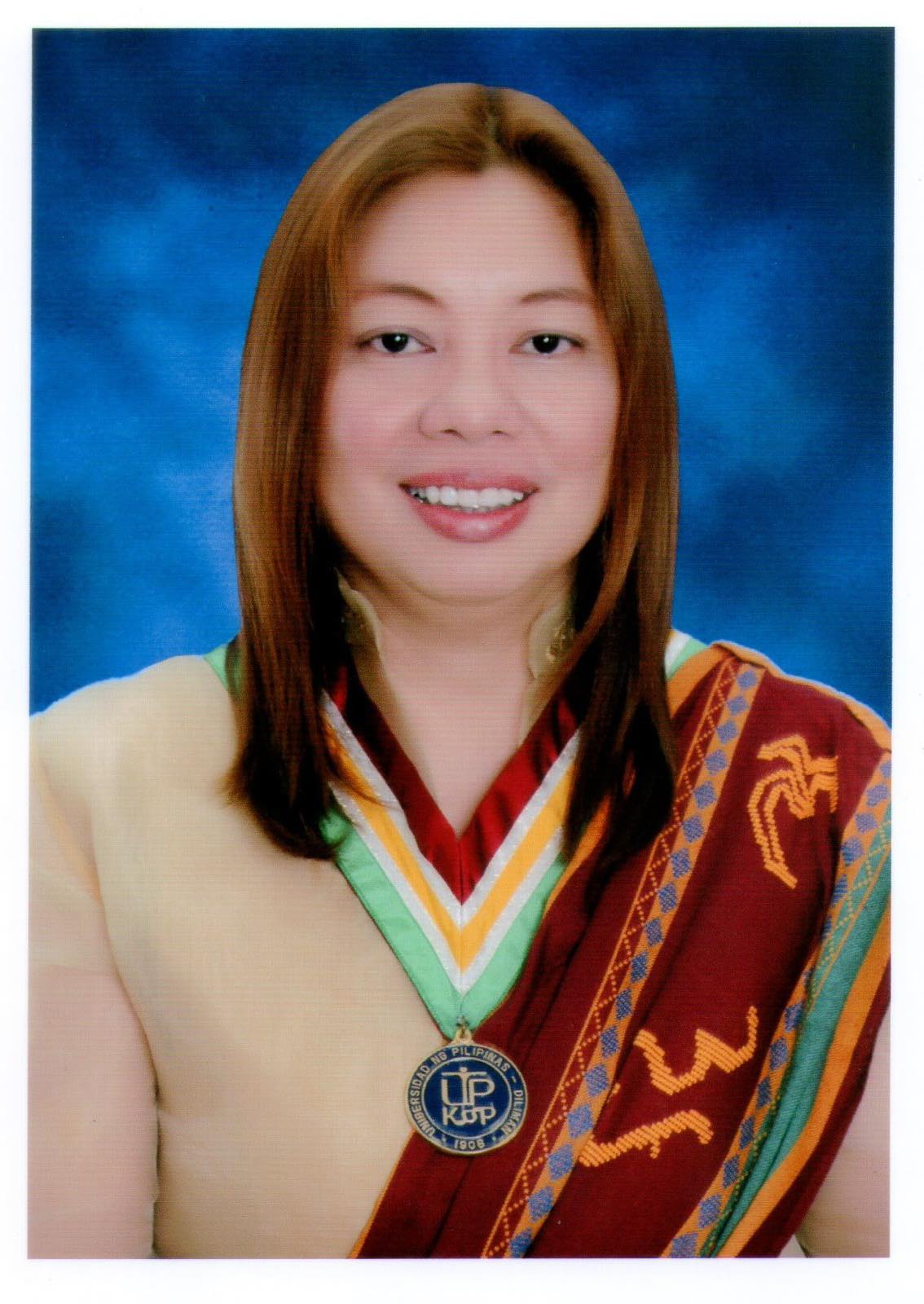
Dean Ma. Teresa Guanzon De Guzman of the College of Arts and Sciences (CAS) of the University of the Philippines Manila, was named the 2026 Human Relations Area Files (HRAF) Global Scholar at Yale University.
HRAF formally included Dean De Guzman in the roster of HRAF scholars effective January 1, 2026. The academician was recognized for her dedication to ethnolinguistic research and the preservation of indigenous cultural heritage. Her current research dives deep into Planetary Health and Forensic Anthropology. By integrating indigenous knowledge with contemporary disaster risk reduction and forensic methodologies, the research drives institutional growth and narrows the divide between traditional forensic practices and modern scientific application.
Founded in 1949 at Yale University, HRAF is a membership-supported nonprofit organization of universities, colleges, libraries, and research institutions. It aims to promote understanding of cultural diversity and commonality by producing scholarly resources and infrastructure for research, teaching, and learning, as well as by supporting and conducting original research on cross-cultural variation. The HRAF Global Scholars program aims to support researchers in underrepresented regions by providing access to the eHRAF World Cultures and eHRAF Archaeology databases. These platforms house millions of pages of ethnographic data, serving as a vital resource for comparative studies in human behavior, health, and history.
Dean De Guzman has been pushing for equitable access to academic resources, noting that many students at UP Manila, especially those from socioeconomically challenged backgrounds, face financial barriers to subscription-based databases.
“Beyond personal research, this access will democratize learning, empowering our students and colleagues to participate more fully in the global academic community. This would help us fulfill the University’s public service mandate—to make knowledge truly accessible and inclusive,” she explained.
By integrating eHRAF resources into the CAS curriculum, the university aims to enhance interdisciplinary learning, strengthen cross-cultural research competencies, and cultivate globally competitive yet locally grounded scholars. Through access to the eHRAF databases, students and faculty will engage with rich ethnographic data that support comparative analysis across cultures, deepening understanding in fields such as anthropology, behavioral science, forensic science, and planetary health. This integration will enrich instruction, sharpen critical thinking, and foster research that is both culturally sensitive and scientifically rigorous.
More importantly, this initiative reinforces CAS UP Manila’s commitment to equity, inclusivity, and the democratization of knowledge. By removing barriers to high-quality academic resources, the College empowers its students—particularly those from underserved communities—to actively participate in global scholarly discourse. It also strengthens CAS’s leadership in integrating Indigenous Knowledge Systems and Practices (IKSP) with contemporary scientific approaches, ensuring that Philippine indigenous voices are preserved, respected, and represented within global knowledge production.
As UP Manila works towards its goal of meaningful and socially aware education, using eHRAF highlights a larger promise: to connect traditional knowledge with modern science, improve the health of our planet, and support a new group of scholars who are committed to understanding cultures, conducting ethical research, and engaging with the world.
With this new global partnership, UP Manila is poised to strengthen its role as a leader in ethnographic studies, ensuring that the voices of the Philippines’ indigenous communities are represented and studied within a global framework.#
Press Release