

Text by: Jericho Paolo L. Mabansag
In the Philippines, the phrase “Bahala na” is often wielded as a cultural shield, a fatalistic shrug against the crushing weight of impending hardship. But beneath this veneer of spiritual resilience lies a sobering biological reality: the brain does not merely “weather” the storm; it is fundamentally reshaped by it.
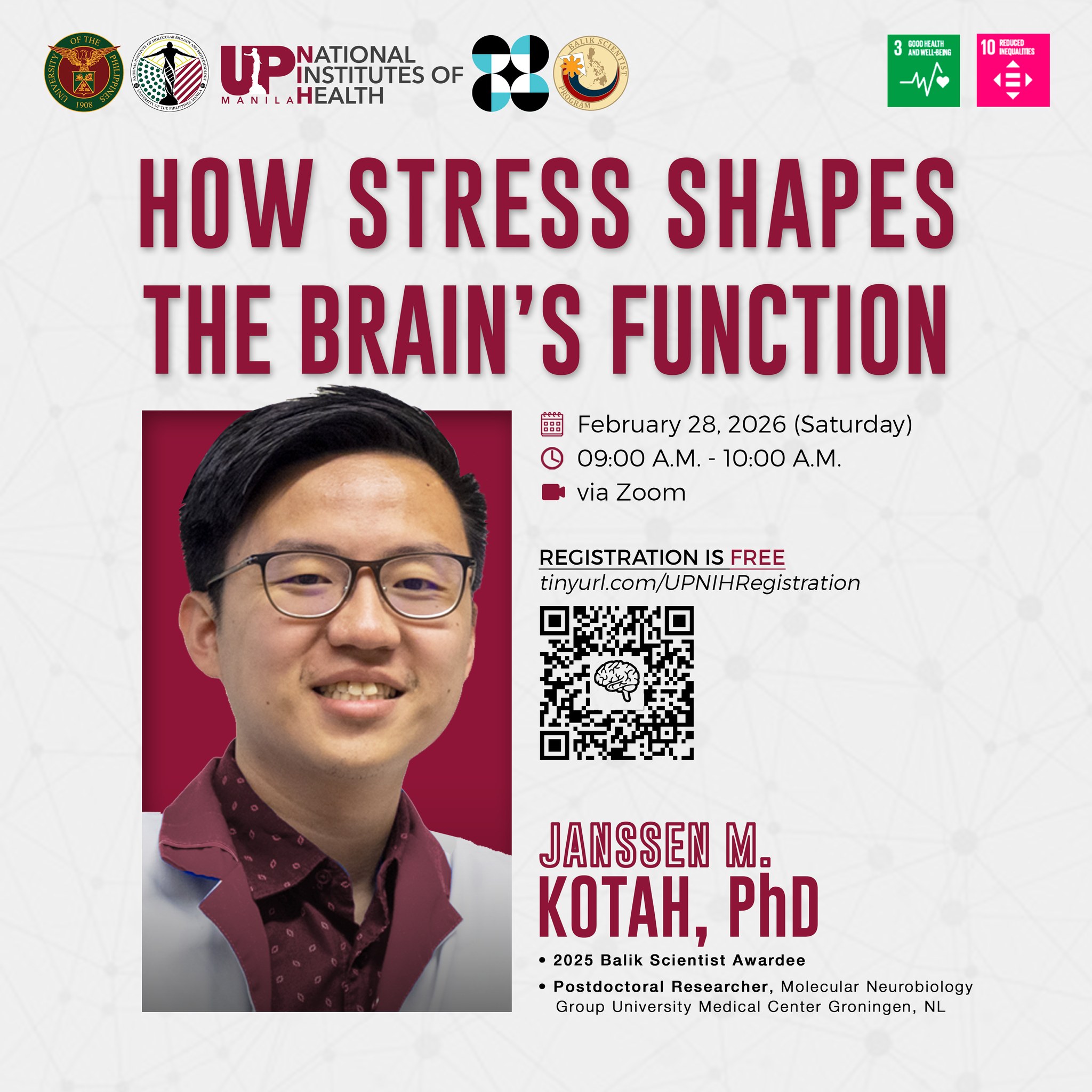
On Feb. 28, the National Institute of Molecular Biology and Biotechnology (NIMBB) at UP Manila hosted Dr. Janssen Kotah, a Department of Science and Technology (DOST) Balik Scientist and postdoctoral researcher from the University Medical Center Groningen, to deconstruct this phenomenon. His lecture, “How Stress Shapes the Brain’s Function,” served as a clinical warning to a nation grappling with systemic poverty and fragmented parenting.
The Architecture of Stress
Dr. Kotah’s presentation centers on Early Life Stress (ELS), a spectrum of adversity ranging from malnutrition and famine to maternal depression and neglect. Because of the brain’s inherent neuroplasticity, these early experiences are not merely memories; they are architectural blueprints.
Using transgenic mouse models engineered with human proteins, Dr. Kotah’s findings reveal an anatomical “cost” to survival. Mice exposed to ELS exhibited lower weight gain, stunted thymus development, and elevated basal cortisol levels. Mechanistically, the trauma manifested in cognitive impairment due to impaired neurogenesis and fewer mitochondria—the cellular powerhouses.
“We found out that there were fewer mitochondria in the stressed mice…This energy problem might be part of the cognitive impairment that we might be seeing,” Dr. Kotah noted.
A Mirror to the OFW Crisis
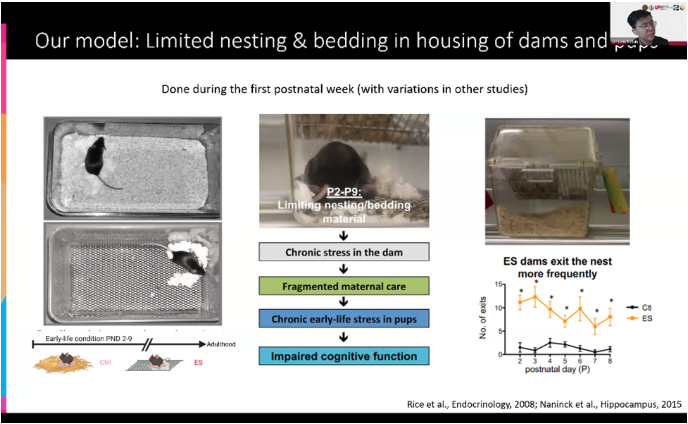
While the laboratory uses the Limited Nesting/Bedding Material (LBM) method to induce stress in dams (mother mice) and pups (baby mice), the parallels to the Philippine sociopolitical landscape are haunting. Dr. Kotah’s study on “fragmented maternal care” serves as an accidental but searing indictment of the Overseas Filipino Worker (OFW) phenomenon.
For millions of Filipino mothers, “limited resources” necessitate a literal separation from their children. As these mothers endure the stress of overseas labor, often blue-collar work, their children are most of the time left in a state of fragmented care, an environmental trigger for the very ELS Dr. Kotah describes. In this context, poverty is not just a lack of currency; it is a neurobiological cause of cognitive deficits, mood disorders, and substance vulnerabilities.
From Biology to Society
The data from international longitudinal studies, such as the Helsinki Birth Cohort and the Dutch Hunger Winter, underscore the stakes. Survivors of the 1944 famine exhibited higher rates of schizophrenia, cardiovascular disease, and shortened life expectancies. For the Philippines, the message is clear: the “vicious cycle” of stress is a societal contagion.
“it’s not just about your biology and what you’re eating and what your genes are. It’s also about what society you’re living in,” Dr. Kotah emphasized.
The Return of Brains in the Brain Drain
Despite these grim trajectories, a “silver lining” exists in the reintegration of Filipino intellectuals. Through the Balik Scientist Program, experts like Dr. Kotah are returning to the Philippines to do ELS science and spearhead interdisciplinary collaborations. The goal is to move beyond mere observation and toward the creation of robust prospective and retrospective cohort studies that look not just into medical/biological but also societal perspectives that will inform national policy.
As the nation celebrates National Women’s Month, the call to action transcends stress-free life and prosperity. The goal is the indissolubility of the Filipino family, the creation of a society where mothers are empowered homemakers, and where the “Bahala na” attitude is replaced by evidence-based intervention, nurturing our sons and daughters to their full potential.
We are a nation that has slipped in many global indices; we cannot afford to lead the world in the global ranking of stressed parents and cognitively impaired children. Through the work of DOST, NIMBB, NIH, and visionary talents like Dr. Kotah, the Philippines may finally begin the work of dismantling this vicious cycle, one neuron at a time.
Read more:
#FP1 #FP6 #FP8 #AccessibleUPLeadership