


Text by Charmaine A. Lingdas
Photos by Sarah Hazel Moces Pulumbarit

Infectious diseases experts gathered at the University of the Philippines Manila – College of Public Health (CPH) on Oct. 21 to 23, 2025, and discussed strategies in eliminating schistosomiasis in the first International Meeting/Workshop of the Southeast Asian Schistosomiasis Elimination Initiative (SEASEI).
The three-day event was attended by representatives from Cambodia, Indonesia, Lao PDR, Japan, South Korea, Thailand, Vietnam, Australia, and Philippines, and focused on current technologies for disease control and strategies to curb the incidence of this tropical disease often affecting school-aged children.
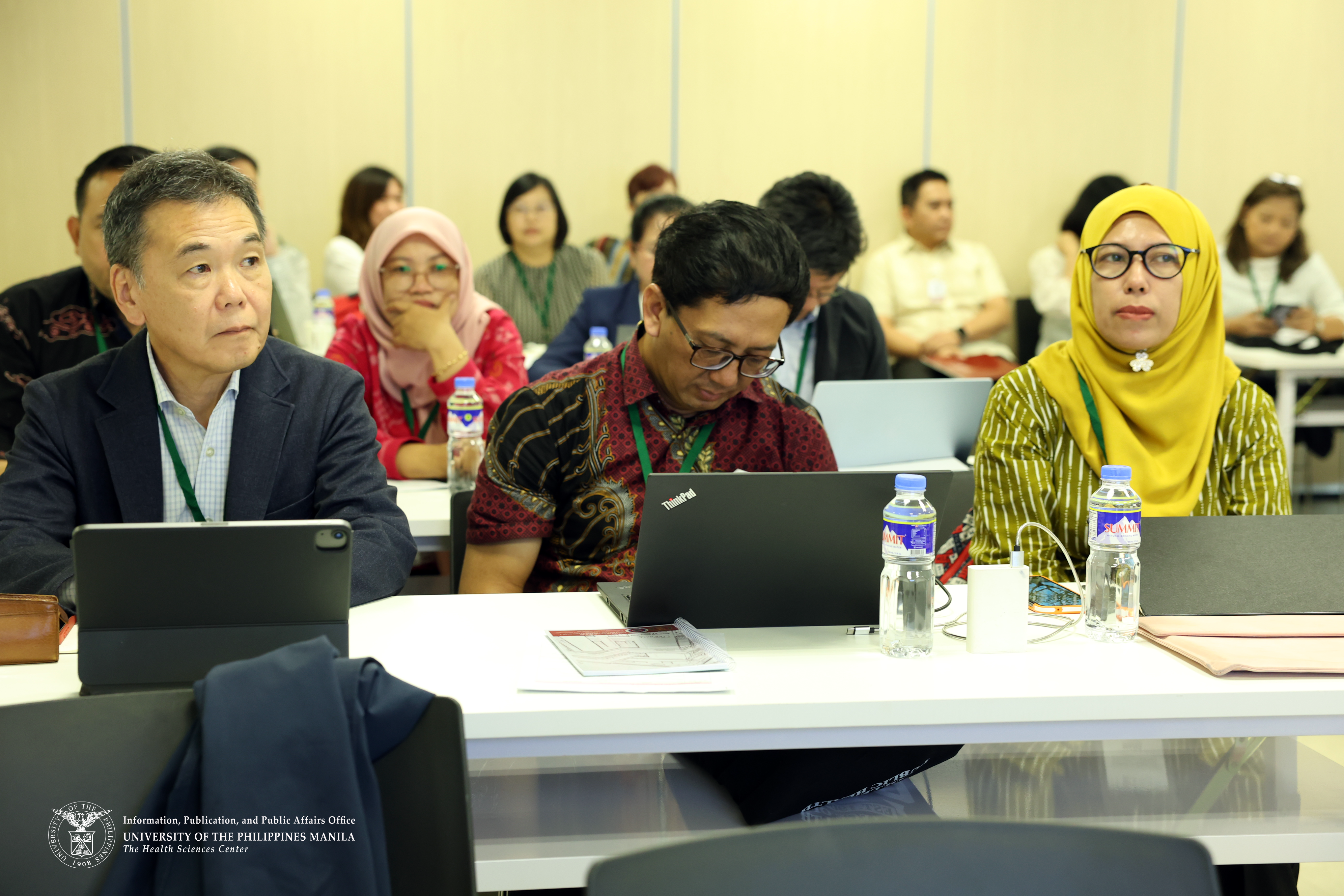
Collaborative Planning
The first day’s sessions, themed “Epidemiological Updates, Research Advances, and Country Perspectives,” featured presentations from World Health Organization (WHO), academic, and national experts who shared updates on surveillance frameworks, elimination tools, and country strategies from the Philippines, Indonesia, Lao PDR, and Cambodia. Researchers also introduced advances in diagnostic technologies and explored emerging methods for disease control, including studies on pediatric outcomes, eDNA detection, and snail-derived control agents. The second day focused on developing a regional roadmap for schistosomiasis elimination through collaborative planning and the alignment of national strategies under the One Health approach.
The third day of the meeting featured a field visit to the Philippine Carabao Center in Nueva Ecija, where participants explored the role of water buffaloes as animal reservoirs of schistosomiasis. The session included lectures and facility tours led by Dr. Liza Battad and Dr. Claro Mingala of the PCC, as well as a dialogue with representatives from the Department of Health, the academe, and the agriculture sector on advancing One Health approaches to disease control.
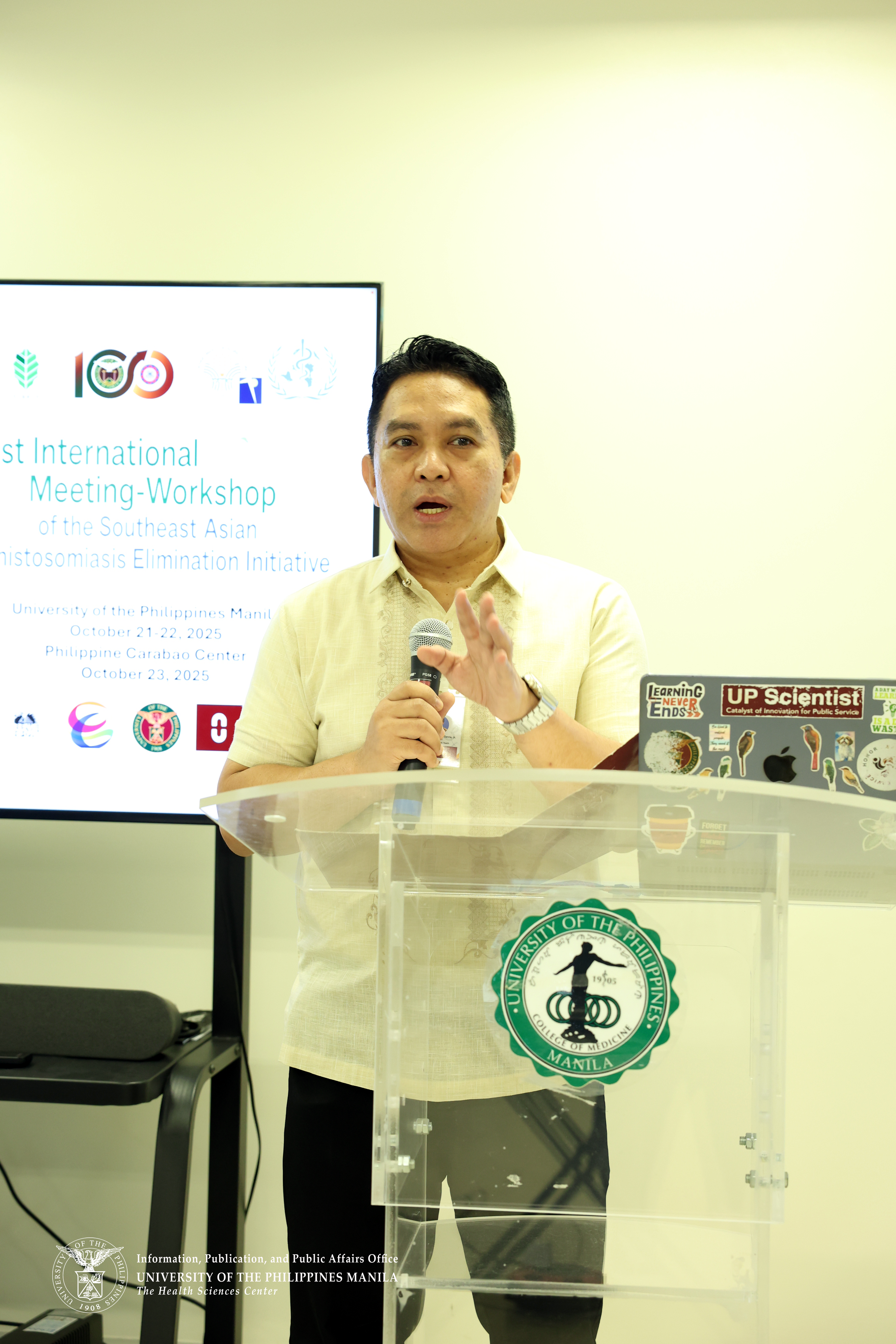
“This inaugural SEASEI meeting represents more than a scientific conference—it is a space where collaborative science intersects with policy action. The path to schistosomiasis elimination demands not only scientific excellence, but also collaborative spirit, shared accountability, and a deep commitment to the communities we serve,” Dr. Fernando Garcia Jr., CPH Dean said during his welcome remarks at the CPH Medical Sciences Building, Henry Sy Sr. Hall. He also highlighted the role of the CPH as part of Southeast Asian Ministers of Education Tropical Medicine (SEAMEO-TROPMED) Philippines, emphasizing its long-standing contributions in research, training, and service in parasitic diseases.
UP Manila’s Legacy in Schistosomiasis Research
Chancellor Michael Tee delivered an engaging message that linked the university’s historical and ongoing commitment to schistosomiasis research.
Citing an Acta Medica Philippina article from 1965 on pulmonary schistosomiasis japonicum and cor pulmonale, Dr. Tee reflected on UP Manila’s decades-long involvement in studying and managing the disease.
“As early as that time, schistosomiasis was already recognized as a problem,” he said at the opening of the event. He recalled his own experience as a medical student researching schistosomiasis antigens in 1993. “Now, I am happy to see that surveillance and national strategies are being reported here, so that we all can share and learn from each other how best to manage this disease.”
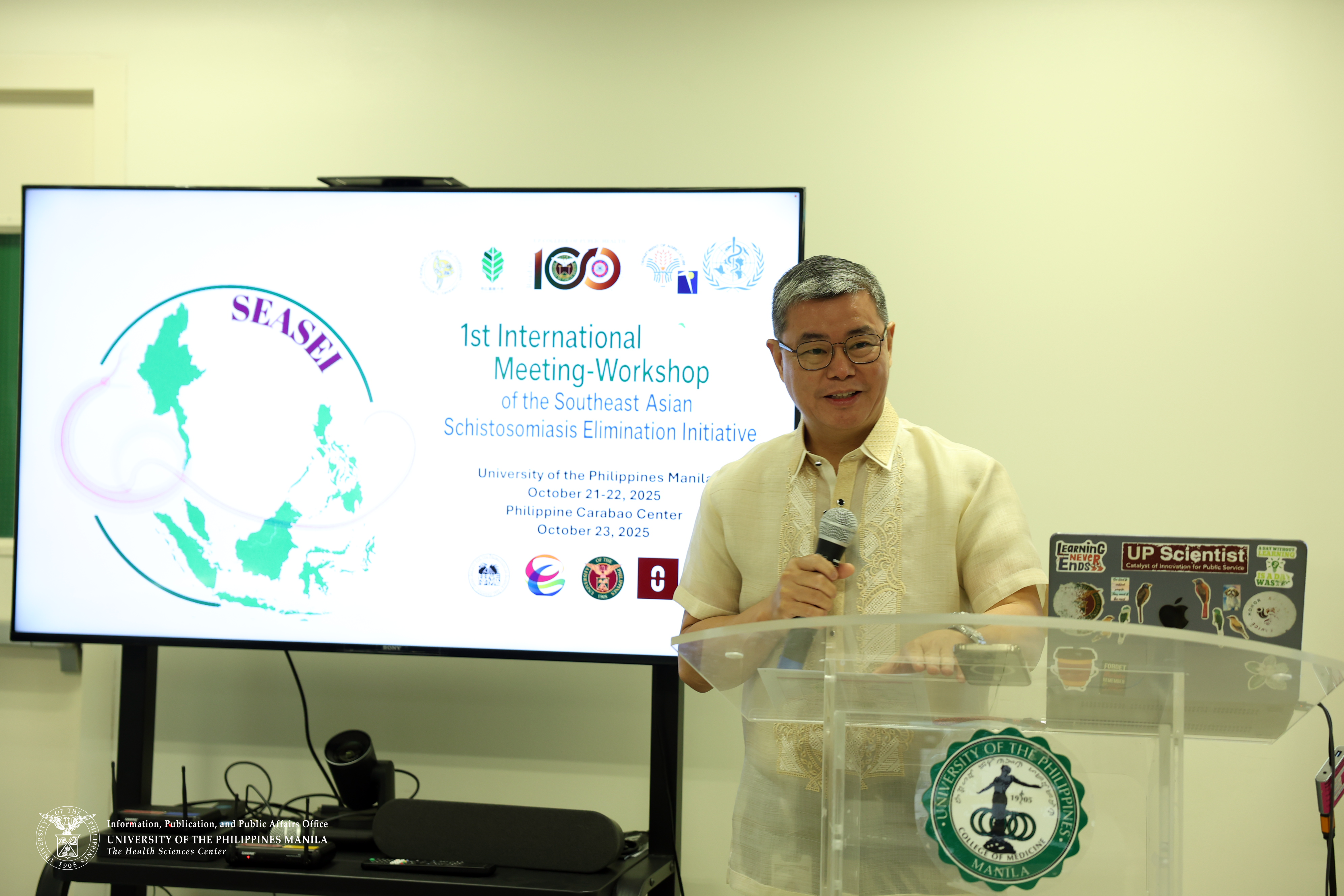
He also emphasized the significance of the Philippine Carabao Center (PCC) field visit in Nueva Ecija, citing the recent findings on the high prevalence of schistosomiasis among carabaos in Leyte. “That completes the picture,” he said. “The impact of this research can already be applied in one of our School of Health Sciences in Leyte.”
Chancellor Tee encouraged the participants to document and publish the meeting proceedings to ensure that knowledge gained continues to inform future generations. “Let not the learnings stay here in the group,” he said. “We can share the knowledge not just among ourselves, but also with the next generation—just as I learned from the 1965 article in Acta Medica.”
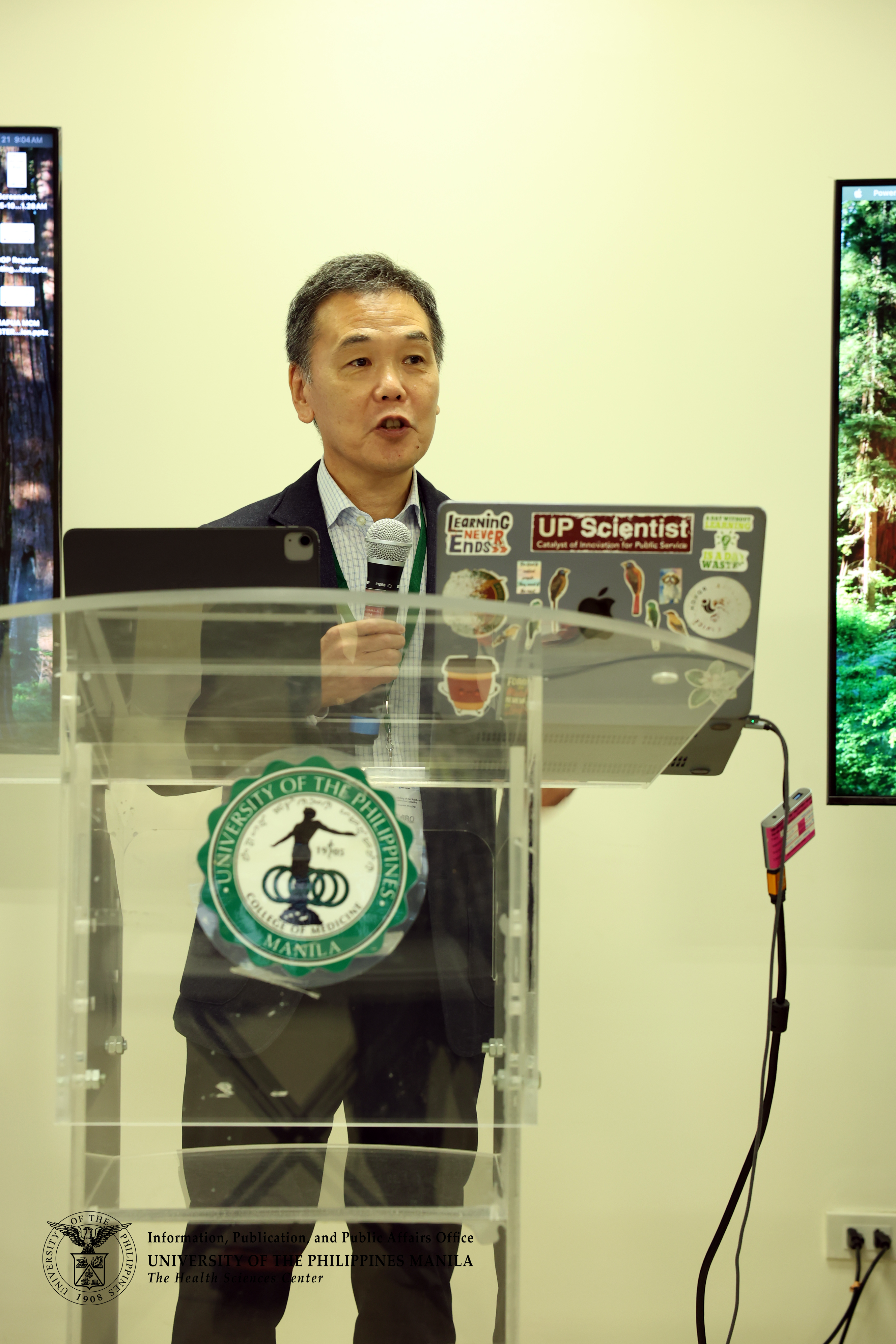
Building Regional Partnerships for Elimination
Project leader Dr. Shin-ichiro Kawazu of the National Research Center for Protozoan Diseases, Obihiro University of Agriculture and Veterinary Medicine, Japan, outlined the goals of the SEASEI initiative, which seeks to establish a South-South and Triangular Cooperation for Coordination of Asian Zoonotic Systems.
“The aim of this program is to establish partnerships between participating countries and their institutions to control schistosomiasis through mutual cooperation,” he said. “This partnership will enable countries to share experiences in overcoming challenges in schistosomiasis control and elimination.”
The meeting also marked the formal launch of the Southeast Asia Schistosomiasis Elimination Surveillance Initiative (SEASchEl), a consortium composed of government agencies and academic institutions from the founding member countries. SEASchEl aims to develop and standardize diagnostic tools, promote technology transfer, and strengthen surveillance networks with WHO’s support.
The event was organized by the WHO South-East Asia and Western Pacific Regional Offices, and the Japan Society for the Promotion of Science (JSPS) under the Ministry of Education, Culture, Sports, Science and Technology (MEXT) of Japan.
Schistosomiasis is an acute and chronic parasitic disease caused by blood flukes of the genus Schistosoma. It is prevalent in tropical and subtropical areas, especially in poor communities without access to safe drinking water and adequate sanitation, the WHO said.
Read More:
#FP1 #FP6 #AccessibleUPLeadership