

Text by Charmaine A. Lingdas
Photos by Sarah Hazel Moces S. Pulumbarit

The University of the Philippines Manila College of Dentistry (UPCD) welcomed officials and faculty members from Centro Escolar University (CEU) for a benchmarking visit on Oct. 1, 2025 aimed at strengthening collaboration, exchanging best practices, and exploring avenues for future partnership.
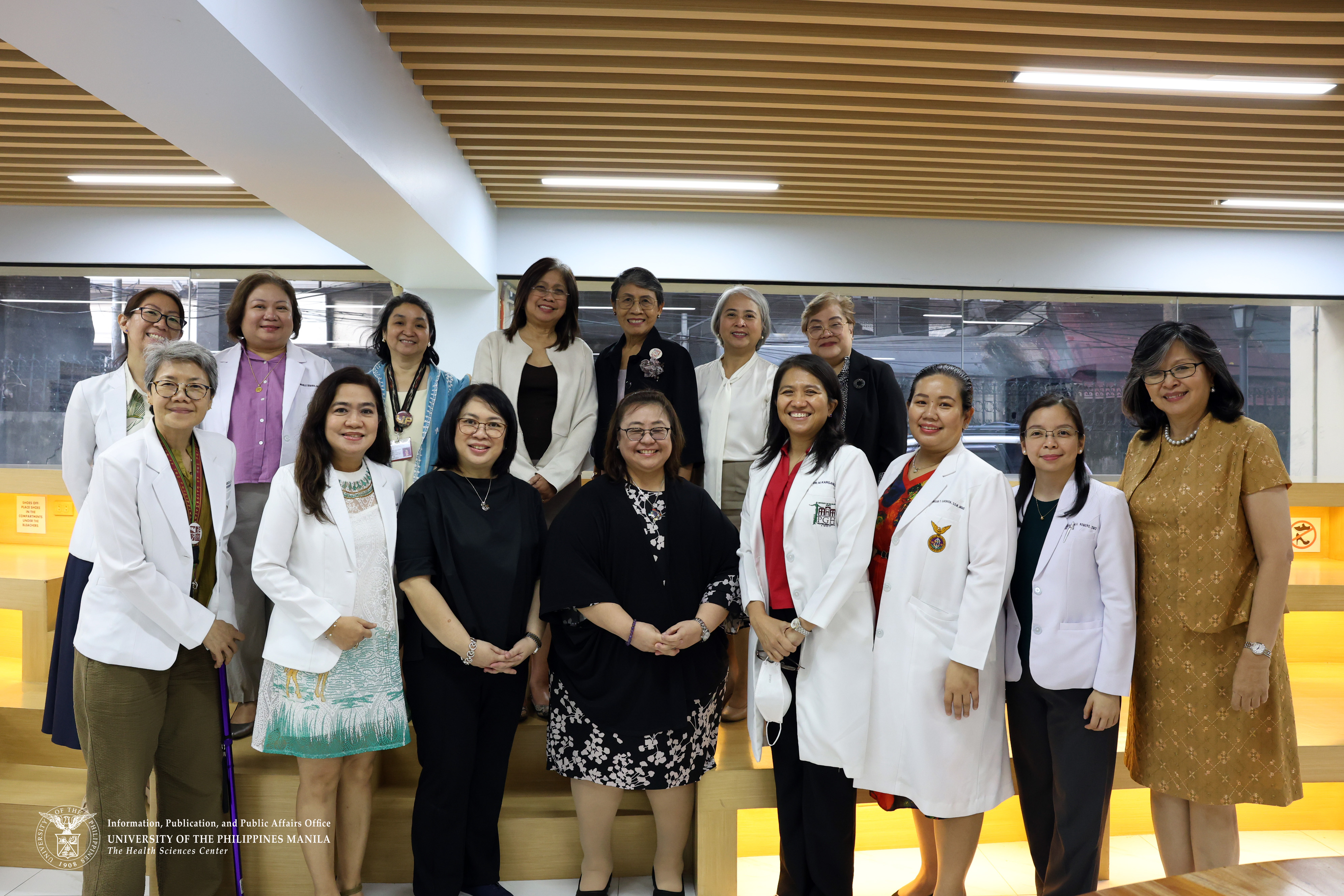
CEU was represented by President Emeritus Dr. Maria Cristina Padolina, Senior Vice President for Academic Affairs Dr. Teresa Perez, Dean of the School of Dentistry Dr. Mary Iodine Lacanienta, and other key faculty members. From the UPCD side, Dean Dr. Michelle Segarra, College Secretary Dr. Arlene Cecilia Alfaro, and several department chairs and program coordinators joined the discussions.
In the meeting, Vice Chancellor for Academic Affairs Dr. Bernadette Heizel Reyes highlighted the importance of partnerships between state universities and private institutions in advancing dental education and training.
“Both our campuses are connected by the LRT, which serves as a lagusan for our countrymen. I think it’s a very good metaphor for what we do: we are in universities immersed in the milieu of the patients we serve, and the fellow Filipinos we all hope to reach,” she said.
“Usually, when we say ‘benchmarking visit,’ it tends to be one-way—you either learn from someone, or someone learns from you. But looking at the long history of excellence of the CEU College of Dentistry, I see this as a true opportunity to share best practices and really learn from each other,” Dr. Reyes added.
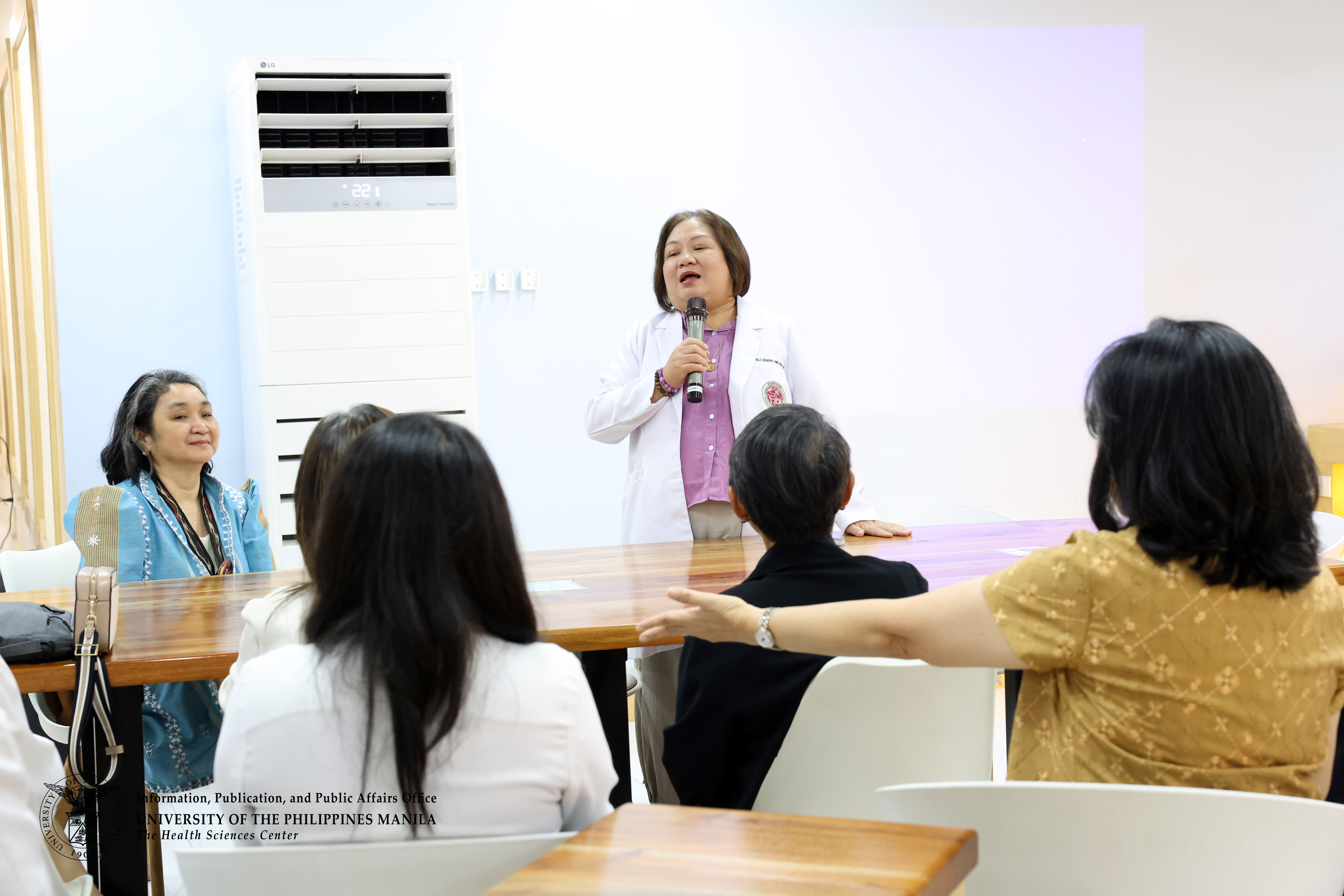
UPCD Dean Segarra noted that the gathering is a chance to align expectations and exchange guidance on accreditation.
“At UPCD, we are still ‘babies’ when it comes to accreditation. We know CEU is already Level IV PAASCU accredited and has AUN-QA recognition. We would love to learn from you and hear pointers about accreditation,” she said.
Raising Academic Standards
CEU Dean Lacanienta emphasized the value of collaboration in raising academic standards, noting CEU’s longstanding partnership with UP in research. “Our students have often gone to UP to use specialized equipment such as the universal testing machine and the SEM. We are very thankful that UP has been open to such collaborations because it makes it possible for our students to do the kind of research that requires those machines,” she said.
She also expressed interest in UPCD’s use of skills testing in the admissions process and how CEU could adopt similar procedures.
In addition, La Camieta proposed further discussions on clinical requirements, pointing out that the Philippine Association of Dental Colleges (PADC) is still finalizing national standards.
The dialogue highlighted differences and similarities in clinical training approaches. UPCD shared its ongoing shift from a requirement-based curriculum to a patient care–based system, where learning outcomes are measured not by a fixed number of procedures but by addressing patients’ treatment needs comprehensively through group practice and mentorship. CEU, on the other hand, presented its structured, skill-level–based system, where students handle patients individually until advanced stages.

Another area that drew CEU’s attention was UPCD’s faculty structure, particularly the clinical assistant professors who serve on a voluntary basis. These volunteer faculty members receive no compensation yet consistently report for duty once a week to mentor and supervise students. Their willingness to serve, despite the lack of financial return, reflects their deep commitment to molding the next generation of dentists and to supporting UP’s mandate of public service. This volunteer system, Dean Segarra emphasized, allows closer mentoring, with a ratio of about one mentor for every three clinicians.
The visit also included a tour of UPCD facilities and an exchange of expectations for future engagements.#
#FP1 #FP6 #innovationsforlifelonglearningdedicatedtoservice
Read More: