

Text by: Jennifer Manongdo
Photos by: Charmaine Lingdas, Dr. Fullante, Ellyn Cassey Chua

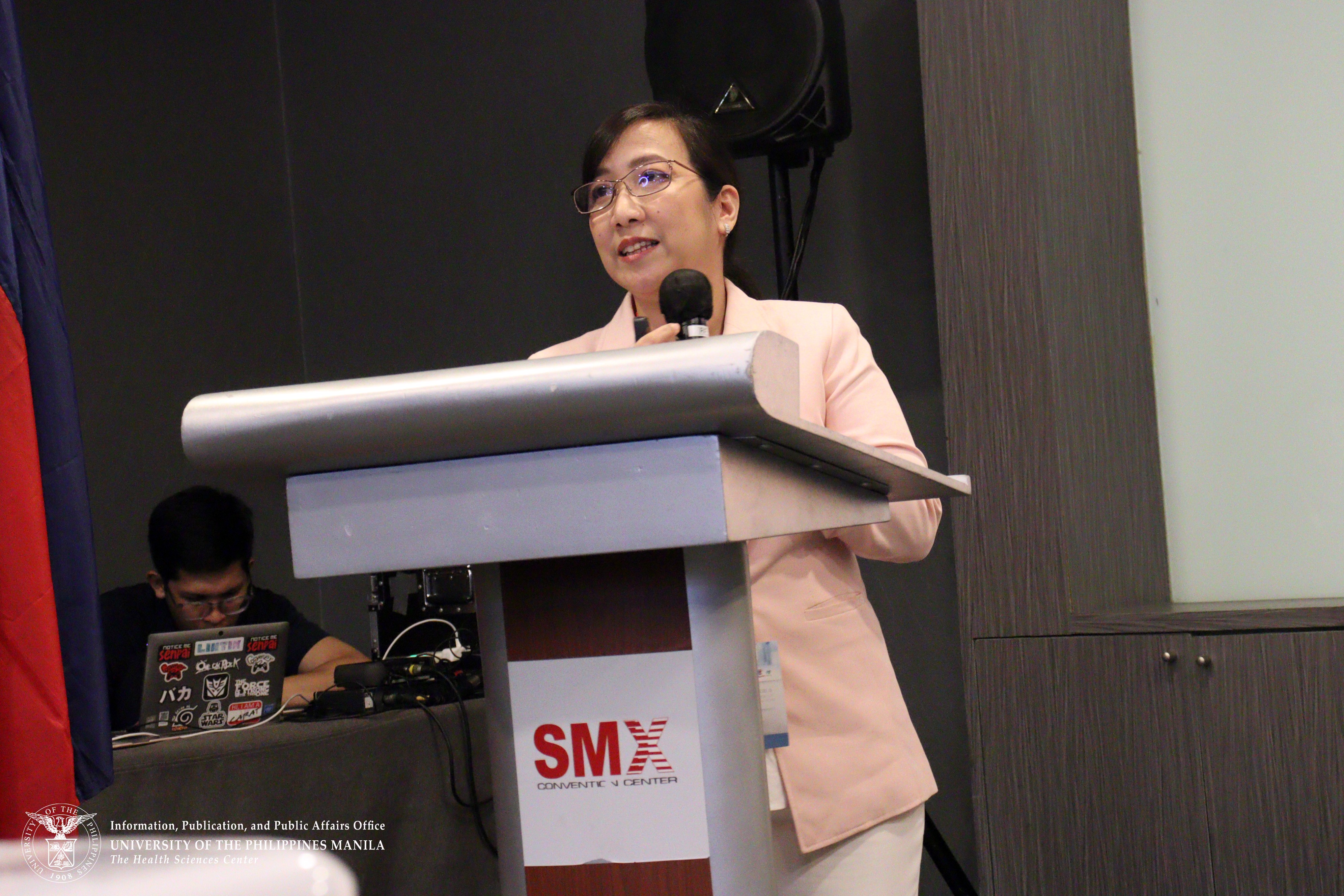
A host of useful innovations from the brightest minds of the University of the Philippines Manila took center stage in the recent annual pitching event, ‘From Breakthroughs to Market: UP Manila Licensing and Health Innovation Stories’ at SMX, Pasay City.
Organized by the UP Manila Technology Transfer and Business Development Office (TTBDO), the event, conducted on on Aug. 13, 2025, saw brief but powerful pitches by health innovators and a candid fireside chat that revealed an insider’s look on the complexities of licensing issues confronting local inventors.
Kuchi Surgical Mouth Gag
Leading the set of pitches was the Kuchi Surgical Mouth Gag introduced by Dr. Philip Follante, a facial plastic and reconstructive surgeon at the Philippine General Hospital. Kuchi is a modular surgical mouth gag designed to address critical shortcomings in current oral surgical tools.
Named after the Japanese word for “mouth,” Kuchi is designed for procedures like tonsillectomies and cleft palate repair and other intraoral procedures. It features customizable components, an alveolar ridge guard, integrated illumination, and a mount for intraoral cameras — all focused on improving surgical visibility and patient comfort.
“Current tools often cause discomfort and injury. KUCHI aims to change that through precision, safety, and cost-efficiency,” Dr. Fullante explained.
“Traditional mouth gags suffer from poor patient comfort, limited adaptability and inadequate surgical visibility, particularly challenging with prominent or cupid teeth,” Dr. Fullante said. “Rigid and non-adjustable designs cause patient discomfort during prolonged procedures while hindering surgeons’ optimal access to surgical sites.”
Dr. Fullante, who is also a project leader of the National Economic and Development Authority’s (NEDA) first Filipinnovation Awards, sees a great demand for the device due to the huge number of patients undergoing tonsillectomies and cleft palate repairs in the country.
HeLe – Automated Newborn Hearing Screening Device
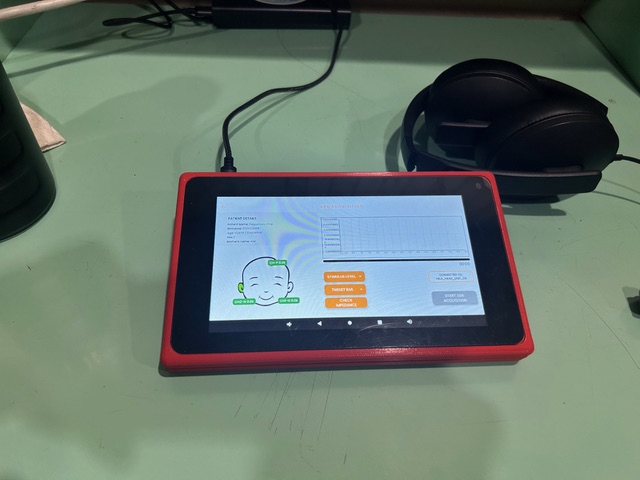
Dr. Philip Fullante also presented the Automated Auditory Brainstem Response (AABR) audiometer for newborn hearing screening or the HeLe Device.
Named after the Filipino word for Lullaby, the HeLe is envisioned to be a “cost-effective and accessible solution that will help medical professionals detect hearing loss among babies.
“The HeLe stands out in two key aspects: accessibility and affordability. And of course, the algorithm is locally made and tailored from Filipino data,” Dr. Fullante explained.
HeLe works by using sound to electrically stimulate the brain. The device captures the brain’s response signals and a built-in algorithm analyzes them. If the brainwave patterns are normal, the device gives a “pass” result.
Aaclatan
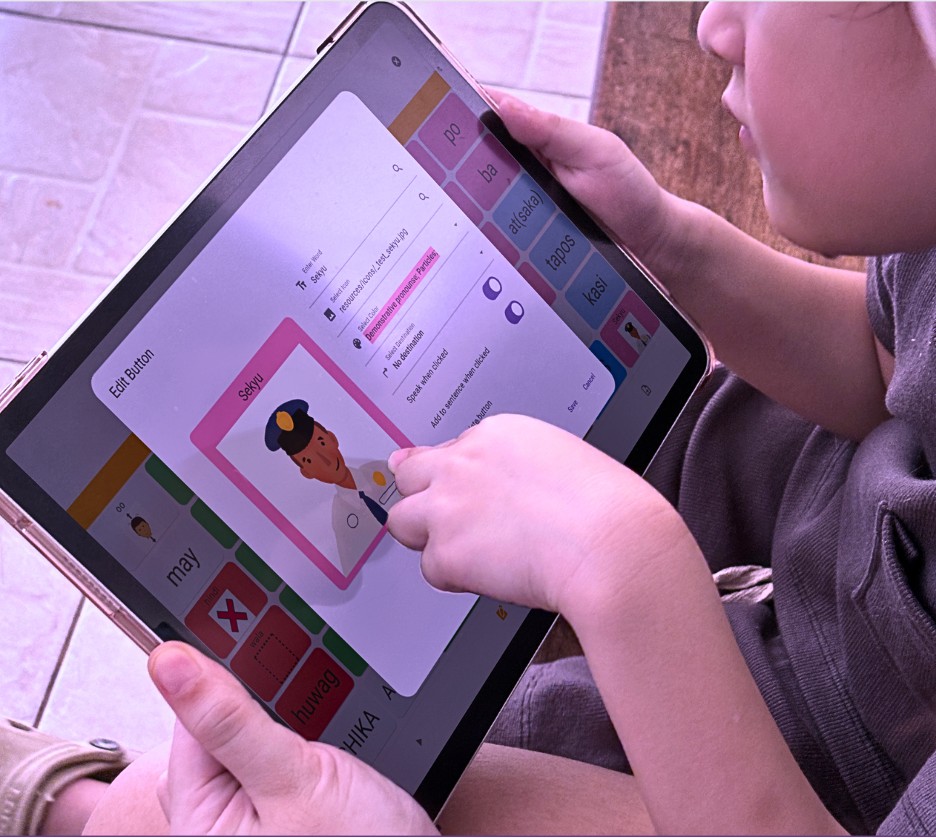
Prof. Ellyn Cassey Chua discussed the benefits of AAClatan, a cross-platform augmentative and alternative communication (AAC) app designed for children and adults who have great difficulty in speaking (e.g., those with Autism, Down Syndrome, Cerebral Palsy, speech and language problems after stroke, Amyotrophic Lateral Sclerosis [ALS]). The mobile app serves as a “speech-generating device” or a “voice output communication aid” to help patients communicate their needs, wants, feelings, and ideas, etc. Chua said the user can either type a word/phrase or message, or choose from among the symbols or icons on the mobile app. The web app, on the other hand, allows users to create low-tech or paper-based versions of the communication boards/grids or pages. Both apps feature Tagalog words and Pinoy pictograms.
MyBeshie Telepresence Robot (Engr. Ruel Cadubla)
This device was conceptualized and designed during the COVID-19 pandemic for patients who were placed in isolation. My Beshie is a medical telepresence device that allows autonomous monitoring and managing of a patient with or without the use of the internet. It uses artificial intelligence to monitor patients and allow the sending of distress signals to an assigned healthcare provider, when needed.
The technology developers are seeking commercial partners to help optimize production and support the marketing of the device.
iFix Orthopedic Fixation System
Presented by Engr. Aina Durana, the iFix Orthopedic Fixation System is a cost-effective alternative to traditional metal external fixators that stabilizes and supports fractured bones. These devices are crucial in the treatment of severe fractures, especially open fractures, where the bone breaks through the skin. They provide the necessary support for the bone to heal properly while allowing for adjustments to maintain alignment throughout the recovery process.
Other Pitches
Another valuable pitch is the E-Tox POCT Device Point of Care Testing (POCT) presented by Gabrielle Anne Pagjunasan. E-Tox POCT Device detects New Psychoactive Substances (NPS) such as ketamine, synthetic cannabinoids, and synthetic cathinones. Earlier in 2024, Dr. Ailyn Yabes said that current drug of abuse (DOA) test kits available in the Philippines do not detect novel psychoactive substances (NPS). Also, existing laboratory-based testing methods for both NPS and pharmaceuticals are often expensive and involve the use of hazardous chemicals, making them unsuitable for emergency or bedside toxicology applications. This highlights the need for a portable, easy-to-use, and affordable point-of-care testing device for use in emergency settings.
Institute of Herbal Medicine Senior Researcher Essel Tolosa discussed the benefits of Tsaang Gubat Tablet & Syrup in managing mild to moderate gastrointestinal colic, particularly in patients aged 2 to 18 years.
Meanwhile, Dr. Maria Eliza R. Aguila presented the Immersive Gamification Technology System or the ImGTS. This involves a set of virtual reality games that has proven effective in managing behavioral and psychological symptoms in dementia patients and individuals with cerebral palsy or mobility limitations.
#fp6 #DiscoveryandResearch #InnovationsforLifelongLearning #UPManila #TTBDO