
Texts by: Ehcel S. Hurna
Photos by: Erlyn U. Pareja
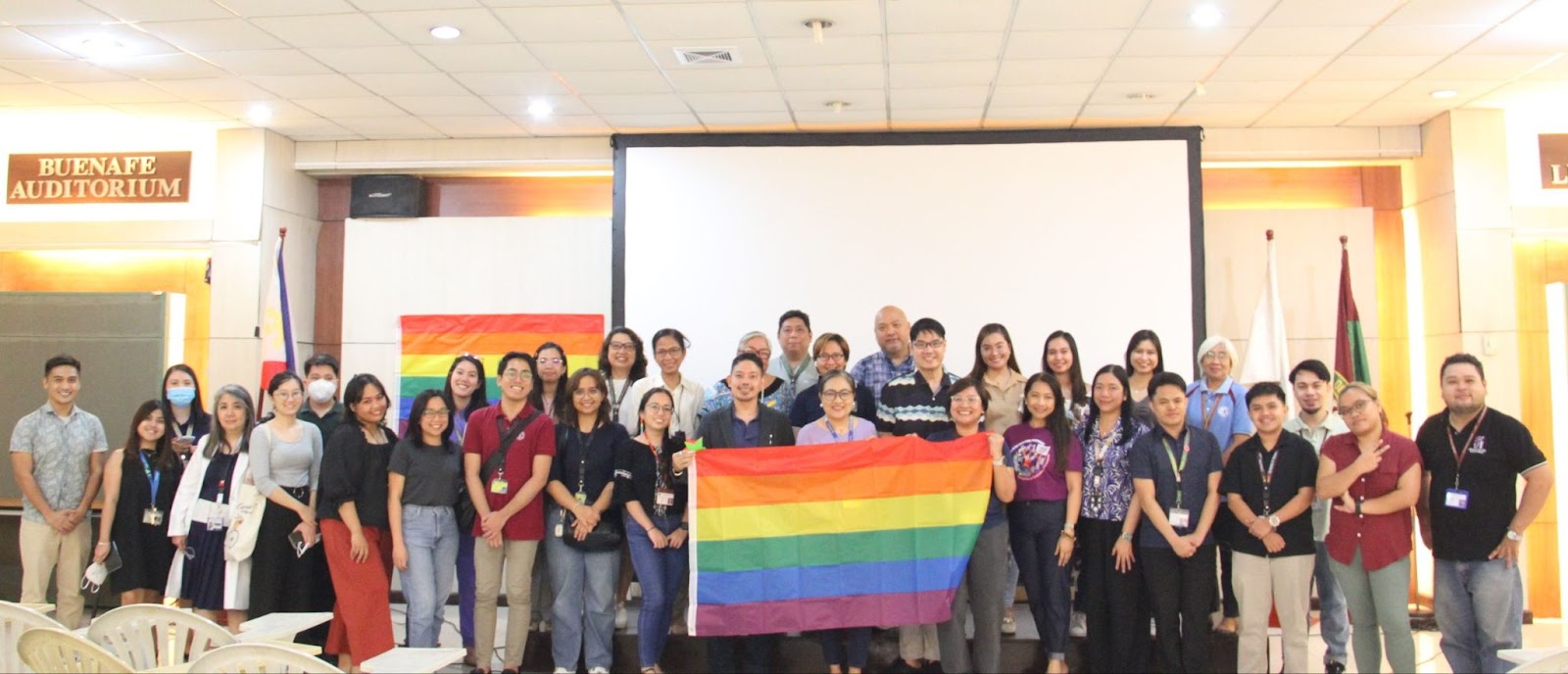
(The UPCM Committee on Gender, Diversity and Inclusivity together with LGBT members, allies, and advocates in UP Manila posed for a picture with the rainbow flag in solidarity with Pride Month.)
Honor, excellence, and service are the cornerstones of the University of the Philippines (UP) that all UP constituent universities uphold. As the health sciences center, UP Manila vows to offer servant leadership with community-oriented medical education directed to the underserved.
When we talk about the underserved, we also refer to the “minorities.” Minorities are defined as individuals or groups that are always singled out, with physical and cultural characteristics, living in differential and unequal treatment, and usual objects of collective discrimination.
Defining the minorities
During the centralized discussion titled, “Establishing an LGBT + Health Network in UP Manila,” on June 25, 2024 at Buenafe Hall, UP College of Medicine, Dr. Winlove Mojica, a Clinical Associate Professor expounded the definition of the word, “minorities,” through their five characteristics: unequal treatment; distinguishing traits; involuntary membership in the group; awareness of subordination; and high rate of in-group marriage.
The United Nation (UN) created regulation of the rights of minorities in 1992 and added a particular characteristic in 2010 which is non-dominance. Ever since, minorities are the easy targets of abuse and are usually escape goats of the society. This is especially true when we look back on the case of jews in World War II. Millions of jews were killed because they were targeted as the culprit in the downfall of Germany.
“The minorities are the most vulnerable population and they are the first to be affected by poor policies, calamities, corruption, and the last ones to get help. The UN says that protection of minorities should not only revolve around race, ethnicity, and color. It should come across intersections, different scenarios in a person’s life and this also would entail discrimination against sex, gender, and disability so the Lesbian, Gay, Bisexual, and Transgender (LGBT) fall in this category of minority.” Dr. Mojica elaborated.
The price of pride
According to the Human Rights Watch, there are countries which still criminalize being a member of LGBT. LGBT members are being punished, persecuted, and some are killed.
In the Philippines, a supposedly LGBT friendly country, abuse still exists. Apparently, the ‘T’ in the LGBT is the most difficult to understand. Transgenders are targets of verbal and physical abuse because of how they usually look. In 2019, a transwoman in Cubao was apprehended and imprisoned by the police authorities because she wanted to use a restroom that was labeled for women. Being a member of the LGBT could also lose an individual’s life like what had happened to Jennifer Laude in 2014. A decade ago, Laude was killed in Olongapo by a United States military named Scott Pemberton. Pemberton recalled how he deliberately succumbed to death Laude, “I choked it. I wrapped my arms around it until it stopped moving and dragged it towards the bathroom.”
SOGIESC in society
“People fear what they don’t understand. Kapag hindi mo alam either ayaw mo pakinggan or natatakot ka. People become more open-minded to the LGBT concerns after defining to them the alphabets in LGBT,” Dr. Mojica said as he introduced the concept of sexual orientation, gender identity and expression, and sex characteristics (SOGIESC).
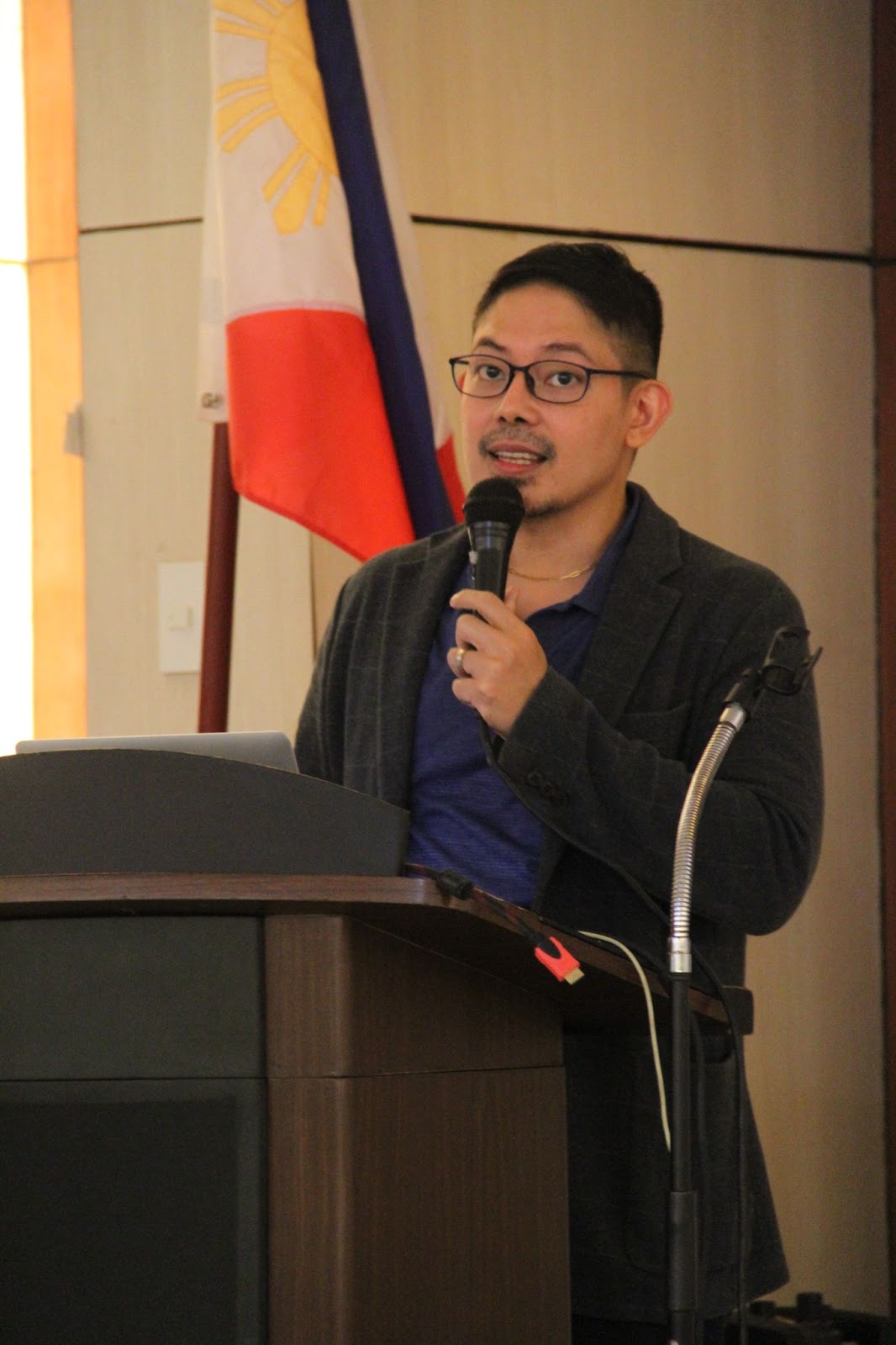
(Dr. Mojica is the UP-PGH Vice Chair for Support Services, Division Chief of Infectious Dermatology, Section Chief on STI and HIV, and a proud member of the LGBT community.)
According to Dr. Mojica, society imposed a norm that people are designed to play a specific role based on their genitalia. However, scientists and medical professionals have learned that sexuality is more than just the penis and the vagina. It is also composed of our hormones, chromosomes, expressions, and who we fall for.
“There is a growing body of scientists and clinicians who acknowledge the complexity of sexuality. Sexuality should be understood as a spectrum. Unfortunately, in a conservative catholic nation, the ignorance is perverse, the indifference in this spectrum has put our society in greater health risk, specifically the LGBT – women and LGBT,” he added.
On the other hand, the lack of understanding of the sexuality spectrum is a major obstacle by the majority of healthcare professionals. Being unheard and misunderstood, an LGBT member may suffer from stressors to mental health such as pressure from society regarding sexuality that may lead to maladaptive behavior in the forms of smoking cigarettes, abuse of marijuana and other addictive drugs, and subscribing to hypersexuality.
“Maladaptive behavior can cause biological disorders like lung disease, liver disease, heart disease, kidney damage, sexually transmitted infection (STI), human immunodeficiency virus (HIV), teen pregnancy, maternal and childhood mortality, among others,” Dr. Mojica enumerated.
Dissecting SOGIESC
Sexuality can be better understood using SOGIESC because they are terms that we can use and these terms are independent of each other. One side is more feminine and the other side is more masculine.
Sex is assigned by the doctor at birth and is based on an individual’s genitalia. It is also a function of chromosomes and the predominant hormones. There are people that have unusual development of their genitalia in cases of enlarged clitoris and penis. They are called intersex.
Gender, on the other hand, is defined as the role given to a person based on their genitalia.
Gender identity is one’s own acceptance and understanding of their gender. If one’s gender identity matches with their genitalia then they are cisgender but if their gender identity is not congruent to their genitalia then they are transgender.
Dr. Mojica explained that there are also individuals who are still questioning their gender identity.
“Meron namang walang pakialam kung babae o lalake sila basta ‘tao ako and I deserve respect,’ We call them queer, non-binary or fluid.”
How an individual expresses their maness and womanness is called gender expression. Gender expression falls on the category whether a person is masculine or feminine. Masculines are expected to cut their hair short, grow a mustache, wear pants, and exhibit manly gestures all the time while feminines should wear skirts and make ups. However, there are also individuals who dare to break the gender stereotypes who do the opposite of what is expected from them based on their genders called androgynous or what they call nowadays, non-binary and gender fluid.
Sexual orientation is related to who we are sexually or romantically attracted to. If a person is attracted to the opposite gender, they are categorized as heterosexual but if a man likes another man, they are called gay. If a woman likes another woman, they are called lesbian. Being attracted to both genders will define an individual as bisexual. If a person is attracted to everybody, they are called pansexual. The lack of attraction to anybody could categorize a person as asexual. According to Dr. Mojica, there are also people who are asexual but romantic and people who are aromantic but not necessarily asexual.
Dr. Mojica that youth these days are more knowledgeable when it comes to SOGIESC and it is imperative for faculty and staff to educate themselves to be informed of the matters concerning the LGBT community.
“Sa totoo lang mas magaling pa sa ating mga matatanda ang mga kabataan when it comes to gender. Magugulat ka. Kaya tayong mga faculty, mag-keep up tayo kasi kapag may nasabi tayo – social media bashing. Ang teacher ko hindi marunong mag-SOGIESC.”
According to Dr. Mojica, understanding SOGIESC is the first step in understanding sexual and gender minorities and it will help address multiple national health concerns.
“Hindi natin kailangang tumingin ng pasyente para maunawaan itong SOGIESC kasi I’m sure meron tayong kamag-anak, anak, pinsan o kaibigan na kakaiba ang SOGIESC. I hope when we return, isipin natin kung paano ba natin sila tinrato. When we go home, we allow our children to be this one that knows who they really are.”
Challenging the tides
Everybody should feel safe. Let us not go back to the old system and norms that perpetuate injustice, stigma, and discrimination against members of the LGBT community.
“Let’s make UP Manila a safe space for all – for the staff, the faculty, students, and patients and hopefully, in the near future, our member of the academicians and healthcare professionals will coordinate in establishing services and care for sexual and gender minorities in UP Manila that will eventually expand to the rest of the country,” Dr. Mojica concluded.