

Text by: Angelou C. Mendoza
Photos by: Erlyn May U. Pareja
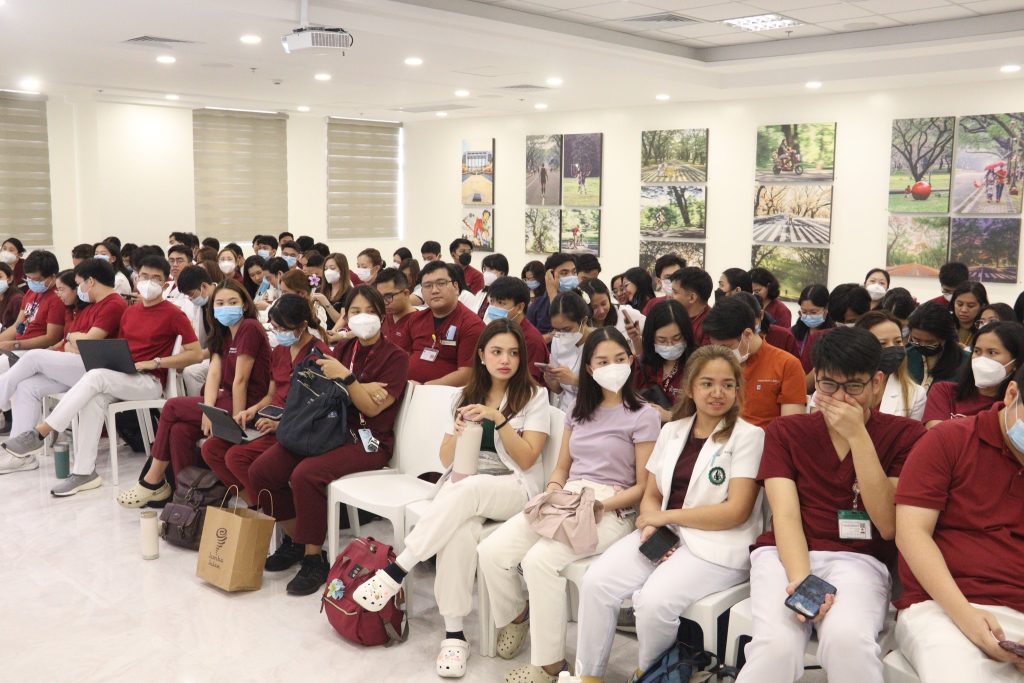
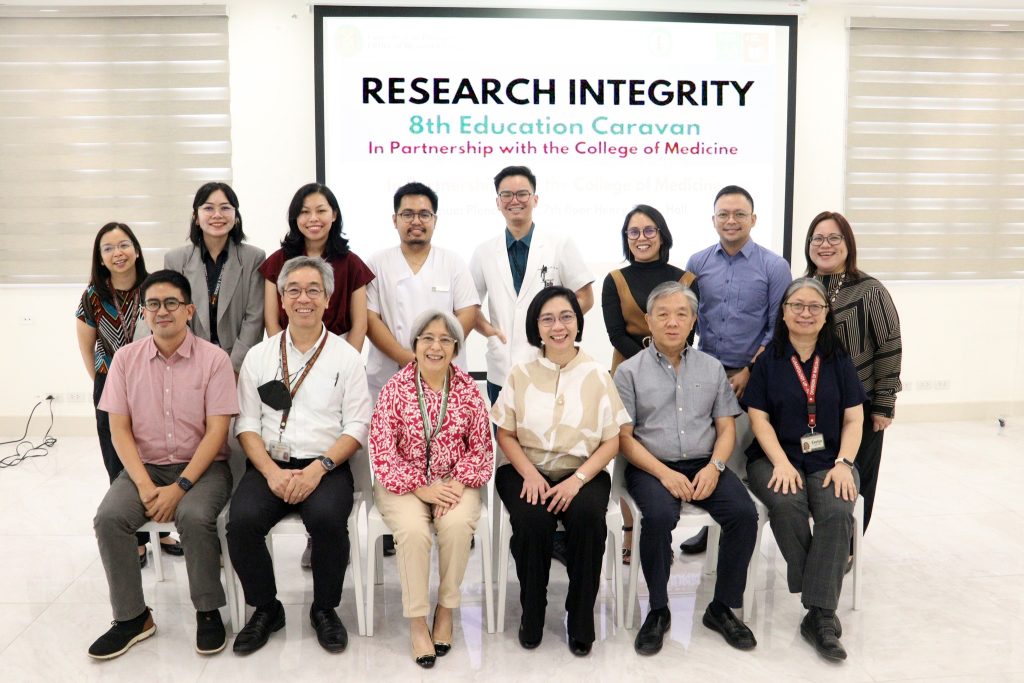
The use of artificial intelligence in writing was discussed in a forum on responsible research during the 8th Academic Caravan on March 12, 2024 at the Henry Sy Sr. Hall, UP Manila.
While many researchers have learned to rely on ChatGPT due to ease of use and availability, Dr. Christopher Jay T. Robidillo, College of Arts and Sciences College Coordinator, said ChatGPT’s
strength lies mostly in its ability to assist an author in writing but the brain is still the most powerful machine despite the existence of AI tools.
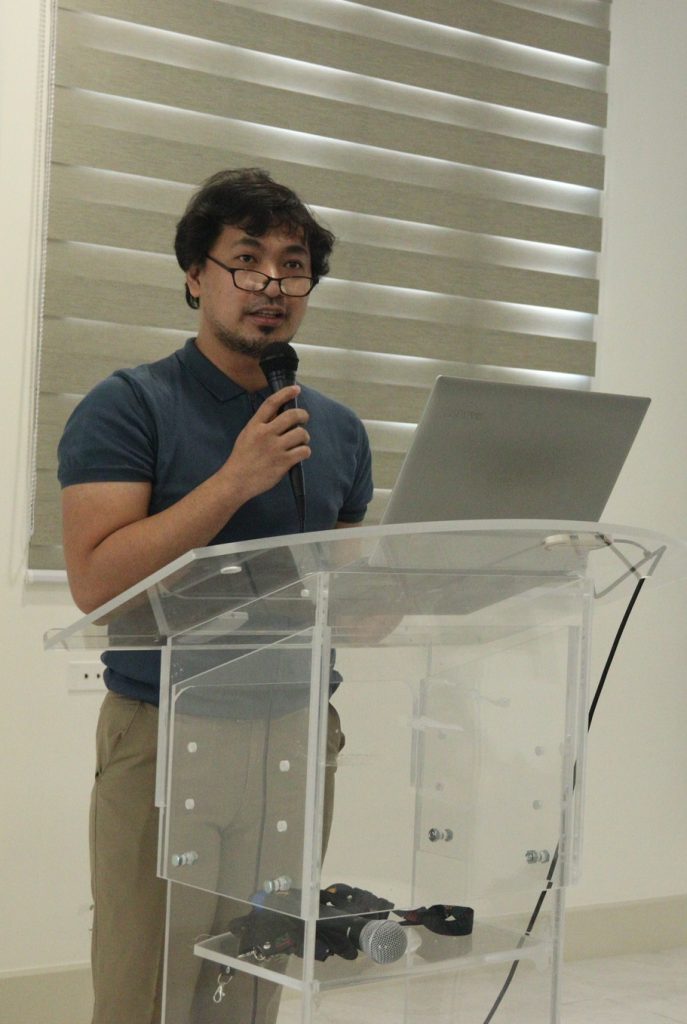
Citing H. Holden Thorp, Editor-in-Chief of the Science of Family journals, Dr. Robidillo explained the use and its implications of the artificial intelligence program ChatGPT emphasizing that it cannot be acknowledged as an author. “The scientific record is ultimately one of the human endeavors of struggling with important questions. Machines play an important role, but as tools for the people posing the hypotheses, designing the experiments, and making sense of the results. Ultimately the by-product must come from—and be expressed by—the wonderful computer in our heads, the human brain,” he said.
Office of Research Integrity Director Dr. Jean Anne Toral talked about research integrity, the establishment of the Office of Research Integrity (ORI) and authorship principles. She also discussed the topic, “Fundamental Principles of Research Integrity” and her research on the “Perception of the Climate of
Research Integrity in UP Manila.”
She stressed that authorship in research has two important attributes: credit and authorship, and inappropriate authorship.
“One would generally associate research integrity with the researcher and the researcher must have a moral compass to know what to do and what not. And like any other compass, the functioning of one depends on the virtuousness of the person. And there are also external factors that can corrupt this moral
compass,” Dr. Toral said.


Dr. Jacinto Blas V. Mantaring III, ORI Core Member, discussed fabrication and falsification in research. He said the author’s intent is a relevant factor in identifying the difference between research misconduct and questionable research practice.
In relation to the abovementioned topic, Dr. Edward HM Wang, former ORI Director and ORI Core Member discussed plagiarism and how to give proper credit to an owner of the idea or written output to avoid plagiarism.

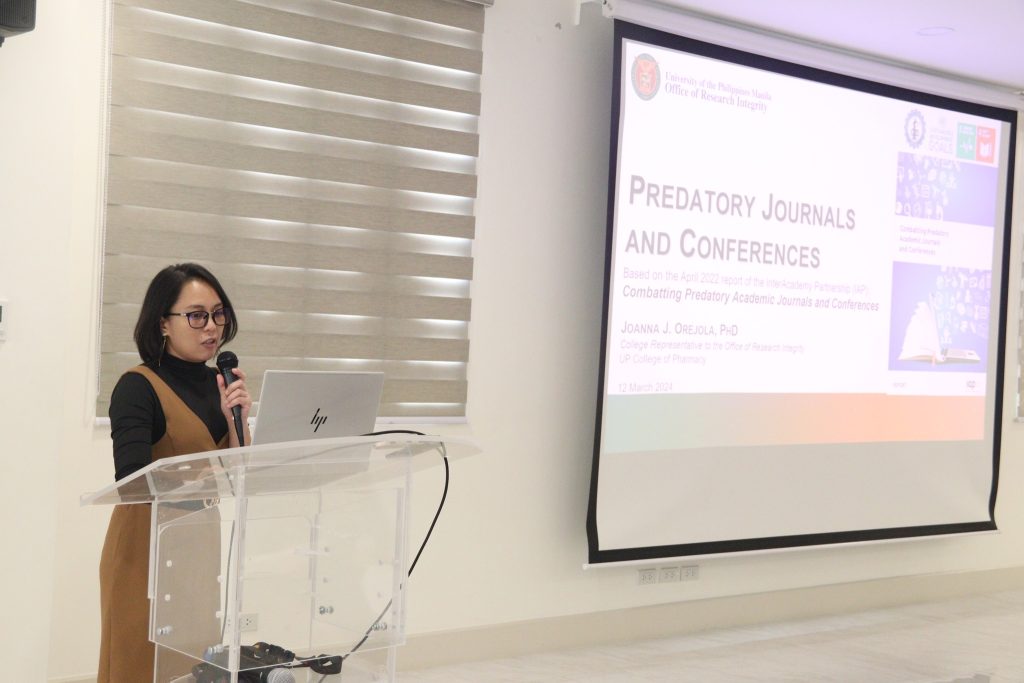
The topic on eliminating nature of predatory journals was tackled by Dr. Joanna J. Orejola, College of Pharmacy College Coordinator. She said these journals satisfy self-interest for personal
gains such as scholarship.
Also during the event, Vice Chancellor for Research Dr. Leslie Michelle Dalmacio highlighted the achievements of ORI: eight academic caravans, Authorship Guidelines Manual, and the research study on the Perception of the Climate of Research Integrity in UP Manila.
“Based on the research conducted on the Perception of the Climate of Research Integrity in UP Manila, the UPM community still needs further awareness on research integrity. As we live our mandate as a research university, integrity in research is essential for the credibility and validity of our research outputs and outcomes,” she said during the event.
The event also included case presentations by medical students Nico Alexander Reyes of UPM Class 2026 on authorship, Arlyn Jave Adlawon on image manipulation, and Joseph Rem C. Dela Cruz on Ethics in AI in research. ■